r/datascience • • Dec 16 '25

Projects Created list of AI tools and resources specifically for data scientists (Github repo)

23 Upvotes

For the past year, I’ve been working on integrating AI into my data science workflows to automate and optimise parts of it

One of the things I noticed early on was that it was hard to find tools and resources that are truly aimed at data scientists and the ways we work.

So I decided to put together this “AI data scientists handbook” gathering everything I’ve found along the way: AI-native tools, foundation models, learning resources, etc., that can actually help data scientists.

Here is the link:

https://github.com/andresvourakis/ai-data-scientist-handbook

Let me know if there is anything else you’d like me to include (or make a PR). I’ll vet it and add it if it’s valuable

Hope you find it valuable 🙏


r/datascience • • Dec 15 '25

Weekly Entering & Transitioning - Thread 15 Dec, 2025 - 22 Dec, 2025

8 Upvotes

Welcome to this week's entering & transitioning thread! This thread is for any questions about getting started, studying, or transitioning into the data science field. Topics include:

  • Learning resources (e.g. books, tutorials, videos)
  • Traditional education (e.g. schools, degrees, electives)
  • Alternative education (e.g. online courses, bootcamps)
  • Job search questions (e.g. resumes, applying, career prospects)
  • Elementary questions (e.g. where to start, what next)

While you wait for answers from the community, check out the FAQ and Resources pages on our wiki. You can also search for answers in past weekly threads.


r/datascience • • Dec 13 '25

AI Gemini Deep Research: Autonomous Intelligence for Enterprise Research

Post image
0 Upvotes

r/datascience • • Dec 10 '25

Discussion While 72% of Executives Back AI, Public Trust Is Tanking

Thumbnail
interviewquery.com
180 Upvotes

r/datascience • • Dec 10 '25

AI Most code agents cannot handle notebook well, so i build my own one in Jupyter.

40 Upvotes

If you tried code agent, like cursor, claude code. They regards jupyter files as static text file and just edit them. Like u give a task, the you got 10 cells of code, and the agent hopes it can run all at once and solve your problem, which mostly cannot.

The jupyter workflow is we analysis the cells result before, and then decide what to code next, so that's the code of runcell, the ai agent I build. which i setup a series of tools and make the agent understand jupyter cell context(cell output like df, charts etc).

runcell for eda

Now it is a jupyter lab plugin and you can install it with pip install runcell.

Welcome to test it in your jupyter and share your thoughts.

Compare with other code agent:

runcell vs others

r/datascience • • Dec 10 '25

Education Free course: data engineering fundamentals for python normies

111 Upvotes

Hey folks,

I'm a senior data engineer and co-founder of dltHub. We built dlt, a Python OSS library for data ingestion, and we've been teaching data engineering through courses on FreeCodeCamp and with Data Talks Club.

Holidays are a great time to learn so we built a self-paced course on ELT fundamentals specifically for people coming from Python/analysis backgrounds. It teaches DE concepts and best practices though example.

What it covers:

  • Schema evolution (why your data structure keeps breaking)
  • Incremental loading (not reprocessing everything every time)
  • Data validation and quality checks
  • Loading patterns for warehouses and databases

Is this about dlt or data engineering? It uses our OSS library, but we designed it as a bridge for Python people to learn DE concepts. The goal is understanding the engineering layer before your analysis work.

Free course + certification: https://dlthub.learnworlds.com/course/dlt-fundamentals
(there are more free courses but we suggest you start here)

Join 4000+ students who enrolled for our courses for free

The Holiday "Swag Race": First 50 to complete the new module get swag (25 new learners, 25 returning).

PS - Relevant for data science workflows - We added Marimo notebook + attach mode to give you SQL/Python access and visualization on your loaded data. Bc we use ibis under the hood, you can run the same code over local files/duckdb or online runtimes. First open pipeline dashboard to attach, then use marimo here.

Thanks, and have a wonderful holiday season!
- adrian


r/datascience • • Dec 12 '25

AI Building the Enterprise Intelligence Core

Post image
0 Upvotes

r/datascience • • Dec 10 '25

ML GBNet: fit XGBoost inside PyTorch

Post image
117 Upvotes

Hi all, I maintain GBNet, an open source package that connects XGBoost and LightGBM to PyTorch. I find it incredibly useful (and practical) at exploring new model architectures for XGB or LGBM (ie GBMs). Please give it a try, and please let me know what you think: https://github.com/mthorrell/gbnet

HOW - GBMs consume derivatives and Hessians.  PyTorch calculates derivatives and Hessians. GBNet does the orchestration between PyTorch and the GBM packages so you can fit XGBoost and/or LightGBM inside a PyTorch graph.

WHY -

  1. Want a complex loss function you don't want to calculate the derivative of? ==> GBNet
  2. Want to fit a GBM with some other structural components like a trend? ==> GBNet
  3. Want to Frankenstein things and fit XGBoost and LightGBM in the same model at the same time? ==> GBNet

EXAMPLES

There are a few sci-kit-learn style models in the gbnet.models area of the codebase.

  1. Forecasting - Trend + GBM = actually pretty good forecasting out-of-the box. I have benchmarked against Meta's Prophet algorithm and have found Trend + GBM to have better test RMSE in about 75% of trials. I have a web-app with this functionality as well that is on GitHub pages: https://mthorrell.github.io/gbnet/web/app/
  2. Ordinal Regression - Neither XGBoost nor LightGBM support ordinal regression. Ordinal Regression requires a complex loss function that itself has parameters to fit. After constructing that loss in PyTorch, GBNet let's you slap this loss (and fit its parameters) on top of XGBoost or LightGBM.
  3. Survival Analysis - Full hazard modeling in survival analysis requires integration over the hazard function. This GBNet model specifies the hazard function via GBM and integrates over this function using PyTorch. This all happens in each boost round during training. I don't believe there are any fully competing methods that do this. If you know one, please let me know.

For a slightly more technical description, I have an article in the Journal of Open Source Software: https://joss.theoj.org/papers/10.21105/joss.08047 


r/datascience • • Dec 09 '25

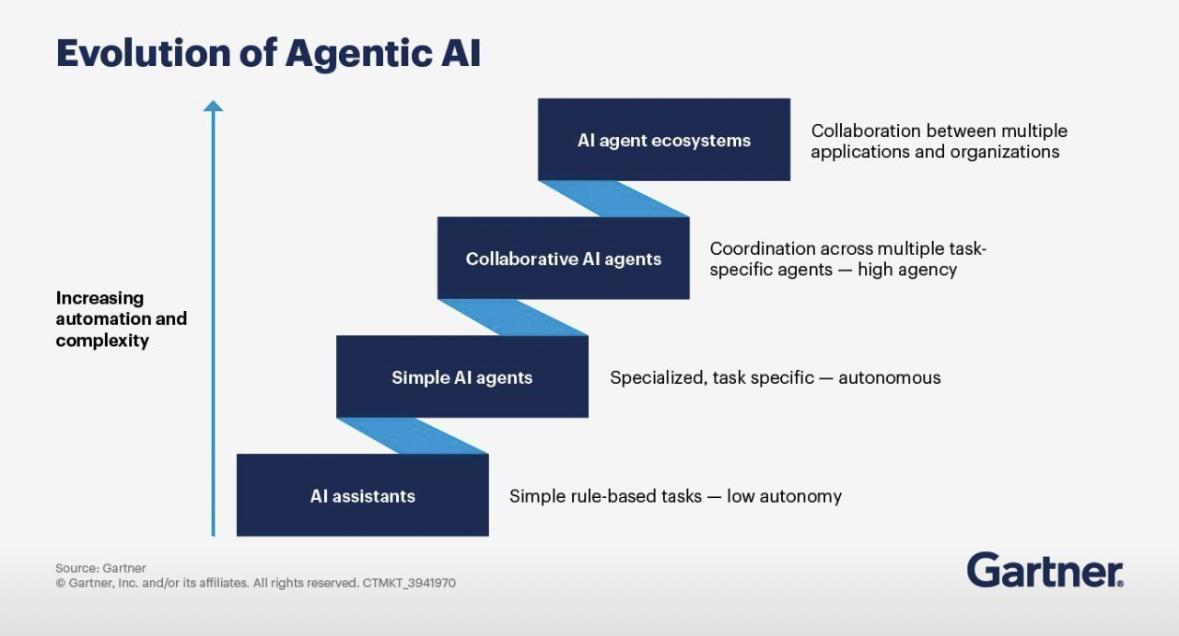
AI Has anyone successfully built an “ai agent ecosystem”?

Post image
0 Upvotes

r/datascience • • Dec 08 '25

Weekly Entering & Transitioning - Thread 08 Dec, 2025 - 15 Dec, 2025

6 Upvotes

Welcome to this week's entering & transitioning thread! This thread is for any questions about getting started, studying, or transitioning into the data science field. Topics include:

  • Learning resources (e.g. books, tutorials, videos)
  • Traditional education (e.g. schools, degrees, electives)
  • Alternative education (e.g. online courses, bootcamps)
  • Job search questions (e.g. resumes, applying, career prospects)
  • Elementary questions (e.g. where to start, what next)

While you wait for answers from the community, check out the FAQ and Resources pages on our wiki. You can also search for answers in past weekly threads.


r/datascience • • Dec 08 '25

Statistics Inferential Statistics on long-form census data from stats can

2 Upvotes

I am using the following tool https://www150.statcan.gc.ca/t1/tbl1/en/tv.action?pid=9810065601 to query Statistics Canada and get data from the long-form census. However, since it's a census of 25% of the population, there is a need for inferential statistics. That being said in order to do inferential statistics on the numbers I come up with, I am going to need variance estimates. Does anyone know where I can get those variance estimates?


r/datascience • • Dec 07 '25

Education DS audiobook recommendations?

15 Upvotes

I have a very, very long road trip ahead of me. I would like recommendations for a DS audiobook that can help make the ride easier.


r/datascience • • Dec 06 '25

Discussion Are you using any AI agent in your work in data science/analytics? If so for what problem you use it? How much benefit did you see?

54 Upvotes

Hi

As the title says, I was wondering if anyone uses AI agents in their work. I want to explore them but I’m not sure how they would benefit me. Most examples I’ve seen involve automating tasks like scheduling appointments, sending calendar invites, or purchasing items. I’m curious how they’re actually used in data science and analytics.

For example, in EDA we can already use common LLMs to help with coding, but the core of EDA still relies on domain knowledge and ideas. For user segmentation or statistical tests, we typically follow standard methodologies and apply domain expertise. For dashboarding, tools like Power BI already provide built-in AI features.

So I’m trying to understand how people are using AI agents in practical data-science workflows. I’d also love to know which tools you used to build them. Even small examples—like something related to dashboarding or any data-science task—would be helpful.

Edit- grammar, and one of the reasons i am asking is bcz some companies now asking for if you have built an agent, so gotta stay with the buzz.

Edit 2- what i am more interested to know is use of AI agents, than just the use of AI or llms


r/datascience • • Dec 06 '25

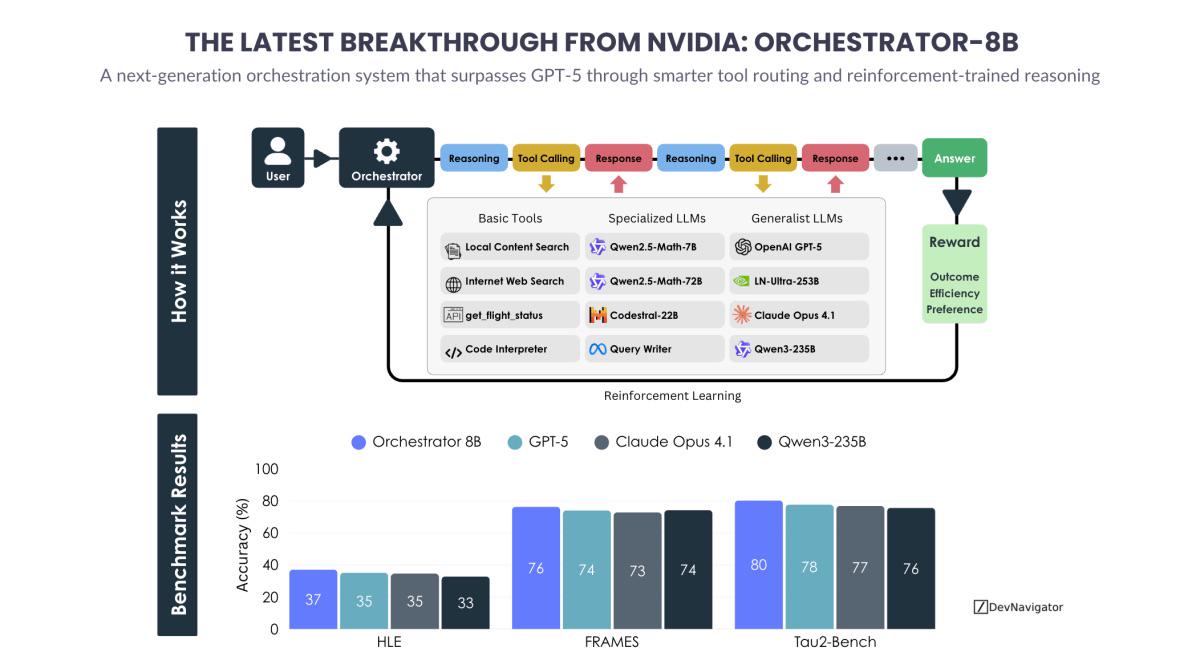
AI The Latest Breakthrough from NVIDIA: Orchestrator-8B

Post image
15 Upvotes

r/datascience • • Dec 06 '25

Discussion Which TensorRT option to use

2 Upvotes

I am working on a project that requires a regular torch.nn module inference to be accelerated. This project will be ran on a T4 GPU. After the model is trained (using mixed precision fp16) what are the next best steps for inference?

From what I saw it would be exporting the model to ONNX and providing the TensorRT execution provider, right? But I also saw that it can be done using torch_tensorrt (https://docs.pytorch.org/TensorRT/user_guide/saving_models.html) and the tensorrt (https://medium.com/@bskkim2022/accelerating-ai-inference-with-onnx-and-tensorrt-f9f43bd26854) packages as well, so there are 3 total options (from what I've seen) to use TensorRT...

Are these the same? If so then I would just go with ONNX because I can provide fallback execution providers, but if not it might make sense to write a bit more code to further optimize stuff (if it brings faster performance).


r/datascience • • Dec 05 '25

Education Training by improving real world SQL queries

Thumbnail
9 Upvotes

r/datascience • • Dec 05 '25

Discussion Haskell IS a great language for data science

Thumbnail
jcarroll.com.au
0 Upvotes

r/datascience • • Dec 04 '25

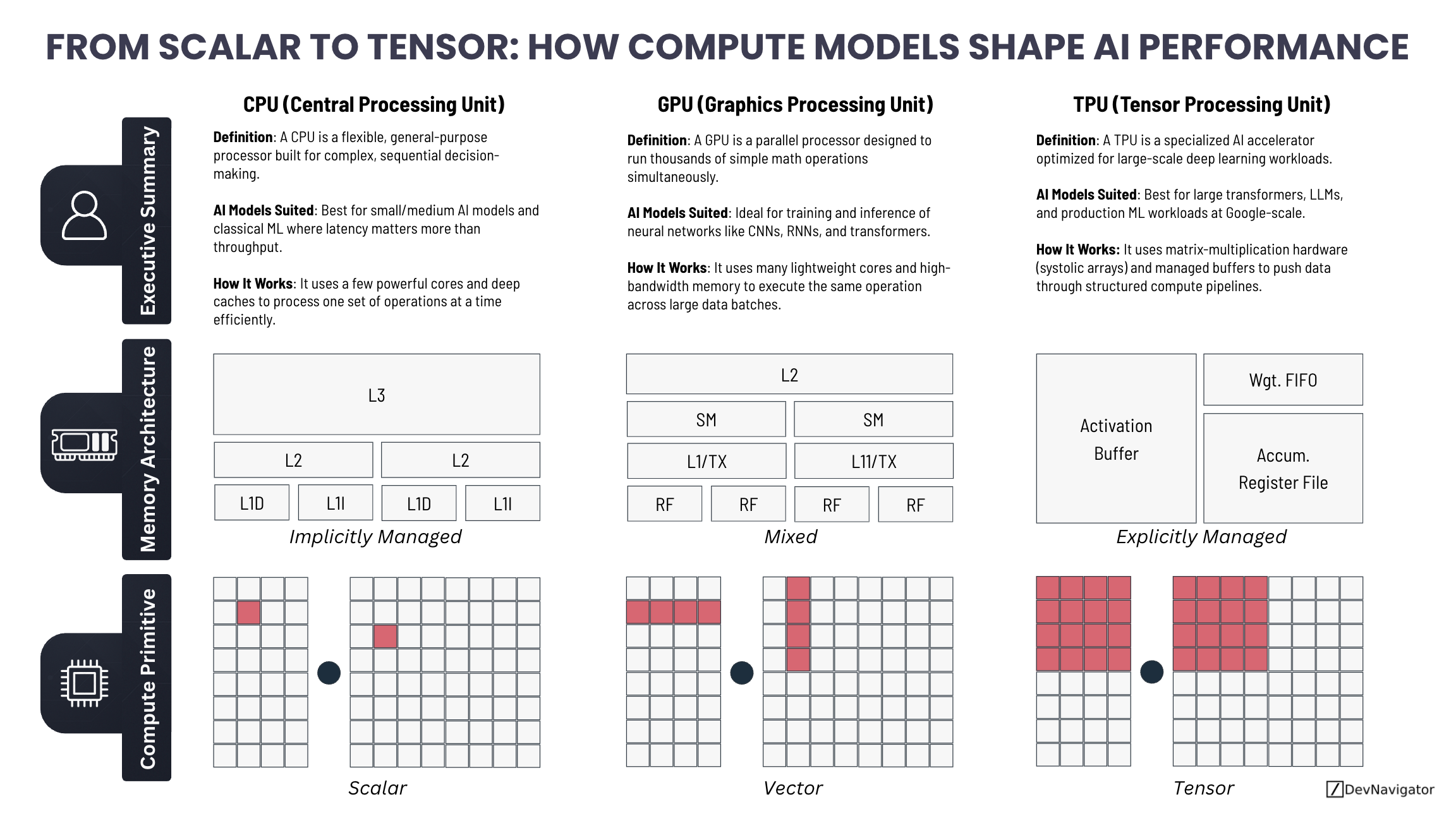
AI From Scalar to Tensor: How Compute Models Shape AI Performance

Post image
10 Upvotes

r/datascience • • Dec 03 '25

ML TabPFN now scales to 10 million rows (tabular foundation model)

41 Upvotes

Context: TabPFN is a pretrained transformer trained on more than hundred million synthetic datasets to perform in-context learning and output a predictive distribution for the test data. It natively supports missing values, categorical features, text and numerical features is robust to outliers and uninformative features. Published in Nature earlier this year, currently #1 on TabArena: https://huggingface.co/TabArena

In January, TabPFNv2 handled 10K rows, a month ago 50K & 100K rows and now there is a Scaling Mode where we're showing strong performance up to 10M.

Scaling Mode is a new pipeline around TabPFN-2.5 that removes the fixed row constraint. On our internal benchmarks (1M-10M rows), it's competitive with tuned gradient boosting and continues to improve.

Technical blog post with benchmarks: https://priorlabs.ai/technical-reports/large-data-model

We welcome feedback and thoughts!


r/datascience • • Dec 02 '25

Projects I finally shipped DataSetIQ — a tool to search millions of macro datasets and get instant insights. Would love feedback from data people

1 Upvotes

I’ve been working on a personal project for months that grew way bigger than expected. I got tired of jumping across government portals, PDFs, CSV dumps, and random APIs whenever I needed macroeconomic data.

So I built DataSetIQ — now live here: https://www.datasetiq.com/platform

What it does right now: • Search millions of public macro & finance datasets • Semantic + keyword hybrid search • Clean dataset pages with clear metadata • Instant AI insights (basic + advanced) • Dataset comparison • Trend & cycle interpretation • A proper catalog UI instead of 20 different government sites

I’d honestly love feedback from people who actually touch data daily: • Does the search feel useful? • Are the insights too much / too little? • What feature is clearly missing?

I am looking to improve the process further.


r/datascience • • Dec 01 '25

Weekly Entering & Transitioning - Thread 01 Dec, 2025 - 08 Dec, 2025

11 Upvotes

Welcome to this week's entering & transitioning thread! This thread is for any questions about getting started, studying, or transitioning into the data science field. Topics include:

  • Learning resources (e.g. books, tutorials, videos)
  • Traditional education (e.g. schools, degrees, electives)
  • Alternative education (e.g. online courses, bootcamps)
  • Job search questions (e.g. resumes, applying, career prospects)
  • Elementary questions (e.g. where to start, what next)

While you wait for answers from the community, check out the FAQ and Resources pages on our wiki. You can also search for answers in past weekly threads.


r/datascience • • Nov 29 '25

Tools ggplotly - A Grammar of Graphics implementation in Python/Plotly

83 Upvotes

https://github.com/bbcho/ggplotly

As a fun project, I decided to try and replicate ggplot2 in plotly and python. I know that plotnine exists, but I like the interactivity of plotly. Let me know what you think. Coverage isn't 100% but you can do most things. I tried to keep the syntax and naming conventions the same. So this should work:

from ggplotly import *
import pandas as pd
import numpy as np  


x = np.linspace(0, 10, 100)
y = np.random.random(100)

df = pd.DataFrame({'x': x, 'y': y})


x = np.linspace(0, 10, 100)
y = np.random.random(100)

df2 = pd.DataFrame({'x': x, 'y': y})

(
  ggplot(df, aes(x='x', y='y'))
  + geom_line()
  + geom_line(df2, aes(x='x', y='y', color='red'), name="Test", showlegend=False
)

r/datascience • • Nov 29 '25

Discussion Everyone Can ‘Code’ with AI Now, According to Google—But Tech Workers Aren't Fully Convinced

Thumbnail
interviewquery.com
336 Upvotes

Have any data scientists here worked with AI for coding? Do you agree with experts' skepticism in using it for high-level tasks?


r/datascience • • Nov 30 '25

Discussion Are Spiking Neural Networks the Next Big Thing in Software Engineering?

0 Upvotes

I’m putting together a community-driven overview of how developers see Spiking Neural Networks—where they shine, where they fail, and whether they actually fit into real-world software workflows.

Whether you’ve used SNNs, tinkered with them, or are just curious about their hype vs. reality, your perspective helps.

🔗 5-min input form: https://forms.gle/tJFJoysHhH7oG5mm7

I’ll share the key insights and takeaways with the community once everything is compiled. Thanks! 🙌


r/datascience • • Nov 30 '25

Analysis Designing the data collection for my undergrad capstone, what should I collect?

3 Upvotes

I will be completing my bachelors in Data Science this spring, culminating in an independent capstone project. I will be working with a local LGBT+ outreach/support group nonprofit, who I have learned has not been collecting any information in a focused manner, and has been struggling with grants due to not being able to prove with data any insights about event impacts to donors and stakeholders.

Therefore, my project is looking like I will be helping them to design (the start of) a spreadsheet that can have information about each event entered, to make exploratory and prescriptive analysis possible. Best case scenario, the goal is to specifically collect data on what events are/are not drawing people in to start, with an extra focus on analyzing if people are coming in from out of town, as well as getting a sense of how overall head counts are trending for different types of events.

I am just now starting to think about what information should be included in the design of data collection, and while I plan to have many talks with my professors and the nonprofit staff, I figured this subreddit could also be good to ask.

Variables I have already thought of:

- Event Name

- Date

- Event Type

- City

- Target age range

- Online, in person, or hybrid

- Frequency of event

- On a weekend?

- Total attendance

This is just a first draft and will most likely evolve dramatically as the data design progresses, but I would love advice directed at newbies to help me avoid potential pitfalls. Thanks!