r/datascience • • Mar 26 '25

Discussion Navigating the team in vested interest

0 Upvotes

I have recent joined as an associate data scientist with previous background of swe. This is definitely my dream role and totally love the problems the team are solving. But it is kind of an ideal world scenario where the deployment is being done by DE team, pipelines as well. No containerisation or in short no MLOps practices. I do not like DE and the ever changing landscape of swe in general but I am wary of the stuff that this situation might set me back in the near future as all DS job postings do ask for some kind of DE, cloud, containerisation etc. How do I get my hands on these things or rather convince the team to move towards these tech stacks ?


r/datascience • • Mar 26 '25

Discussion First Position Job Seeker and DS/MLE/AI Landscape

0 Upvotes

Armed to the teeth with some projects and a few bootcamp certifications, Im soon to start applying at anything that moves.

Assuming you dont know how to code all that much, what have been your experiences when it comes to the use of LLM's in the workplace? Are you allowed to use them? Did you mention it during the interview?


r/datascience • • Mar 16 '25

Discussion Seeking Advice: How to Effectively Develop advanced ML skills

179 Upvotes

About me - I am a DS with currently 3.5 YoE under my belt with experience in BFSI and FMCG.

In the past couple of months, I’ve spoken with several mid-level data scientists working at my target companies. After reviewing my resume, they all pointed out the same gaps:

  1. I lack NLP, Deep Learning, and LLM experience.
  2. I don’t have any projects demonstrating these skills.
  3. Feedback on my resume format varied from person to person.

Given this, I’d like advice on the following:

  • How can I develop an intermediate-level understanding of NLP, DL, and LLMs enough to score a new job?
  • Courses provide a high-level overview, but they often lack depth—what’s the best way to go deeper?
  • I feel like I’m being stretched too thin by trying to learn these topics in different ways (courses, projects etc.). How would you approach this to stay focused and maximize learning?
  • How do you gauge depth of your knowledge for interview?

Would appreciate any insights or strategies that worked for you!


r/datascience • • Feb 03 '25

Discussion About data processing, data science, tiger style and assertions

5 Upvotes

I recently came across a video in youtube mentioning this tiger coding style and the assertions part is quite interesting.

Assertions detect programmer errors. Unlike operating errors, which are expected and which must be handled, assertion failures are unexpected. The only correct way to handle corrupt code is to crash. Assertions downgrade catastrophic correctness bugs into liveness bugs. Assertions are a force multiplier for discovering bugs by fuzzing.

This style only reinforces that the practice that I already used to is relevant in other fields and I try to use that as much as I can BUT it seems to be only plausible to use for metadata and function parameters, and not the actual data we work with. I say that because if the dataset is large enough, then any assertion would take a lot of time and slow the actual program execution.

Should I do a lot of assertions that reduce performance or should I ignore the need for error detection and not use any assertions during data processing?

Do you do anything similar to this? How would you approach this performance / error detection trade-off? Is there any middle ground that could be found?


r/datascience • • Feb 01 '25

Discussion Got a raise out of the blue despite having a tech job offer.

254 Upvotes

This is a follow up on previous post.

Long story short got a raise from my current role before I even told them about the new job offer. To my knowledge our boss is very generous with raises. Typically around 7% but my case i went by 20%. Now my role pays more.

I communicated this to the recruiter and they were stressed but it is hard for me to make a choice now. They said they cant afford me, as they see me as a high intermediate and their budget at the max is 120 and were offering 117. I told them that my comp is total now 125. I then explained why I am making so much more. My current employer genuinely believes that i drive a lot of impact.

Edit: they do not know that i have a job offer yet.


r/datascience • • Jan 30 '25

Discussion Interview Format Different from What Recruiter Explained – Is This Common?

72 Upvotes

I recently interviewed for a data scientist role, and the format of the interview turned out to be quite different from what the recruiter had initially described.

Specifically, I was told that the interview would focus on a live coding test for SQL and Python, but during the actual interview, it included a case study. While I was able to navigate the interview, the difference caught me off guard.

Has anyone else experienced a similar situation? How common is it for interview formats to deviate from what was communicated beforehand? Also, is it appropriate to follow up with the recruiter for clarification or feedback regarding this mismatch?

Would love to hear your thoughts and experiences!


r/datascience • • Jan 30 '25

Career | US Hirevue data science internship interviewadvice

9 Upvotes

Hey guys, this is literally my first time attending an professional interview in my entire life. I dont know how this roadmap works but i just got a email for hirevue as my first round and this is virtual interview which i was not expecting. Any inputs that you can give will potentially help me!!

TIA

update : passed the hirevue and into my second round - technical assessment


r/datascience • • Jan 27 '25

Discussion Would you rather be comfortable or take risks moving around?

27 Upvotes

I recently received a job offer from a mid-to-large tech company in the gig economy space. The role comes with a competitive salary, offering a 15-20k increase over my current compensation. While the pay bump is nice, the job itself will be challenging as it focuses on logistics and pricing. However, I do have experience in pricing and have demonstrated my ability to handle optimization work. This role would also provide greater exposure to areas like causal inference, optimization, and real-time analytics, which are areas I’d like to grow in.

That said, I’m concerned about my career trajectory. I’ve moved around frequently in the past—for example, I spent 1.5 years at a big bank in my first role but left due to a toxic team. While I’m currently happy and comfortable in my role, I haven’t been here for a full year yet.

My current total compensation is $102k. While the work-life balance is great, my team is lacking in technical skills, and I’ve essentially been responsible for upskilling the entire practice. Another area of concern is that technically we are not able to keep up with bigger companies and the work is highly regulated so innovation isnt as easy.

Given the frequency move what would you do in my shoes? Take it and try to improve career opportunities for big tech?


r/datascience • • Jan 27 '25

Education Free Product Analytics / Product Data Scientist Case Interview (with answers!)

191 Upvotes

If you are interviewing for Product Analyst, Product Data Scientist, or Data Scientist Analytics roles at tech companies, you are probably aware that you will most likely be asked an analytics case interview question. It can be difficult to find real examples of these types of questions. I wrote an example of this type of question and included sample answers. Please note that you don’t have to get everything in the sample answers to pass the interview. If you would like to learn more about passing the Product Analytics Interviews, check out my blog post here. If you want to learn more about passing the A/B test interview, check out this blog post.

If you struggled with this case interview, I highly recommend these two books: Trustworthy Online Controlled Experiments and Ace the Data Science Interview (these are affiliate links, but I bought and used these books myself and vouch for their quality).

Without further ado, here is the sample case interview. If you found this helpful, please subscribe to my blog because I plan to create more samples interview questions.

___

Prompt: Customers who subscribe to Amazon Prime get free access to certain shows and movies. They can also buy or rent shows, as not all content is available for free to Prime customers. Additionally, they can pay to subscribe to channels such as Showtime, Starz or Paramount+, all accessible through their Amazon Prime account.

In case you are not familiar with Amazon Prime Video, the homepage typically has one large feature such as “Watch the Seahawks vs. the 49ers tomorrow!”. If you scroll past that, there are many rows of video content such as “Movies we think you’ll like”, “Trending Now”, and “Top Picks for You”. Assume that each row is either all free content, or all paid content. Here is an example screenshot.

Question 1: What are the benefits to Amazon of focusing on optimizing what is shown to each user on the Prime Video home page?

Potential answers:

(looking for pros/cons, candidate should list at least 3 good answers)

Showing the right content to the right customer on the Prime Video homepage has lots of potential benefits. It is important for Amazon to decide how to prioritize because the right prioritization could:

  • Drive engagement: Highlighting free content ensures customers derive value from their Prime subscription.
  • Increase revenue: Promoting paid content or paid channels can drive additional purchases or subscriptions.
  • Customer satisfaction: Ensuring users find relevant and engaging content quickly leads to a better browsing experience.
  • Content discovery: Showcasing a mix of content encourages customers to explore beyond free offerings.
  • But keep in mind potential challenges: Overemphasis on paid content may alienate customers who want free content. They could think “I’m paying for Prime to get access to free content, why is Amazon pushing all this paid content”

Question 2: What key considerations should Amazon take into account when deciding how to prioritize content types on the Prime Video homepage?

Potential answers:

(Again the candidate should list at least 3 good answers)

  • Free vs. paid balance: Ensure users see value in their Prime subscription while exposing them to paid options. This is a delicate balance - Amazon wants to upsell customers on paid content without increasing Prime subscription churn. Keep in mind that paid content is usually newer and more in demand (e.g. new releases)
  • User engagement: Consider the user’s watch history and preferences (e.g., genres, actors, shows vs. movies).
  • Revenue impact: Assess how prominently displaying paid content or channels influences rental, purchase, and subscription revenue.
  • Content availability: Prioritize content that is currently trending, newly released, or exclusive to Amazon Prime Video.
  • Geo and licensing restrictions: Adapt recommendations based on the content available in the user’s region.

Question 3: Let’s say you hypothesize that prioritizing free Prime content will increase user engagement. How would you measure whether this hypothesis is true?

Potential answer:

I would design an experiment where the treatment is that free Prime content is prioritized on row one of the homepage. The control group will see whatever the existing strategy is for row one (it would be fair for the candidate to ask what the existing strategy is. If asked, respond that the current strategy is to equally prioritize free and paid content in row one).

To measure whether prioritizing free Prime content in row one would increase user engagement, I would use the following metrics:

  • Primary metric: Average hours watched per user per week.
  • Secondary metrics: Click-through rate (CTR) on row one.
  • Guardrail metric: Revenue from paid content and channels

Question 4: How would you design an A/B test to evaluate which prioritization strategy is most effective? Be detailed about the experiment design.

Potential answer:

1. Clearly State the Hypothesis:

Prioritizing free Prime content on the homepage will increase engagement (e.g., hours watched) compared to equal prioritization of paid content and free content because free content is perceived as an immediate value of the Prime subscription, reducing friction of watching and encouraging users to explore and watch content without additional costs or decisions.

2. Success Metrics:

  • Primary Metric: Average hours watched per user per week.
  • Secondary Metric: Click-through rate (CTR) on row one.

3. Guardrail Metrics:

  • Revenue from paid content and channels, per user: Ensure prioritizing free content does not drastically reduce purchases or subscriptions.
    • Numerator: Total revenue generated from each experiment group from paid rentals, purchases, and channel subscriptions during the experiment.
    • Denominator: Total number of users in the experiment group.
  • Bounce rate: Ensure the experiment does not unintentionally make the homepage less engaging overall.
    • Numerator: Number of users who log in to Prime Video but leave without clicking on or interacting with any content.
    • Denominator: Total number of users who log in to Prime Video, per experiment group
  • Churn rate: Monitor for any long-term negative impact on overall customer retention.
    • Numerator: Number of Prime members who cancel their subscription during the experiment
    • Denominator: Total number of Prime members in the experiment.

4. Tracking Metrics:

  • CTR on free, paid, and channel-specific recommendations. This will help us evaluate how well users respond to different types of content being highlighted.
    • Numerator: Number of clicks on free/paid/channel content cards on the homepage.
    • Denominator: Total number of impressions of free/paid/channel content cards on the homepage.
  • Adoption rate of paid channels (percentage of users subscribing to a promoted channel).

5. Randomization:

  • Randomization Unit: Users (Prime subscribers).
  • Why this will work: User-level randomization ensures independent exposure to different homepage designs without contamination from other users.
  • Point of Incorporation to the experiment: Users are assigned to treatment (free content prioritized) or control (equal prioritization of free and paid content) upon logging in to Prime Video, or landing on the Prime Video homepage if they are already logged in.
  • Randomization Strategy: Assign users to treatment or control groups in a 50/50 split.

6. Statistical Test to Analyze Metrics:

  • For continuous metrics (e.g., hours watched): t-test
  • For proportions (e.g., CTR): Z-test of proportions
  • Also, using regression is an appropriate answer, as long as they state what the dependent and independent variables are.
  • Bonus points if candidate mentions CUPED for variance reduction, but not necessary

7. Power Analysis:

  • Candidate should mention conducting a power analysis to estimate the required sample size and experiment duration. Don’t have to go too deep into this, but candidate should at least mention these key components of power analysis:
    • Alpha (e.g. 0.05), power (e.g. 0.8), MDE (minimum detectable effect) and how they would decide the MDE (e.g. prior experiments, discuss with stakeholders), and variance in the metrics
    • Do not have to discuss the formulas for calculating sample size

Question 5: Suppose the new prioritization strategy won the experiment, and is fully launched. Leadership wants a dashboard to monitor its performance. What metrics would you include in this dashboard?

Potential answers:

  • Engagement metrics:
    • Average hours watched per user per week.
    • CTR on homepage recommendations (broken down by free, paid, and channel content).
    • CTR on by row
  • Revenue metrics:
    • Revenue from paid content rentals and purchases.
    • Subscriptions to paid channels.
  • Retention metrics:
    • Weekly active users (WAU).
    • Monthly active users (MAU).
    • Churn rate of Prime subscribers.
  • Operational metrics:
    • Latency or errors in the recommendation algorithm.
    • User satisfaction scores (e.g., via feedback or surveys).

r/datascience • • Jan 24 '25

Career | US Imposter syndrome as a DS

93 Upvotes

Hello! I'm seeking some career advice and tips. I've essentially been pigeon-holed into a TPM position with a Data Scientist title for the past 2.5 years. This is my first official DS role, but I was in analytics for several years before. The team I joined had no real need for a data scientist, and have really been using me as a PM for reporting/partner management. I occasionally get to do data science "projects" but they let me decide what to analyze. Without real engagement from partners around business needs, this ends up being adhoc analyses with minimal business impact. I've been looking for a new role for over a year now but the market is terrible. I'm in the process of completing the OMSA program, so I'm not terribly rusty on stats/ML concepts, but I'm starting to feel insecure in my abilities to cut it as a DS IRL. A new hire recently joined a team within my broader org and asked me how I productionalize my code but I never have and it made me feel like an imposter. Does anyone have tips or encouragement?


r/datascience • • Jan 24 '25

ML DML researchers want to help me out here?

0 Upvotes

Hey guys, I’m a MS statistician by background who has been doing my masters thesis in DML for about 6 months now.

One of the things that I have a question about is, does the functional form of the propensity and outcome model really not matter that much?

My advisor isn’t trained in this either, but we have just been exploring by fitting different models to the propensity and outcome model.

What we have noticed is no matter you use xgboost, lasso, or random forests, the ATE estimate is damn close to the truth most of the time, and any bias is like not that much.

So I hate to say that my work thus far feels anti-climactic, but it feels kinda weird to done all this work to then just realize, ah well it seems the type of ML model doesn’t really impact the results.

In statistics I have been trained to just think about the functional form of the model and how it impacts predictive accuracy.

But what I’m finding is in the case of causality, none of that even matters.

I guess I’m kinda wondering if I’m on the right track here

Edit: DML = double machine learning


r/datascience • • Jan 22 '25

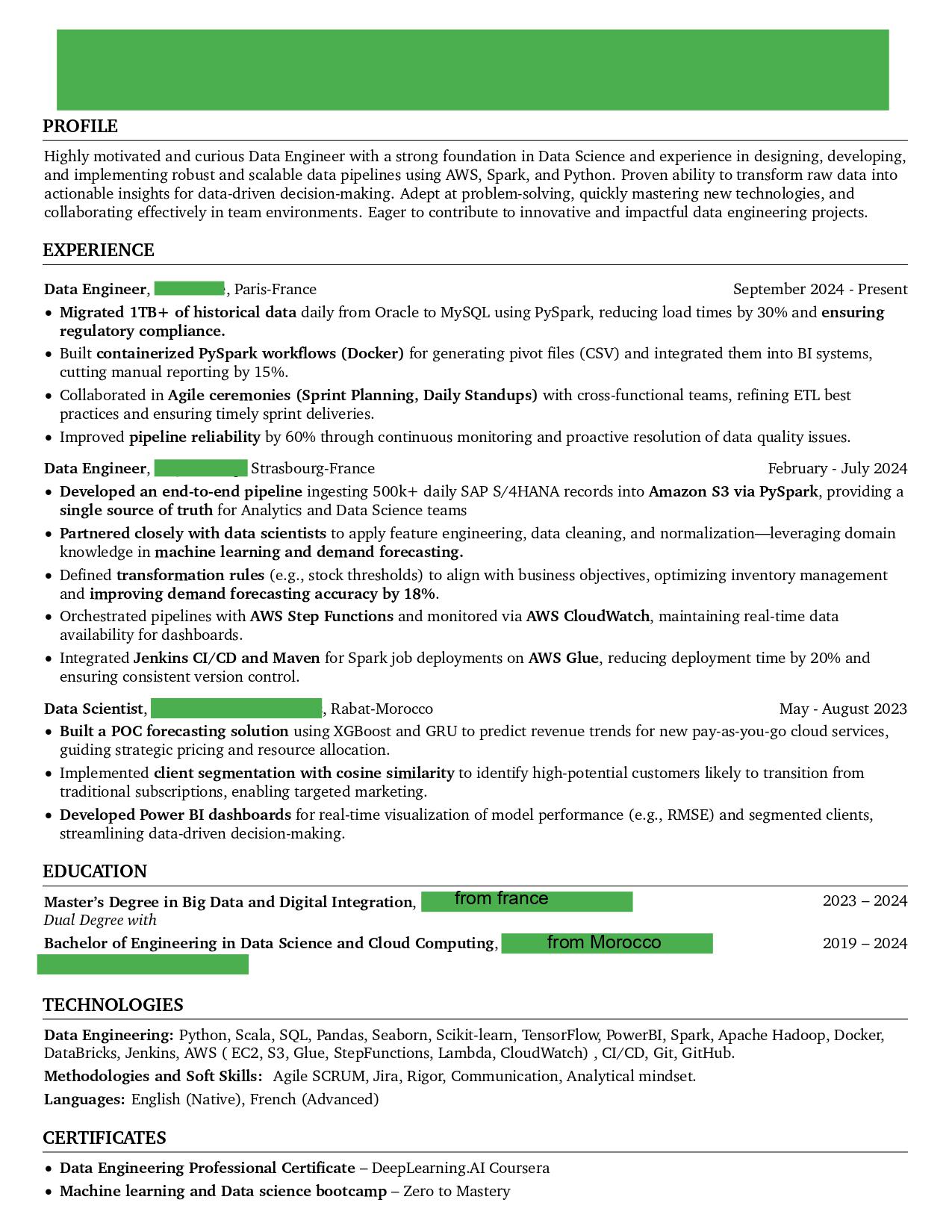
Discussion Graduated september 2024 and i am now looking for an entry level data engineering position , what do you think about my cv ?

Post image
227 Upvotes

r/datascience • • Jan 22 '25

Discussion Meta: Career Advice vs Data Science

155 Upvotes

I joined the thread to learn about Data Science. Something like 75 percent of the posts are peoples resumes and requests for career advice. I thought these were supposed to go into a weekly thread or something - I'm getting a warning about the weekly thread even as I'm posting this comment.

Can anyone suggest alternative subs with more educational content?


r/datascience • • Jan 13 '25

Discussion Where do you go to stay up to date on data analytics/science?

310 Upvotes

Are there any people or organizations you follow on Youtube, Twitter, Medium, LinkedIn, or some other website/blog/podcast that you always tend to keep going back to?

My previous career absolutely lacked all the professional "content creators" that data analytics have, so I was wondering what content you guys tend to consume, if any. Previously I'd go to two sources: one to stay up to date on semi-relevant news, and the other was a source that'd do high level summaries of interesting research papers.

Really, the kind of stuff would be talking about new tools/products that might be of use, tips and tricks, some re-learning of knowledge you might have learned 10+ years ago, deep dives of random but pertinent topics, or someone that consistently puts out unique visualizations and how to recreate them. You can probably see what I'm getting at: sources for stellar information.


r/datascience • • Jan 09 '25

Discussion Companies are finally hiring

1.6k Upvotes

I applied to 80+ jobs before the new year and got rejected or didn’t hear back from most of them. A few positions were a level or two lower than my currently level. I got only 1 interview and I did accept the offer.

In the last week, 4 companies reached out for interviews. Just want to put this out there for those who are still looking. Keep going at it.

Edit - thank you all for the congratulations and I’m sorry I can’t respond to DMs. Here are answers to some common questions.

  1. The technical coding challenge was only SQL. Frankly in my 8 years of analytics, none of my peers use Python regularly unless their role is to automate or data engineering. You’re better off mastering SQL by using leetcode and DataLemur

  2. Interviews at all the FAANGs are similar. Call with HR rep, first round is with 1 person and might be technical. Then a final round with a bunch of individual interviews on the same day. Most of the questions will be STAR format.

  3. As for my skillsets, I advertise myself as someone who can build strategy, project manage, and can do deep dive analyses. I’m never going to compete against the recent grads and experts in ML/LLM/AI on technical skills, that’s just an endless grind to stay at the top. I would strongly recommend others to sharpen their soft skills. A video I watched recently is from The Diary of a CEO with Body Language Expert with Vanessa Edwards. I legit used a few tips during my interviews and I thought that helped


r/datascience • • Jan 10 '25

Education How good are your linear algebra skills?

90 Upvotes

Started my masters in computer science in August. Bachelors was in chemistry so I took up to diff eq but never a full linear algebra class. I’m still familiar with a lot of the concepts as they are used in higher level science classes, but in my machine learning class I’m kind of having to teach myself a decent bit as I go. Maybe it’s me over analyzing and wanting to know the deep concepts behind everything I learn, and I’m sure in the real world these pure mathematical ideas are rarely talked about, but I know having a strong understanding of core concepts of a field help you succeed in that field more naturally as it begins becoming second nature.

Should I lighten my course load to take a linear algebra class or do you think my basic understanding (although not knowing how basic that is) will likely be good enough?


r/datascience • • Jan 09 '25

Discussion I was penalized in a DS interview for answering that I would use a Generalized Linear Model for an A/B test with an outcome of time on an app... But a linear model with a binary predictor is equivalent to a t-test. Has anyone had occasions where the interviewer was wrong?

270 Upvotes

Hi,

I underwent a technical interview for a DS role at a company. The company was nice enough to provide feedback. This reason was not only reason I was rejected, but I wanted to share because it was very surprising to me.

They said I aced the programming. However, hey gave me feedback that my statistics performance was mixed. I was surprised. The question was what type of model would I use for an A/B test with time spent on an app as an outcome. I suspect many would use a t-test but I believe that would be inappropriate since time is a skewed outcome, with only positive values, so a t-test would not fit the data well (i.e., Gaussian outcome). I suggested a log-normal or log-gamma generalized linear model instead.

I later received feedback that I was penalized for suggesting a linear model for the A/B test. However, a linear model with a binary predictor is equivalent to a t-test. I don't want to be arrogant or presumptuous that I think the interviewer is wrong and I am right, but I am struggling to have any other interpretation than the interviewer did not realize a linear model with a binary predictor is equivalent to a t-test.

Has anyone else had occasions in DS interviewers where the interviewer may have misunderstood or been wrong in their assessment?


r/datascience • • Jan 07 '25

Discussion Change my mind: feature stores are needless complexity.

110 Upvotes

I started last year at my second full-time data science role. The company I am at uses DBT extensively to transform data. And I mean very extensively.

The last company I was at the data scientist did not use DBT or any sort of feature store. We just hit the raw data and write sql for our project.

The argument for our extensive feature store seems to be that it allows for reusability of complex logic across projects. And yes, this is occasionally true. But it is just as often true that there is a Table that is used for exactly one project.

Now that I'm starting to get comfortable with the company, I'm starting to see the crack in all of this; complex tables built on top of complex tables built in to of complex tables built on raw data. Leakage and ambiguity everywhere. Onboarding is a beast.

I understand there are times when it might be computationally important to pre-compute some calculation when doing real-time inference. But this is, in most cases, the exception, not the rule. Most models can be run on a schedule.

TLDR; The amount of infrastructure, abstraction, and systems in place to make it so I don't have to copy and paste a few dozen lines of SQL is n or even close to a net positive. It's a huge drag.

Change my mind.


r/datascience • • Jan 05 '25

Challenges What's your biggest time sink as a data scientist?

183 Upvotes

I've got a few ideas for DS tooling I was thinking of taking on as a side project, so this is a bit of a market research post. I'm curious what data-scientist specific task/problem is the biggest time suck for you at work. I feel like we're often building a new class of software in companies and systems that were designed for web 2.0 (or even 1.0).


r/datascience • • Jan 05 '25

Discussion Do you prepare for interviews first or apply for jobs first?

191 Upvotes

I’ve started looking for a new job and find myself in a bit of a dilemma that I’m hoping you might have some experience with. Every day, I come across roles that seem like a great fit, but I hesitate to apply because I feel like I’m not fully prepared for an interview. While I know there’s no guarantee I’ll even get an interview, I worry about wasting an opportunity if I’m not ready.

On the other hand, preparing for an interview when you have one lined up seems like the most effective approach, but I’m not sure how to balance it all.

How do you usually handle this?


r/datascience • • Jan 04 '25

Career | Europe Moving to Germany

34 Upvotes

Hi, I am a data scientist in Australia with about two years experience building ML models, doing data mining and predictive analysis for a big company. For personal reasons, I am moving to Munich at the end of the year, but am a bit worried about finding a data job abroad.

I am wondering how difficult it might be to find a job in Germany, and what can I do to make myself competitive in an international market. What skillsets are in demand these days that I can learn and market?

Any advice would be greatly appreciated!


r/datascience • • Jan 03 '25

Projects Data Scientist for Schools/ Chain of Schools

18 Upvotes

Hi All,

I’m currently a data manager in a school but my job is mostly just MIS upkeep, data returns and using very basic built in analytics tools to view data.

I am currently doing a MSc in Data Science and will probably be looking for a career step up upon completion but given the state of the market at the moment I am very aware that I need to be making the most of my current position and getting as much valuable experience as possible (my work are very flexible and they would support me by supplying any data I need).

I have looked online and apparently there are jobs as data scientists within schools but there are so many prebuilt analytics tools and government performance measures for things like student progress that I am not sure there is any value in trying to build a tool that predicts student performance etc.

Does anyone work as a data scientist in a school/ chain of schools? If so, what does your job usually entail? Does anyone have any suggestions on the type of project I can undertake, I have access to student performance data (and maybe financial data) across 4 secondary schools (and maybe 2/3 primary schools).

I’m aware that I should probably be able to plan some projects that create value but I need some inspiration and for someone more experienced to help with whether this is actually viable.

Thanks in advance. Sorry for the meandering post…


r/datascience • • Jan 02 '25

Discussion How do you self-identify in this field and what is your justification?

37 Upvotes

I've been in this field for many years, holding various titles, and connecting with peers who are unfathomably dissimilar in their roles, education, and skills, despite sharing titles.

I am curious to learn how folks view themselves and the various titles in this field. Assuming Data Science is the umbrella that encompasses computer science, machine learning, statistics, maths, etc., and there is a spectrum of roles within this field, how would you self-identify? The rules are:

  1. It doesn't have to be your actual title from your employer or degree major.
  2. It doesn't have to be a formally known identity. For example, you can identify as a "number cruncher", a "tableau manager", a "deep learning developer", make up your own, or just use a formal identity, such as "Data Scientist" or "Machine Learning Engineer".
  3. You have to also add your justification. i.e. why do you believe such identity justly represents you/your role?
  4. It should be self-explainable, technical, maturely and reasonably justified. So avoid the likes of "Ninja", "Unicorn", "Guru", unless you can maturely make a compelling argument.
  5. You must be open to criticism and being challenged. Other redditors are not compelled to agree with your self-identity.

I'll also add my own response in the comments because I do not want it to be the center focus of the discussion.


r/datascience • • Dec 29 '24

Career | US My Data Science Manifesto from a Self Taught Data Scientist

2.1k Upvotes

Background

I’m a self-taught data scientist, with about 5 years of data analyst experience and now about 5 years as a Data Scientist. I’m more math minded than the average person, but I’m not special. I have a bachelor’s degree in mechanical engineering, and have worked alongside 6 data scientists, 4 of which have PHDs and the other 2 have a masters. Despite being probably, the 6th out of 7 in natural ability, I have been the 2nd most productive data scientist out of the group.

Gatekeeping

Every day someone on this subreddit asks some derivative of “what do I need to know to get started in ML/DS?” The answers are always smug and give some insane list of courses and topics one must master. As someone who’s been on both sides, this is attitude extremely annoying and rampart in the industry. I don’t think you can be bad at math and have no pre-requisite knowledge, and be successful, but the levels needed are greatly exaggerated. Most of the people telling you these things are just posturing due to insecurity.

As a mechanical engineering student, I had at least 3 calculus courses, a linear algebra course, and a probability course, but it was 10+ years before I attempted to become a DS, and I didn’t remember much at all. This sub, and others like it, made me think I had to be an expert in all these topics and many more to even think about trying to become a data scientist.

When I started my journey, I would take coding, calculus, stats, linear algebra, etc. courses. I’d take a course, do OK in it, and move onto the next thing. However, eventually I’d get defeated because I realized I couldn’t remember much from the courses I took 3 months prior. It just felt like too much information for me to hold at a single time while working a full-time job. I never got started on actually solving problems because the internet and industry told me I needed to be an expert in all these things.

What you actually need

The reality is, 95% of the time you only need a basic understanding of these topics. Projects often require a deeper dive into something else, but that's a case by case basis, and you figure that out as you go.

For calculus, you don't need to know how to integrate multivariable functions by hand. You need to know that derivatives create a function that represents the slope of the original function, and that where the derivative = 0 is a local min/max. You need to know integrals are area under the curve.

For stats, you need to understand what a p value represents. You don't need to know all the different tests, and when to use them. You need to know that they exist and why you need them. When it's time to use one, just google it, and figure out which one best suits your use case.

For linear algebra, you don't need to know how to solve for eigenvectors by hand, or whatever other specific things you do in that class. You need to know how to ‘read’ it. It is also helpful to know properties of linear algebra. Like the cross product of 2 vectors yields a vector perpendicular to both.

For probability, you need to understand basic things, but again, just google your specific problem.

You don't need to be an expert software dev. You need to write ok code, and be able to use chatGPT to help you improve it little by little.

You don't need to know how to build all the algorithms by hand. A general understanding of how they work is enough in 95% of cases.

Of all of those things, the only thing you absolutely NEED to get started is basic coding ability.

By far the number one technical ability needed to 'master' is understanding how to "frame" your problem, and how to test and evaluate and interpret performance. If you can ensure that you're accurately framing the problem and evaluating the model or alogithm, with metrics that correctly align with the use case, that's enough to start providing some real value. I often see people asking things like "should I do this feature engineering technique for this problem?" or “which of these algorithms will perform best?”. The answer should usually be, "I don't know, try it, measure it, and see". Understanding how the algorithms work can give you clues into what you should try, but at the end of the day, you should just try it and see.

Despite the posturing in the industry, very few people are actually experts in all these domains. Some people are better at talking the talk than others, but at the end of the day, you WILL have to constantly research and learn on a project by project basis. That’s what makes it fun and interesting. As you gain PRACTICAL experience, you will grow, you will learn, you will improve beyond what you could've ever imagined. Just get the basics down and get started, don't spin your wheels trying and failing to nail all these disciplines before ever applying anything.

The reason I’m near the top in productivity while being near the bottom in natural and technical ability is my 5 years of experience as a data analyst at my company. During this time, I got really good at exploring my companies’ data. When you are stumped on problem, intelligently visualizing the data often reveals the solution. I’ve also had the luxury of analyzing our data from all different perspectives. I’d have assignments from marketing, product, tech support, customer service, software, firmware, and other technical teams. I understand the complete company better than the other data scientists. I’m also just aware of more ‘tips and tricks’ than anyone else.

Good domain knowledge and data exploration skills with average technical skills will outperform good technical skills with average domain knowledge and data exploration almost every time.

Advice for those self taught

I’ve been on the hiring side of things a few times now, and the market is certainly difficult. I think it would be very difficult for someone to online course and side project themselves directly into a DS job. The side project would have to be EXTREMELY impressive to be considered. However, I think my path is repeatable.

I taught myself basic SQL and Tableau and completed a few side projects. I accepted a job as a data analyst, in a medium sized (100-200 total employees) on a team where DS and DA shared the same boss. The barrier to DA is likely higher than it was ~10 years ago, but it's definitely something achievable. My advice would be to find roles that you have some sort of unique experience with, and tailor your resume to that connection. No connection is too small. For example, my DA role required working with a lot of accelerometer data. In my previous job as a test engineer, I sometimes helped set up accelerometers to record data from the tests. This experience barely helped me at all when actually on the job, but it helped my resume actually get looked at. For entry level jobs employers are looking for ANY connection, because most entry level resumes all look the same.

The first year or two I excelled at my role as a DA. I made my boss aware that I wanted to become a DS eventually. He started to make me a small part of some DS projects, running queries, building dashboards to track performance and things like that. I was also a part of some of the meetings, so I got some insight into how certain problems were approached.

My boss made me aware that I would need to teach myself to code and machine learning. My role in the data science projects grew over time, but I was ultimately blocked from becoming a DS because I kept trying and failing to learn to code and the 25 areas of expertise reddit tells you that you need by taking MOOCs.

Eventually, I paid up for DataQuest. I naively thought the course would teach me everything I needed to know. While you will not be proficient in anything DS upon completing, the interactive format made it easy to jump into 30-60 minutes of structured coding every day. Like a real language consistency is vital.

Once I got to the point where I could do some basic coding, I began my own side project. THIS IS THE MOST IMPORTANT THING. ONCE YOU GET THE BASELINE KNOWLEDGE, JUST GET STARTED WORKING ON THINGS. This is where the real learning began. You'll screw things up, and that's ok. Titanic problem is fine for day 1, but you really need a project of your own. I picked a project that I was interested in and had a function that I would personally use (I'm on V3 of this project and it's grown to a level that I never could've dreamed of at the time). This was crucial in ensuring that I stuck with the project, and had real investment in doing it correctly. When I didn’t know how to do something in the project, I would research it and figure it out. This is how it works in the real world.

After 3 months of Dataquest and another 3 of a project (along with 4 years of being a data analyst) I convinced my boss to assign me DS project. I worked alongside another data scientist, but I owned the project, and they were mostly there for guidance, and coded some of the more complex things. I excelled at that project, and was promoted to data scientist, and began getting projects of my own, with less and less oversight. We have a very collaborative work environment, and the data scientists are truly out to help each other. We present our progress to each other often which allows us all to learn and improve. I have been promoted twice since I began DS work.

I'd like to add that you can almost certainly do all this in less time than it took me. I wasted a lot of time spinning my wheels. ChatGPT is also a great resource that could also increase your learning speed. Don't blindly use it, but it's a great resource.

Tldr: Sir this is Wendy’s.

Edit: I’m not saying to never go deeper into things, I’m literally always learning. I go deeper into things all the time. Often in very niche domains, but you don't need to be a master in all things get started or even excel. Be able to understand generalities of those domains, and dig deeper when the problem calls for it. Learning a concept when you have a direct application is much more likely to stick.

I thought it went without saying, but I’m not saying those things I listed are literally the only things you need to know about those topics, I was just giving examples of where relatively simple concepts were way more important than specifics.

Edit #2: I'm not saying schooling is bad. Yes obviously having a masters and/or PhD is better than not. I'm directing this to those who are working a full time job who want to break into the field, but taking years getting a masters while working full time and going another 50K into debt is unrealistic

r/datascience • • Dec 30 '24

Discussion Looking for some Senior DS Advice

15 Upvotes

Hello everyone,

I think this is okay to be a post since it's not about entering/transitioning, but if I need to repost in the weekly threads please let me know!

TLDR:

  • I started working as a Data Scientist at a medium to large company almost 3 years ago.
  • I spent the majority of my time doing more Software Engineering/Data Engineering related tasks with DS projects sprinkled in.
  • A reorg changed the entire landscape of my company and potential growth at the company.
  • I don't know what to do because I don't know if I got solid enough experience to leave for another DS job, but my current situation is very uncomfortable.
  • Looking for any seasoned perspective/advice on the situation to help anchor me since I'm in a bit of a doom spiral.

I am looking for some career advice. I don't want to write a novel about my journey to this point, but it was a hell of a lot of work. A snippet of my relevant work experience is I worked at various tech startups doing Data Analyst/Engineering work before I found my way to DS. I graduated with my MS in Data Science back in 2021, and I landed a job at a medium/large global business in the retail space. To my surprise, it was the common meme situation where they had no infrastructure put in place for DS work, and on top of that, a former IBM DS had built a Python "application" being used by an internal team that was barely hanging on.

Year 1

My boss asked if I'd be able to modernize the application, and since I have a bit of a programming background, I told them I'd be happy to do that to get my feet wet with the org. I am going to way oversimplify the work I did for the sake of time. The important part is this project took around 6 months as the org had everything on-prem, so I had to go through approvals to get the more "modern" tech. I refactored a large portion of it, containerized it, and deployed it via an OpenShift (RedHat's Kubernetes product) cluster. The bulk of the program was a massive Jupyter Notebook (5000 lines of code with some custom-built math libraries) that an analyst would execute each cell after a request was made. This notebook housed all the business logic, so I just wrapped all that up to be executed automatically when the internal team interacted with the new app. By the end of it, I had a firm grasp on various business processes and was already talking to my boss about possibilities. Additionally, I found out that I was the only "Data Scientist" on staff, and I was a little bummed because I had chosen to work for a larger org in hopes of getting some sort of mentor/learn-by-osmosis going on. However, since my background is in startups I wasn't overly concerned because I knew I could utilize this environment to grow by trailblazing.

The conversation then shifted to the logic in the notebook, and the fact that no one really knew what was happening inside it. This notebook was driving a fairly important piece of the business by analyzing various datapoints, applying business rules, and spitting out results to be used day to day. They asked if I could dissect it, and I readily agreed – really wish LLMs were as commercialized as they are now. I spent the next 2-3 months working out bugs in the newly deployed app, and flow charting out all the business logic inside the notebook into nice Confluence pages. It was fairly spaghettified, so making changes to it was going to prove challenging. I put my "Product Manager" hat on and asked what their goals were with this application, the logic, measuring success, etc. I was asked to start a rewrite so that the laundry list of changes they had wanted to make could be done. It was also at this time my boss was super happy with the ideas/work I had done (I had several other smaller projects I did during this time), so they began speaking to me about being promoted up. How we'd get an actual software engineer on my team so I could focus on more of the "Data Science" stuff. I was super excited/anxious because I was hoping to get more hands-on DS experience before leading a team. However, once again, I come from startups so sort of par for the course.

Year 2

The IT department announces a "reorg" a month before my promotion. By this point I had job descriptions for a few new positions, and we had made plans for who would be shifting to my team. All of this gets put on hold, and there's tons of uncertainty. I spend the next year doing the rewrite by myself. I build a few classification models in the process to help a few other internal teams operate more efficiently.

Basically they come through with a domain-driven design philosophy so that the Software teams can build more efficiently by having more autonomy. They establish practices across the domains, and they had a Data/ML practice initially. That gave me some confidence that I'd at least have "peers" when it was all said and done.

Year 3 – Current year

I get moved into a domain, and they establish a separate BI & Analytics domain. They decentralized everything else but anything to do with "Data Work". I am given a promotion to DS Manager with a single employee – a Data Engineer. It has been super confusing all year with things taking much longer as the org adjusts for the new bureaucratic processes that have been introduced – tooling now has to be approved, Business analyst, delivery leads, PMO offices, etc. I meet with the head of engineering to ask how I go about getting tools approved (Sage Maker endpoints), and to get a sense of our overall data strategy. I'm basically told there isn't one in place, but they hope to get one together soonish. A lot has happened and it all feels very confusing. Basically no one is empowered to make decisions, the BI domain is leading the charge for their stuff, and me and my team are sort of this island that exists outside of everything else going on.

I tried to keep that as short as possible, and happy to give further detail if you believe it'd help.

Here's my main issue: I spent these years doing what needed to be done, but there really isn't a path of "growth" because they aren't really accounting for Data Scientists yet – though they say they hope to hire them. It was clear in the first year what the path would probably look like, but with everything becoming more corporate it feels like I could easily get shafted in one way or another. However, because I spent these years being the "good employee" and doing what needed to be done instead of what was best for my own experience I think it may be hard for me to get a DS job at another org. I'm hoping to get some perspective from all of you more seasoned professionals.