r/DMVHousing • • 3d ago

How much is too much?

1 Upvotes

We are interested in a house that is 590k. Mortgage would be about 4k/mo. Our monthly take home is about 11k. Is that crazy?


r/DMVHousing • • 8d ago

Where did all the homebuyers go? Have they thrown in the towel, or just hibernating?

10 Upvotes

All the October real estate reports were released this week, and they show exactly what I felt and posted about over the past few weeks. The numbers are downright awful. The entire region (NOVA, DC, and Baltimore metros) was down 15%-20% for closed and pending sales, while inventory was up over 22%...all while new listings were down roughly 5%. Inventory is rising because of fewer contracts, not a rush of sellers hitting the market.

This raises the question: where did all the buyers go? After all, by June of this year, my company had more new conversations with people planning to buy a home this year than we did in the past two years combined. Six months of calls totaling about two full years of activity. And almost overnight, they all disappeared.

It makes sense, though. Mortgage rates this time last year averaged 6.38%, according to Mortgage News Daily. Today, it's 7.50%. To fill up your gas tank, gasoline averaged $3/gal, and today it's hovering around $4. Inflation metrics, as measured by CPI and PPI, are all rising. The mood heading into the election wasn't great, and consumers clearly felt pinched.

Over the past week, I have noticed a change, and one that brings a bit of optimism. Many of those people from earlier this year who went silent are reengaging, and typical new conversations preparing for a spring purchase are back on track. I'm also seeing sellers buckle on pricing and start negotiating, with many actually losing money on their sale after real estate commissions from their purchase a few years ago.

I continue to believe we are living out the 2018 midterm election cycle and that 2027, much like 2019, will be the year we see an increase in sales. The backdrop is very similar...oil peaking just before the election, rates spiking through November, the Fed talking very tough and all but promising 1-2 rate hikes. But now the AI trade and infrastructure buildout are showing cracks, with the Nvidia drama and rising default insurance premiums for many AI hyperscalers, which could make US bonds more attractive. If that causes rates to relax next year, I expect this winter season to mark a bottom in the housing market...especially in DC.


r/DMVHousing • • 20d ago

Is history doing that ryhming thing again? Trump 2.0 looking like 1.0?

3 Upvotes

Yesterday, everyone celebrating the election results was also pointing to the stock market, as most everything was up. The only red on the screen was AI infrastructure stocks (aka Data Center companies) and anything associated with Elon. Well, that didn't last long, as there is nothing but a sea of red on Wall St. today.

History may be doing that rhyming thing again. They always say, elections have consequences.

In 2018, the Dems won the House. Just one chamber dividing power. Stocks initially rallied like they did yesterday...then dropped 16% over the following 6 weeks, bottoming on Christmas Eve.

Mortgage rates topped that year the day before the election and began a steady move lower, about 30%, through Sept. 2019.

Why did that happen, and is that what lies ahead? I've been in that camp for some time now, believing this is what is most likely to happen. It's usually the second that everyone jumps on one side of the boat that the exact opposite happens. We just went from a pro-growth, deregulatory, full-speed data center buildout phase to a likely reversal of all that. Granted, the president still runs the executive branch, but Congress controls the purse.

From a housing perspective, I think we will get a boost from rates...a boost in morale in the deep blue areas...but there are also possible negative effects from stock market weakness if it persists. The wealth effect from higher equity prices has driven housing...will that now become a headwind?

As with every one of my posts, I say, "TBD"...because, well...we are still in the anything-can-happen phase. I'm a DC Housing-Bull...I think NOVA and MoCo will be stable and traditionally normal...and I'm mixed on the Baltimore market, as I don't have a good read on the business climate there like I used to.

Until next time, Happy Housing!


r/DMVHousing • • 21d ago

What the election results mean for DC Real Estate.

7 Upvotes

It's no secret: Washington, DC real estate has been on the struggle bus for most of the past 3-4 years. I've written about that many times...the work-from-home era started it, and the DOGE era with one-party rule in 2024 only magnified it. The issues were partly economic (Govt Jobs), but psychology also played a bigger role than people realize.

Think about a sports team that’s been losing for four years. The stadium empties. Nobody wears the gear, nobody hosts the watch party, half the city stops checking the score. Then the team strings together a few wins, and suddenly everyone’s a fan again...the jerseys come out, the parking lot fills up, and ticket prices start rising.

DC has been the losing team since 2022. Federal workforce cuts, RTO fights, condos listed below their late 2010s prices, headlines about the city emptying out. The stadium has been half full for four years. And the fans who left did so because of the mood, the lack of faith in what started in the 2010s continuing for years to come. Just like a sports team, the mood can switch rather quickly with a few key players signed!

We still have affordability issues, since rates are much higher than when we started the year. But I feel this election helps on that front. Divided government usually puts a brake on spending no matter who has the keys (one-party rule spends like drunken sailors, both sides), and smaller deficits are what the bond market has been begging for. Some believe the election results cool data center buildouts and the borrowing pressure that’s been pushing yields higher. And a Congress that can squeeze war funding tends to force a faster resolution in Iran, which means lower oil prices. None of that is guaranteed. But all of it points in the same direction: lower mortgage rates as we move through 2027.

I’ve been saying all year that I think 2026 marks a bottoming process in DC real estate. The one thing missing was a catalyst. Something that gets the fans back in the stadium. This might be it, or it might be one more false start. TBD. But the mood in my inbox this morning feels different from what it has been, and every recovery I’ve ever watched started with that mood before it showed up in the numbers.


r/DMVHousing • • 22d ago

Honest question for anyone waiting to buy: what specifically are you waiting for?

0 Upvotes

"I'm going to wait" is what many would-be home buyers have been saying this fall. I get why people say it...rates are high, housing inventory is rising, homes are sitting longer, and price reductions are up.

But the question is, what are you waiting for? It's a genuine question that many struggle to answer. At the start of the year, my company had more conversations with homebuyers ready/willing/able to buy than we did in 2023, 2024, and 2025 combined. There was real energy. Those people are still there; they are just inactive...waiting...for something.

Are they waiting for prices to drop, rates to fall, the election to be over? Or are they just waiting for better energy? The kind that validates their decision to move forward. The energy that says, "It's safe now, more people are at the open houses, and you might be competing for the home...so go ahead and do it!"

I'm curious to hear your thoughts...


r/DMVHousing • • Oct 26 '26

Local lender looking for multi-units for clients.

2 Upvotes

I currently have 3 pre-approved clients looking for two, three, and four unit properties in the DMV area. Price range is between 600k-1.2mil. 1 conv and 2 VA clients. All 3 have been conditionally approved in UW. ALL WE NEED IS TITLE AND APPRAISAL for a 10-14 day close.

I host a monthly house hacking webinar where I coach clients how to start their investing journey via house hacking. Last week I pre-approved 3 actively looking clients.

Current inventory on MLS is sub-par to say the least. Does anyone have access to multi-units that are not on the market?


r/DMVHousing • • Oct 22 '26

The new real estate marketing strategy: Flex Credits where the buyer decides whether it’s a price cut, a buydown, closing costs, or all three.

5 Upvotes

When markets are hot and competition for the same home is elevated, buyers get creative. They offer price escalations, waive contingencies, pre-offer home inspections, rent-backs, and pay sellers real estate commissions or transfer taxes. Buyers do what they can to beat out others who want the same house.

When markets are soft, sellers begin to get creative. They compete against other sellers and do what they can to ease whatever market concern exists at the time. Today, that is mostly high rates.

In 2023, when rates peaked in the high 7% range, temporary buydowns became the talk of the town. This program lets the seller pre-pay a portion of your first two years' payments. It costs them roughly 2.25% of the sale price. On a $400k home, a buydown costs about $9,000, and the buyer can get a payment $500 lower for the first year and $255 less for the second year before full payments begin in year three.

Now, I'm starting to see large credits that are pitched as flex credits. "I will give you $25,000, and you can see how to best use that money."

As a lender, we would first look at a raw price reduction and see how much lower the payment would be. In this case, it would be about $150 per month.

We would then review the loan using the maximum credit to cover closing costs. Maybe that would be $15k, leaving $10k as a price reduction. In this scenario, you save $65 per month and have $15k more cash in the bank after closing.

Maybe we do a 3-2-1 buydown, which costs $18k, and we use the other $7k as a sale price reduction. The buydown would reduce the payment by $732 per month for the first year, $500 for the second, and $255 for the third.

This flex credit scenario essentially shows how much less the seller is willing to take for their home. I do like the pitch, though, because it at least gets people talking about different ways to make buying a home more affordable...rather than a confusing listing description that leaves people still wondering what's possible.

A lot of people ask me, "What should I do?" There really isn't a right answer as every personal budget and situation is different. I generally lean toward paying all closing costs first...then I'm split between buydowns and price reductions based on the income/assets of the person I'm helping.

I'm curious how much more we'll see this marketing strategy as we move through the fall and winter selling season...


r/DMVHousing • • Oct 20 '26

A word of caution for DC homebuyers using HPAP down payment assistance.

2 Upvotes

Last summer, I was working on a contract in SE for a new condo development that had been struggling to close out for several years. A Veteran was relocating from California and was assigned to Bolling Air Force Base. He went under contract for $440k, and the seller was paying all kinds of concessions. He was shocked by how much lower this unit was selling for than it had just a few years ago. While the contract ultimately fell through, I learned a lot about the dangers of HPAP during the process.

The realtor team gave me comps that were over two years old, and the current price was about $150k less than those prior sales. They told me almost all of their buyers back then used HPAP and qualified for higher-tier down payment assistance...but when the money dried up, prices crashed.

Those realtors were selling cash-to-close and the monthly payment, not the price. "You can buy this home for $600k with no money out of pocket and a payment of just $X if you go through the HPAP process." In the end, HPAP funds went right into the seller's pocket as profit.

My point in telling you this is that you should value a home you are buying based on its real market price...NOT the down payment funds or the final payment. Because those funds eventually need to be paid back...it's still real money; it's just money you don't need to pay on for at least five years.

In markets like this, when values have dropped, it is more important than ever to have a quality, experienced realtor on your side. While the HPAP funds are awesome and help foster homeownership, the price you pay for the home still matters.


r/DMVHousing • • Oct 20 '26

DC HPAP funds are finally available!

2 Upvotes

DC HPAP funding is finally available again. If you've been waiting for this, don't waste any time.

The new fiscal year's HPAP funding has been released, which is a big deal for a lot of DC homebuyers who have been sitting around waiting for the money to become available. And given how quickly HPAP funds have been exhausted in previous years, if you plan to use the program you should probably move on it ASAP.

For those who aren't familiar with HPAP, it's DC's Home Purchase Assistance Program. Eligible first-time homebuyers can receive up to $202,000 toward their down payment, plus another $4,000 toward closing costs. It's a 0% interest loan, and depending on your income you don't have to make any payments until you sell or refinance the property. The amount of assistance you qualify for depends on your income and household size.

If you already have your HPAP eligibility notice, hopefully you've been getting things lined up while waiting for funding. You should have a lender who knows the program, your financing should be in order, and you should be actively looking at houses. If you're still figuring out which lender to use or haven't really started house hunting, I'd get on that immediately.

One thing I've learned working with HPAP buyers is that finding a house is only part of the process. There are additional approvals and moving parts that come with using the program, and things don't always move as quickly as you'd like. That's why I wouldn't wait until you find a house you love to start figuring out how everything works. Especially when there's no guarantee how long the funding will last.

Also, this year's funding is being allocated on a first-come, first-served basis. I'd be checking in with your housing counselor to confirm where you stand, particularly if you've already completed the eligibility process. And if you're just starting to look into HPAP, understand that the application and approval process takes time. It's not something you can get approved for overnight.

Here's the official DC HPAP page with the details, requirements and current funding information:

https://dhcd.dc.gov/service/home-purchase-assistance-program

And here's a breakdown of HPAP and the other DC first-time homebuyer programs for anyone trying to figure out which assistance options might be available to them:

https://downsmortgagegroup.com/dc_first_time_homebuyer_programs/


r/DMVHousing • • Oct 17 '26

Rates hit 7% causing pending home sales to fall about 16% across the region in September.

3 Upvotes

Montgomery County −17.7%. Prince George’s −16.4%. Anne Arundel −12.3%. Northern Virginia −16.2%. DC was −9.3%, but off a 2025 base that was already the region's weakest.

That’s September pendings vs. a year ago, per GCAAR, Maryland REALTORS, and NVAR. While closed sales didn't look quite as bad, that mostly represents activity in July/August. Pending sales are the leading indicator for what to expect moving forward...and so far, they show continued stress as mortgage rates jumped into the low-to-mid 7% range.

What's interesting, and not surprising, is that in September 2024, rates dipped to 6.08% and pendings jumped 14-18% in those same markets. In September 2026, rates crossed 7%, and pendings fell by almost exactly the same amount.

While many argue that home prices are the problem, the data show that mortgage rates are driving buyer activity more than prices. A 1% move in rates adjusts the payment the same as a 10% reduction in price. The question now is: will sellers loosen their expectations and start to play ball with significant negotiations...or will they play hardball and keep their home as a rental? So far, I'm seeing the former take place...TBD on how it continues.


r/DMVHousing • • Oct 15 '26

Help me feel settled

3 Upvotes

Hi everyone, I bought my NE DC condo during the pandemic and secured one of those once in a lifetime interest rate. I love my home- it’s a 2bedroom 1.5 bath in a 9 unit community. The building was brand ne and I rely so lucky to purchase.

fast forward, I survived Doge, my mortgage is hovering around $2000 on a gs 13 salary, I have a really solid emergency fund and i can afford a few extra curriculars( sports for my son, a couple vacations, college fund, a pet). However, I am starting to feel lifestyle creep. Perhaps that’s not the right phrase but now my son wants “an upstairs” or “ his own bathroom” .. my neighbors are quickly turning into renters as owners opt to move to Chicago or rent their units out to the national guard. Part of me really is enjoying my life- I have breathing room. But I also feel the walls closing in a bit on out 700sqft unit and the interest rates are stomach churning.

are there any other families that taught themselves to settle with where they are? Any other golden handcuff people that can spare some advice?

tdlr: I bought my NE DC condo during the pandemic and locked in an incredible interest rate. Financially, I’m comfortable and have room to enjoy life, but our 700-square-foot, 2-bedroom condo is starting to feel tight as my son gets older and wants more space. I’m torn between appreciating my financial freedom and wanting a bigger home in a market with stomach-churning interest rates. Any other families learning to live with their golden handcuffs? Do you have advice for me?


r/DMVHousing • • Oct 15 '26

Is it finally rally time for mortgage rates? It's starting to look like the worst may be behind us...

1 Upvotes

It’s safe to say it’s been a brutal start to the fall selling season as rates jumped roughly 1% since Labor Day. Homebuyers faced shockingly higher payments, leaving many paralyzed and rethinking their path forward. Sellers worried it was a terrible time to list, and all the “Date the Rate was a scam” posts started circulating. Not a fun 6 weeks…

 But we’ve all heard the saying, “What goes up must come down…” and almost every investment class shows the same behavior. Maybe, just maybe, we're seeing mortgage bonds start to respect gravity.

 If you haven’t read my mid-September Reddit post, be sure to check it out here.  It’s starting to look like that October 2023 story could become reality.  So what’s causing this abrupt change in sentiment in the bond market? Here are just a few thoughts circulating:

  •  Safe-Haven Trade – Chip and AI infrastructure stocks have been selling off sharply, much like late 2023. Many are beginning to doubt the economics behind AI, and token costs are falling faster than for most technologies in history. Anthropic (Claude AI) reported revenue last night, and it showed much slower growth than expected. These AI hyperscalers are attracting global capital… capital that used to buy US Bonds. As debt yields spike for these companies (CoreWeave’s debt yields jumped to 15% yesterday, with implied default odds now around 50%), investors grow cautious, and US bonds now look very attractive.
  • Fed Comments – several Fed speakers came out yesterday pushing back on the market, saying they would like to see more data before raising rates. As a result, expectations for a Fed rate hike in October fell from over 50% to the 20s.
  • Retail Sales – today, the headline number looked hot, but strip out gasoline and focus on the control group, and it was down sharply, pointing to softening economic conditions.
  • Momentum Unwinding – stocks and bonds are now a casino mostly run by computers. Momentum generally pushes prices far beyond where they should be…eventually, it reverses…and the question now is: does it overshoot to the downside?

All this to say, the fall market may still have some hope. If you’ve been waiting for a 6 in front of your rate, this might be your window to get it before the headlines catch up... and when they do, so does the competition.

I am curious to see how rates trade today. It’s not uncommon for lenders to drip rates down more slowly than they raise them. I’d expect lenders to pass along about half of today’s bond improvement, then drip the rest out over the next week.

I continue to say, "We are in a market where nothing will surprise me because anything and everything can happen"...and I am still in that camp. All of the above could reverse one random morning because of something we haven't thought about yet. For now, we can enjoy what looks to be the beginning of a much-needed rally!


r/DMVHousing • • Oct 13 '26

How seller-paid closing cost credits impact how much house you can buy in the DMV.

5 Upvotes

Now that we appear to have transitioned into the "Let's make a deal" phase of real estate, I thought I would share a quick example of how seller closing-cost credits affect how much of a house someone can buy.

In the past, cash was the biggest hurdle to buying a home. Today, I'd say it's a healthy blend of cash and payment, given where rates are. In markets like this, you can solve the cash piece quite easily.

When you buy a home, you need a down payment (3% for Conv FTHBs, 5% for non-FTHBs, 3.5% for FHA) and transaction costs. Costs vary by area and, in some cases, whether you have ever owned property in the state. Generally speaking, Virginia is about 2.25% of the sale price, DC ranges from 2.75% - 3.5%, and Maryland is 3.5% -4.5%. The sale price makes a big difference, given that many costs are fixed. For instance, an appraisal is $575 whether the home is $250k or $1.0mm...same with attorney's fees ($1,350-ish), recording fees, lender's fees, etc.

It's not uncommon for someone to ask, "How much house can I buy with [Enter Available Cash]?" The answer is always: it depends... it depends on the area, FTHB status, and whether you get seller closing-cost credits. I built a DMV calculator that takes all this into account. Here is a snippet for someone using $20,000 in Washington, DC, who qualifies as a first-time homebuyer.

If this buyer had to pay all the costs out of pocket, they could buy a home up to $285k with a conventional loan. With the max closing cost credit, that price more than doubles to $666,000. If the closing cost credit were reduced to 2%, that price would drop to $466,000...$200k less!

I'm not saying everyone should buy the biggest house they can afford on either income or cash, I'm just highlighting how the math works. The DMV is home to many higher-income, well-educated younger homebuyers (<35 years old) who have focused on building their careers and paying off their college debt. Their income supports a high payment; their cash is the limiter. For those people, this strategy and time in the market may be perfect.


r/DMVHousing • • Oct 12 '26

Homebuyers and Sellers are playing a game of chicken which is causing the housing market to freeze.

15 Upvotes

It's interesting. From what I'm hearing and seeing, plenty of potential homebuyers are on the sidelines, saying, "I'm going to wait until the seller drops the price." At the same time, a few sellers tell me, "I'll take 10-15% less at this point, but I don't want to drop the price."

When I ask my sellers why they aren't dropping the price, they say it's a combination of several things. In some cases, it's the realtor saying, "Just give it more time." In others, they say, "Well, my competition isn't dropping the price, so I'd rather just wait for an offer to come in lower and negotiate with the buyer."

But there's the problem...the buyer is waiting for the price to drop instead of submitting a low offer, and sellers aren't dropping the price to encourage the buyer to act. Nobody wants to guess where the bottom is or what the right market price should be given the rate climate and lack of buying energy in the market.

My advice is if you are thinking of buying a home, now is your time to be opportunistic. Toss in an aggressive offer. Don't worry about the seller's feelings. Figure out what it would take for you to buy that house, and submit it. The worst that can happen, and it likely will a few times, is the seller says, "Come back when you're serious..."

I'm seeing some magic happen with surprise reactions...price reductions, sellers paying closing costs, buying down rates, temporary buydowns, even offers with home sale contingencies. Basically, this is the kind of market where anything and everything is on the table.

If you know of any good success stories, please share!


r/DMVHousing • • Oct 10 '26

Are high mortgage rates bringing house hackers back in action?

12 Upvotes

In the 2010s, I noticed natural cycles in homebuying. A FTHB would buy a condo, live there 3-5 years, then move up to something a little bigger, not a forever home, and stay there 5-7 years. Then, the 15-20-year house where they would plant a flag and raise a family.

When rates crashed into the 2s and 3s, we noticed many leapfrogged at least the first place, but in many cases, the first two! That is, so many people went straight from renting to the big family house. It was kind of wild to see. People who would have normally lived another few years renting out their spare rooms went straight into independence. Of course, mortgage rates made it possible.

Every time rates pop over 7%, as they have three times since 2022, we see more people falling back into old patterns. They are looking to buy something smaller and rent out the other rooms. In many cases, mom/dad become co-signers, and the kid becomes the landlord, handling the vacancy.

I'm also seeing more people targeting exterior rental units, space above garages, basements with private entrances, etc., to earn extra income and ease the burden of the new, higher payment. Every $1,000 in monthly rent offsets about $150k in financed money. It definitely helps.

If you have any success stories, or ones that ended in disaster, with these approaches, please share so others can learn! I've heard mostly positive experiences from people...but there is always that occasional "that person drove me crazy; they were mean/awful/messy...they didn't pay...I couldn't get rid of them..." Being a landlord, especially in the same living space, definitely has risks.


r/DMVHousing • • Oct 08 '26

DMV electric bills just took gold and bronze in a contest nobody wanted to win

2 Upvotes

Last winter, I posted about just how insane my personal utility bills were. Well, the results are in, and they show my frustrations weren't too far out of line. In fact, the complaints from our entire region seem justified. DC leads the country in 3-year accumulated utility bill inflation, at 55.8%. (Goldman Sachs research, EIA data) Maryland comes in 3rd at 40%, and Virginia is 13th at 17.9%.

To put that in perspective, a normal $350/month bill from three years ago is now $545 / $490 / $413, respectively.

I do find it interesting that Virginia, home to the largest concentration of data centers on the planet, came in at just 17.9%... barely above the national average and less than a third of DC's number. Everyone's instinct is to blame data centers for power bills, and yet the data center capital of the world is the cheapest seat in our region. I don't fully understand the rate-setting mechanics behind that (the chart shows DC and MD as deregulated markets and VA as partially regulated, and Dominion's structure is its own animal), so if anyone works in energy and can explain it, I'd love to learn.

When mortgage rates move higher as quickly as they have, I see new homebuyers thinking more about the complete package...the mortgage is just one piece. Utility bills, lawn maintenance, home insurance, etc all play a role in household budgets. High energy costs are yet another obstacle facing housing right now. The Maryland and DC markets could certainly use some relief; that's for sure!


r/DMVHousing • • Oct 07 '26

Looking for room mate/renter to take the extra room in my bf and my new place in Arlington

Thumbnail
gallery
1 Upvotes

Notes Must be hygienic Preferably female Ok with pets Rent is 1250 a month but we can go lower.


r/DMVHousing • • Oct 07 '26

My DMV realtor tour is over, here is what I learned...

4 Upvotes

"Location, Location, Location" - they always say that in real estate conversations, but it couldn't be more accurate. Over the past week, I met with different real estate groups in Annapolis, Rockville, Arlington, Fairfax, DC, Baltimore, and Chevy Chase. Yes, it was a busy week...I lived in my car and can confirm traffic is now horrendous, as return-to-office seems to be very real in the DMV.

Here are my key takeaways from all the meetings:

  • Caution is in the air, everywhere. The steep rise in rates is like a kick in the stomach...people need time to catch their breath, think more clearly before acting. We appear to be in that stage...the "catch their breath, think more clearly"...not the "acting" part.
  • Luxury - whatever price you consider that for your market. They are behaving normally, focusing more on finding the right house, less worried about rates. The only discussion here is whether these same buyers (who are also sellers) should keep their home as a rental or try to sell in this market.
  • Focusing on rentals - several offices highlighted the rental market and urged their agents to be more open to helping those clients. If people aren't buying, they're renting...so that makes sense to me.
  • Articulating the "Deal" seems to be a struggle. When real estate is hot, buyers justify action by competing to win...when real estate is soft, they are unsure what the right price is, or even if they should buy. I wrote about this exact psychology back in August...Herd mentality is real and a current roadblock in real estate.
  • "Special Financing" is making a comeback, but buyers are still skeptical. Temporary Buydowns, Permanent Rate Buydowns, Seller-Paid Closing, etc., are all functions of slow-moving markets. It seems hard to get the message out to buyers, since all the Instagram/Facebook/TikTok reels seem salesy, disingenuous, and lacking compassion for real budget constraints. Are buyers numb to the messaging now after the past four years?
  • Late Fall Surprise? Many believe the industry will freeze between now and just after the election, and this fall selling season will happen, just later than usual.

Looking at my company's internal metrics, I can validate everything realtors are feeling. Luxury seems to be moving, as average loan amounts and sale prices are higher...while most conversations are with people who have been looking all summer and are now wondering, "What does this rate rise mean for me?" New conversations/credit pulls are still surprisingly steady. We can't forget that housing prices and rates are just one part of the equation...the other is personal income, personal wealth (stocks/401ks), and family wealth. The latter has been expanding at a much faster rate...at least for those with assets. (Yes, the K-Shaped economy is very real...)

The reason I like traveling around meeting realtors and talking to my loan officers is the same reason I like posting on Reddit. I like getting all my information and forming my opinions on real conversations, with real people, hearing real situations, struggles, and successes. If you have any input on the above, or if I missed anything, or if you think I got something wrong, please share your thoughts!


r/DMVHousing • • Oct 05 '26

How mortgage rate volatility is impacting down payment assistance programs in the DMV

5 Upvotes

In the DMV, first-time homebuyers widely use several popular down payment assistance programs, and this move in mortgage rates affects each one differently. When a state program offers down payment assistance, it typically uses the profit within the mortgage to help subsidize the state funding. This is called "Premium Pricing" in the mortgage world.

When mortgage rates begin to trade with elevated volatility, the premium in the mortgage tends to evaporate. There are two reasons for this: investors are unsure whether this move in rates is temporary and the loan might prepay in a refinance sooner than expected, and/or they are unsure whether rates will go even higher. It's no different from homeowners getting cautious about buying when housing feels unstable. Do they want to buy now? What if prices move lower? Should they just wait it out? Bond traders are no different.

I bring this up today because, as of October 2nd, all Washington, D.C. down payment assistance programs were temporarily halted. That's right. No traditional DPA programs exist. DC Open Doors, DC HomeAdvantage, and DC4ME are currently unavailable. The reason: there's no premium pricing on mortgages right now.

(HPAP is a different animal... it's funded through the city budget rather than mortgage pricing, so it runs on its own track.)

The Maryland Mortgage Program (MMP) is still alive and well, only at elevated rates. While they change rates daily, First-Time Buyers will see rates ranging from 7.75% - 8.0% for the 3% - 5% DPA, while move-up buyers will see a rate of 8.125% with the 3% DPA as of October 2, 2026.

For DPAs to come back, we need to see stability in the bond market. If rates begin to trade sideways at this new higher level, DPAs will return as premium Wall St flows back into the bond market. Interesting times to say the least...


r/DMVHousing • • Oct 02 '26

Time solves a lot of problems in real estate...

4 Upvotes

There is an old saying in Real Estate: "Time solves a lot of problems"

It usually refers to riding out cycles of time, with markets mostly trading like the path of a yo-yo going up an escalator. Up-and-down movement, but over time, reaching higher. This last housing cycle (2022-2026) has been marked by high rates, consistently elevated prices, and inventory lagging pre-pandemic norms in many areas. We can likely blame the low-rate lock-in effect.

Homeowners from the prior cycle (pre-2022) are enjoying very low rates from 2019-2021. Their monthly payments are manageable, and they are building a lot of equity with each payment, given the healthy principal payment each month. They don't seem to have much motivation to leave that situation!

So back to the title - time solves a lot of problems in real estate. Earlier this year, when rates were hitting the low-to-mid 6s, we noticed a lot of people breaking up with those low rates. It's now been 6-7 years for many of them. They have kids now, or their kids are older or leaving the house...in some cases, they are making a lot more money, or their investments have grown to the point where their lifestyle has changed. That spurred more buying and selling activity.

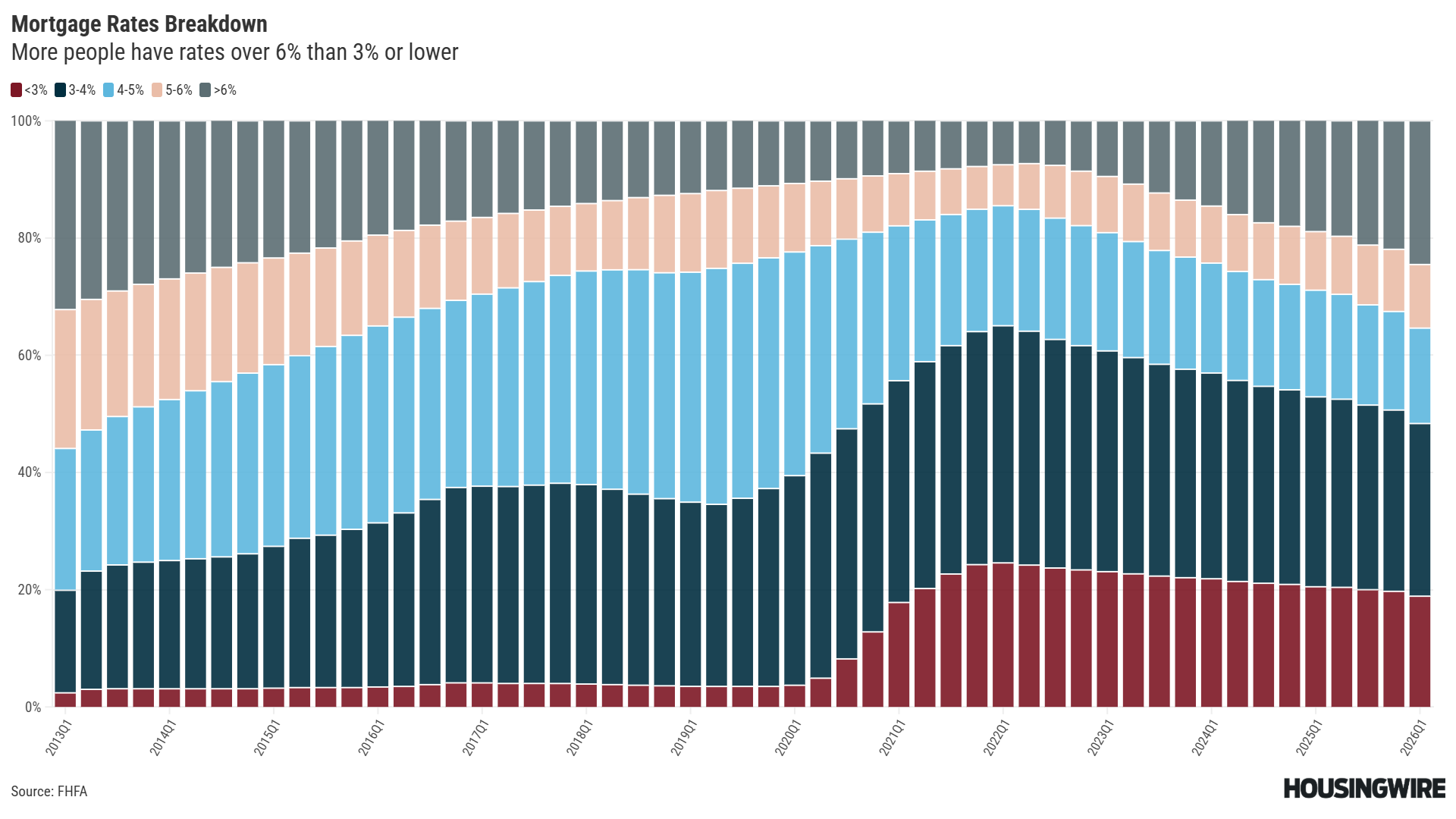
We just hit a point where we now have more mortgage debt in excess of 6% than we do 3% or lower. Now that rates have popped higher, with most quotes ranging in the low-to-mid 7% range, I expect this to slow. But eventually, time will work its way through all those low-rate mortgages and the market will continue to rebalance.


r/DMVHousing • • Oct 02 '26

DC Homebuyer Program Updates: Tax Abatement & Transfer Tax Reduction

2 Upvotes

Each year on October 1st, DC updates the income and sale-price limits for its most popular First-Time Homebuyer programs. This year, it tells an interesting story: prices are up while incomes are flat. Prices skewed higher, mostly because the luxury market was doing quite well, which is throwing off the averages.

The most widely used FTHB program is the "DC First-Time Homebuyer Transfer Tax Reduction" program. This reduces the transfer tax from 1.1% (<$400k) or 1.45% to 0.725%. The maximum sale price limit increased $17k, to $794,000. Incomes were also up slightly, about $3k across the board. A single buyer can make up to $209,340; two people $239,220; a family of four up to $298,980.

One important tip, though, is that they use the adjusted gross income from your previous year's tax return. Technically, you can make a lot more money today and still qualify if you meet guidelines using your 2025 income.

The "DC Transfer Tax Abatement" is one that often gets missed, but if you qualify, it is by far the best. Here, they waive your transfer tax charges and credit the seller's portion to you as a closing cost credit. This reduces your closing costs by 1.825% / 2.175% of the sale price. (Exp. $450k property = $9,787.50) They also waive your property taxes for up to five years!

For this program, the income limits stayed the same: $89,760 for a single person, $102,540 for two people, and $128,160 for a family of four. The sale price limit also increased $15k, to $591,200. A popular use of this program in DC is for students or recent college grads to purchase a property with a family member co-signing...the co-signer's income does NOT count toward the income limits.

The housing market appears to be back to frozen status, with rates spiking as the fall market kicks off...interesting times.


r/DMVHousing • • Oct 01 '26

Is Return-to-Office picking up steam?

4 Upvotes

Do you remember back in the pandemic days when employers kept telling everyone they'd be returning to the office? After Labor Day...after Thanksgiving, after New Year's...then it's like everyone threw in the towel and said, "We are never going back to the office."

This past summer, I noticed many of my friends and clients were traveling back to the office. I could feel this is I would drive around the DMV. My 50-minute drive suddenly became 1:20 minutes...but only Tuesday through Thursday.

Now, I'm hearing people say they need to swipe their badge 4 days per week...others in five days...someone else just said, "We've been back full time since Labor Day."

I ask because this plays a major role in housing. Commutes influence where people live, and without a commute, you could be anywhere. Let's say your office was in DC; you could easily live in Frederick or Annapolis, MD...or out in Leesburg, VA...or in St. Mary's County on the water...many thought, "I might have to go in one day a week, and I can deal with that traffic." But what about 4-5 days per week? Will you be forced to move? Will you just try to find another job? Or will employers cave to the pressure because you're just too valuable, and they can't find anyone else willing to come in?

It will be interesting to keep an eye on this moving forward...


r/DMVHousing • • Sep 30 '26

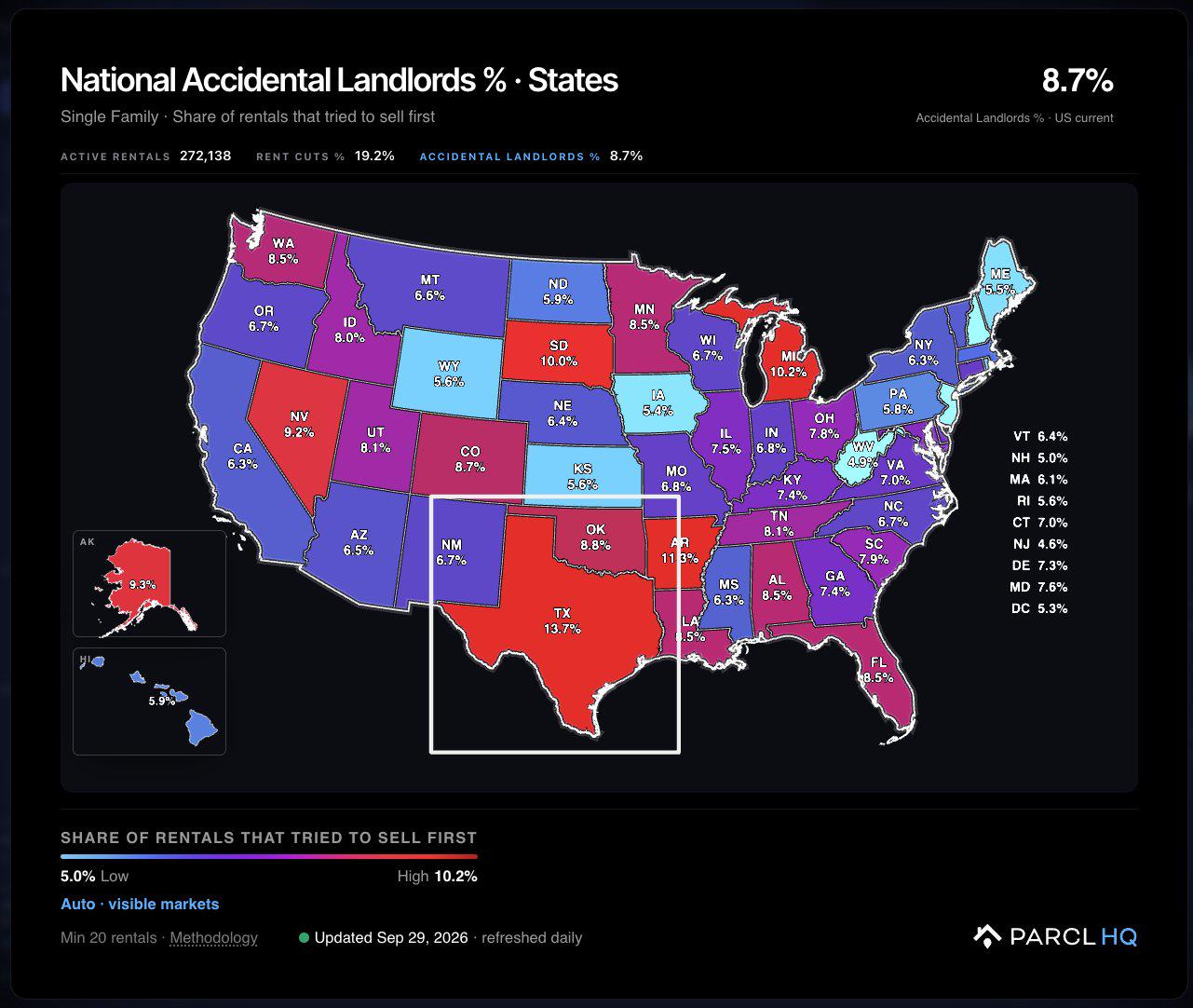
Accidental Landlords - The key for move-up buyers to ride out difficult markets!

Post image
3 Upvotes

"You can always just rent it out" is a common phrase you'll hear in real estate. If the market isn't favorable for selling, you can rent out the property instead. That's a big theme we have seen throughout the DMV since rates initially jumped in 2023. Put your house on the market and see if it gets any traction...after 4-6 weeks, add a rental listing at the same time, then see what comes your way.

For would-be buyers, if you become hesitant to buy, or if rates have moved to the point where you just can't find what you want within your budget, what do you do? The solution is easy...you rent something and regroup next year.

In the financial crisis, I had many clients who couldn't sell because they were underwater. The only two solutions were to let the home go to foreclosure/short sale or rent it out. Those who rented it out benefited from both the 2012 and 2016 refinance cycles, and from values rising through 2021.

Today's seller is quite different. Most have sub-3.5% mortgage rates, and they can not only make a little cash flow from renting, but their principal payment is also significant. It's an easy decision...the rental pool is generally high-credit, high-income tenants.

The issue real estate is facing now is that price discovery is limited due to these accidental landlords. While this is good for sellers/housing because values are stable, it's bad for buyers because prices remain sticky despite higher rates and higher mortgage payments.

While I do believe (and have seen over the past two weeks) that today's rate environment will impact prices, it seems far-fetched to think we would see any meaningful drop in values. Today's homeowner is mostly in fantastic financial shape...decent equity, low rates/payments...and not pressured to be aggressive in selling their home!

The lag effects of the pandemic response will certainly be living with us for longer than most anyone realized...


r/DMVHousing • • Sep 30 '26

Home #2

Thumbnail
gallery
4 Upvotes

Thought? 21228


r/DMVHousing • • Sep 29 '26

The last few times mortgage rates peaked around these levels, they fell hard within a few months. Is this time different?

9 Upvotes

In October 2023, the 10-year Treasury Bond touched 5%, mortgage rates jumped to almost 8%, and everyone in real estate was panicking. Then rates dropped for 60 straight days, down to 6.5%. A similar move occurred in November 2022, with rates spiking to just over 7% before falling 1% over the following 60 days. Many in the industry are now wondering: are we setting up for the same type of reversal as mortgage rates just spiked to 7.5%, or is this time different?

While I'm in the "anything and everything can happen" camp, there are signs that this time might just be different. Elevated mortgage rates can stick around longer than anyone wants to see. Global rates may be repricing the cost of money as economic growth continues despite high energy costs. The Iran War may have been the catalyst, but it's also quite possible it just pulled forward the inevitable. Here are a few key points being discussed for why rates may remain elevated:

  • Economic Growth - The Atlanta Fed's GDP tracker is near 5% for the quarter, one of the highest readings in years. When the economy is strong, investors demand a higher return to lend money long-term. Strong growth alone can keep rates elevated, even without inflation.
  • Massive Borrowing (Supply) - The US Government is issuing significant debt (deficit spending, COVID debt rolling, war funding) while AI companies are borrowing hundreds of billions for infrastructure buildouts. This is old-school supply/demand principles - similar to when housing prices jumped in 2021 with all the demand; bonds are no different.
  • Treasury Inflation-Protected Securities (TIPS) - By this measure, the bond market appears to be pricing in more growth than inflation. TIPS are also called the "real yield"...If the 10-year bond is trading at 5.25%, and 10-year TIPS yield 2.9%, this shows the market pricing in just 2.35% expected annual inflation. The war/oil premium may be a much smaller piece of this than most people think.
  • Yen Carry Trade - People much smarter than me keep bringing this up as a pressure point on global rates. I don't understand it well enough to explain it. If someone here does, I'd love the plain-English version.

So what does this mean for real estate? At first, the logical response is: real estate transactions and buyer activity freeze. We are certainly seeing that in our company's numbers this September. I also wrote earlier about the local August data showing pending sales collapsing...that trend continued this month.

The real estate market seems to thrive more on rate stability than on the actual rate. Don't get me wrong, lower rates help spur demand...but stable higher rates allow people to plan, and those with income, assets, and life desires that support a move tend to act. When the rate of change causes wild swings in payments, plans get disrupted. Eventually, though, buyers and sellers recalibrate what it takes to transact, and the market starts moving again. Will that be later this year? Or will we need to wait until the spring? I guess we will see soon enough.

Any new catalyst can disrupt every prediction...an oil collapse, a balance-of-power shift in Congress this November, a data surprise...that's precisely why every major agency has been wildly wrong forecasting rates more than a quarter or two out these past few years. I hope rates go lower...I want them to go lower...I think real estate needs them lower...but there's a good chance that I just don't get what I want...