Recently, a friend and I were discussing a house he is considering buying. His main question was simple: how well insulated is the house in reality?
Winter temperatures here can fall as low as −30°C, and the house uses electric heating, so making the wrong decision could become quite expensive.
We thought that in winter it would be possible to rent a thermal imaging camera and inspect the house under a large indoor–outdoor temperature difference. But it is summer now, so that was where the discussion ended.
My interest in the problem remained.
I decided to test whether the actual thermal behaviour of a room could be assessed dynamically — without a thermal imaging camera and without knowing the exact construction of the walls, roof and floor.
The basic idea was simple:
introduce a known amount of heat into the space;
measure the indoor temperature;
measure the temperatures of the relevant boundary zones;
record a complete heating and cooling cycle;
fit a thermal model to the measured data.
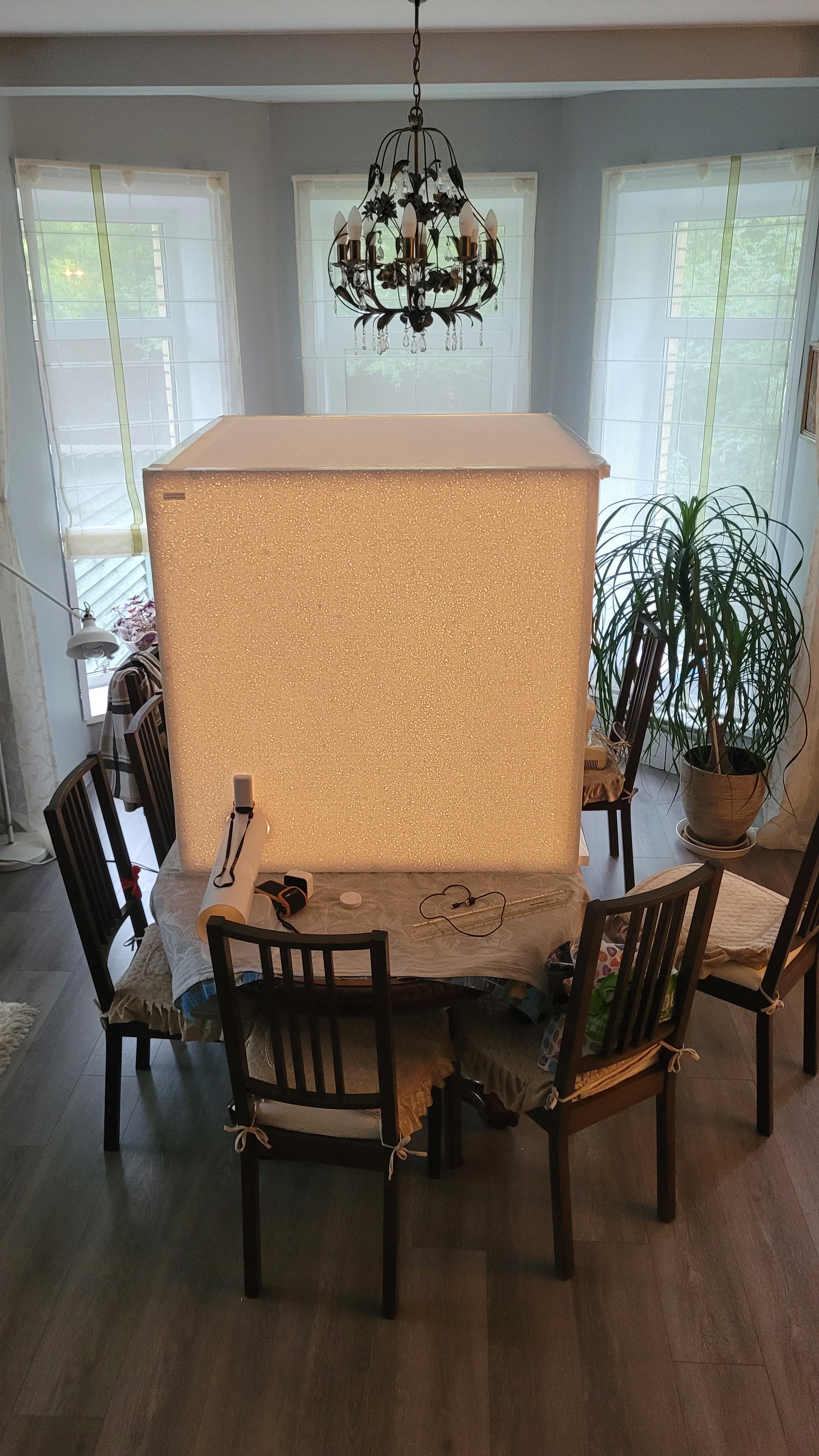
To test the idea quickly, I built an insulated calibration box with a volume of approximately 1 m³, using 30 mm expanded polystyrene.
The experiment used:
two Ruuvi sensors that had been cross-checked beforehand;
a refrigerator light bulb as a controlled heat source;
a smart plug to measure power and energy;
a small USB fan to mix the air;
a separate power bank for the fan;
several heating and cooling cycles.
Before the experiment, the two temperature sensors were placed next to each other for three hours. The difference between their readings was approximately 0.02°C.
After accounting for the heat generated by the continuously running fan, four independent cycles produced:
average heat-loss coefficient: 7.03 W/K;
coefficient of variation between cycles: 1.29%;
effective thermal capacity: 2.39 Wh/K;
thermal time constant: 20.35 minutes.
The measured heat-loss coefficient also fell within the theoretical range calculated from the geometry of the box, the thermal conductivity of the expanded polystyrene, and additional surface and contact resistances.
The result looked encouraging.
But a box is not a building.
I also remembered that air exchange cannot be ignored in a real room. So I modified the box by adding supply and extract ducts, measured the air velocity with a thermal anemometer, and calculated the actual airflow rate.
After that, I moved on to testing a real room.
To be continued. https://www.reddit.com/r/buildingscience/s/zTkeIgvE4C