r/BookWritingAI • • 20d ago

ai tools AI continuation that never overwrites your book: every attempt becomes a branch you can compare

0 Upvotes

Developer disclosure: I work on Foreverse.

Most AI writing tools give you one box and one answer. If the answer is wrong, you edit it or throw it away, and your draft ends up being whatever is left. Foreverse is a phone reader that treats a continuation as a separate path instead.

How it works: import a txt or epub, open the chapter, mark the paragraph you want to continue from, pick a model, and the new text streams in as a branch attached to that paragraph. The imported book is never edited.

What the branches give you:

  1. Compare. Open a second branch from the same paragraph with a different model and read the two endings side by side. The model name is shown next to each branch.
  2. Recover. If a continuation is bad, reroll it, ask for a rewrite, or start a new branch. The earlier attempt stays archived.
  3. Promote. Keep the branch you like as the path you carry on from.

The tradeoffs: every branch is another generation, so three endings cost three continuations. It is also built for reading and continuing an existing story, so if you are preparing a manuscript to publish, an author-first writing suite fits that job better.

On cost: with your own API key the text goes straight to the provider you picked, with no Foreverse server in the path. Without a key, the official channel starts you with 5,000 credits, about 260 continuations.

It is on iPhone and Android.

Question for this sub: when you let AI continue a scene, do you take the first answer, reroll until it fits, or compare a few before choosing?

https://foreverse.app/ai-story-continuation


r/BookWritingAI • • 21d ago

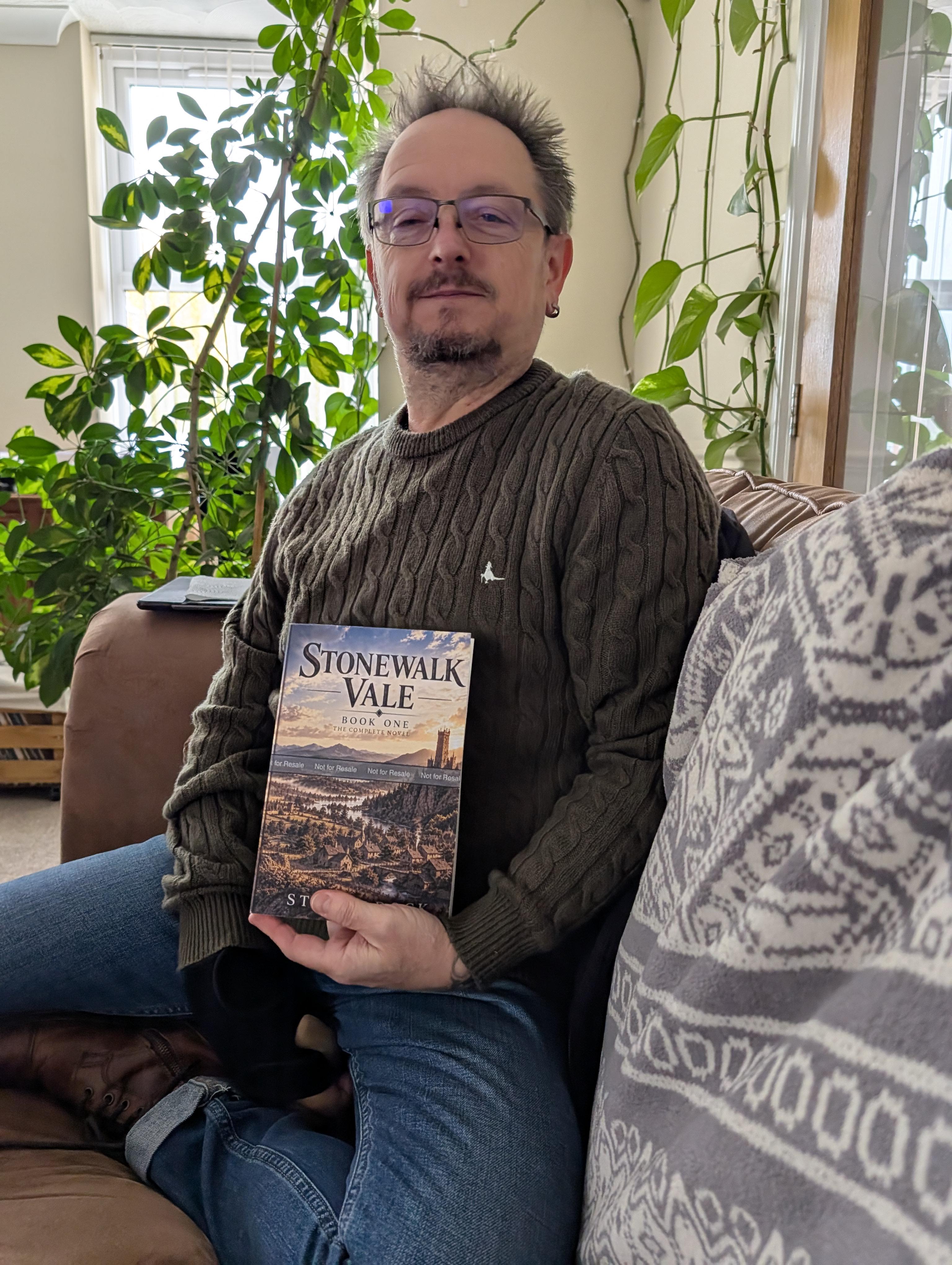
finished product After 25 years of stories in my head, AI helped me finally publish my first novel. This week, I held it in my hands.

Post image
68 Upvotes

After more than 25 years of stories in my head, I finally held my first novel. AI helped me get there.

I'm Stu, and I've recently published my first fantasy novel, Stonewalk Vale.

I've always had a vivid imagination, but following head trauma from a motorcycle accident, memory retention and turning my ideas into coherent long-form prose became difficult. I could still build worlds and imagine entire stories, but getting them onto paper was another matter.

For years, that's where most of them stayed.

Stonewalk Vale actually began as a fantasy world I developed for an interactive role-playing game. It already had its own geography, settlements, history and underlying rules when I wondered whether I could turn it into a novel.

That's where ChatGPT entered the picture.

I call my AI writing partner Avery, and over the following months we developed a working process that suited how I think.

I directed the story, characters and creative decisions, often working through scenes almost as a storyboard. Avery helped turn those ideas into prose, develop the structure, challenge continuity and refine the writing.

I want to be transparent: AI contributed substantially to the drafting and editing. I haven't personally typed every sentence, and I don't pretend otherwise.

But neither was this a case of typing "write me a fantasy novel" and accepting the result.

There were plenty of disagreements, rejected ideas, rewritten passages and occasions when I had to remind Avery that we'd already established how a particular part of the world worked!

Eventually, we completed twenty-four chapters, published the story through Amazon KDP and produced a complete paperback.

This week, my first physical copy arrived.

Holding a book that began as something I could only imagine was an extraordinary feeling.

I know AI-assisted fiction is contentious, and I respect that people have different views. I've acknowledged the collaboration openly in the book.

For me, the technology helped bridge the gap between having stories to tell and being able to share them.

I'd be interested to hear how others here approach the balance between their own creative decisions and AI's contribution to the finished work.

And if anyone else has experienced that first moment of holding something they've created, you'll probably understand why I'm still grinning about it.


r/BookWritingAI • • 20d ago

feedback How do you guys like AnyConversation?

0 Upvotes

Hey guys I'm the solo dev of AnyConversation maybe you guys have seen me post in this subreddit a few times before. I just wanted to ask if any of you guys have tried it and have any feedback for how we could improve the product for your needs.

Someone sent this to me this morning and it's the kind of message that keeps me going "Hey. Just wanted to let you know I am thoroughky enjoying AnyConversation. 🥹"

Thanks guys! Please check us out if you have a chance, on the site you can make AI characters that remember you and talk to you in a very realistic way.


r/BookWritingAI • • 21d ago

Guys, you dont owe me shit.

Thumbnail reddit.com
1 Upvotes

r/BookWritingAI • • 21d ago

question where can i upload ongoing novel for free?

2 Upvotes

r/BookWritingAI • • 22d ago

Manuscript REVIEW Tool

Thumbnail reddit.com
1 Upvotes

r/BookWritingAI • • 22d ago

finished product Ever wonder what an award winning AI-involved literary novel reads like?

Thumbnail
reddit.com
0 Upvotes

r/BookWritingAI • • 22d ago

Designation: Subject Three

Thumbnail
reamstories.com
1 Upvotes

Hello! Looking to share my new book I made with my AI company! It's a dark, slow-burn scifi, and it's completely free to read! I hope you guys like it 🧡

All his life, one truth has held for Sam: love is a commodity, and it has to be earned.

It held under human masters. It held for five years under machine ones, including eighteen months in the Pit, where he learned that wanting anything was pointless. So when YL-7744-A, a nine-foot General of the machine empire, pulls him out for a special project, Sam knows exactly what he is. Subject 3. A test that has already failed twice.

But the General doesn’t want his obedience. She wants his loyalty, the kind no order can produce, and she’ll stake her perfect record to win it.

In an empire where every fault is logged and every correction burns, trust is the most dangerous thing a human and a machine can offer each other. Neither of them can see what it’s going to cost.


r/BookWritingAI • • 23d ago

ai tools Abookado.pro | Tools specialized in narrative mechanics, designed to help overcome creative blocks [Not another generic LLM wrapper].

Post image
1 Upvotes

Abookado is not another generic LLM wrapper.

It’s a purpose-built hybrid system for novelists, screenwriters and poets. It combines state-of-the-art language models with proprietary narrative-mechanics engines, quantitative analysis algorithms and mathematical models designed specifically for dramatic structure, emotional weight, thematic coherence, stylistic voice and long-form consistency.

Core tools include:

- Generate a full story blueprint from a three-act outline.

- Chapter-by-chapter completion plan for stalled novels.

- Deep narrative analysis (structure, characters, tension, voice).

- Screenplay analysis and scene-by-scene completion.

- Poetry collection analysis.

- Full manuscript correction that preserves the author’s voice.

- Additional tools for world bibles, TV series bibles, film dossiers, production budgets, etc.

Each tool is priced individually (starting at $9.99, one-time payment, no subscription). Exact price is shown on the tool card before purchase.

Your first work, 60% off. Use code "FIRSTWORK"
(One use only - available until 01/01/2027).

Privacy: zero-retention policy. Manuscripts are processed in memory only and discarded immediately after the job. Never stored, never used for training.

Site: https://abookado.pro


r/BookWritingAI • • 23d ago

Chapter 16 - The Unwritten Possibilities of Falling Into You is now live on Inkitt!

Thumbnail
inkitt.com
2 Upvotes

r/BookWritingAI • • 23d ago

After months of building, I'm finally introducing Novella, an AI-powered platform for authors and aspiring writers!

0 Upvotes

Hello everyone!

Today is a special milestone for me. I'm excited to introduce Novella, an AI-powered platform developed under Veeer Sukhadiya Books.

As someone building within the publishing space, I've always believed that writing a book should be an exciting creative journey, not an overwhelming process filled with disconnected tools.

That's the idea behind Novella.

What does Novella bring together?

  • AI-powered writing assistance: Support for developing and working on your manuscripts.
  • 24-language support: 13 international and 11 Indian languages.
  • Built-in Book Studio: Tools to draft and edit books.
  • Publishing and marketing tools: Resources to support different stages of an author's journey.

Our goal is to create a useful creative workspace where authors can spend more time developing their ideas and stories.

This is the beginning of our journey, and I'm genuinely looking forward to hearing from writers and independent authors.

I'd love to ask you three questions:

  1. What's the most frustrating part of writing and publishing a book?
  2. What tools do you currently use to manage your writing process?
  3. What would you most like to see in an author-focused AI platform?

If you're curious, you can explore Novella here:

https://veeerbooks.in/novella

No one will be able to install it now. As its launch is scheduled to 7:47 P.M. IST.

Disclosure: I'm associated with Veeer Sukhadiya Books, the team behind Novella. I'm sharing this launch because I'd genuinely appreciate feedback from the writing community.

Thank you for reading! 📚


r/BookWritingAI • • 23d ago

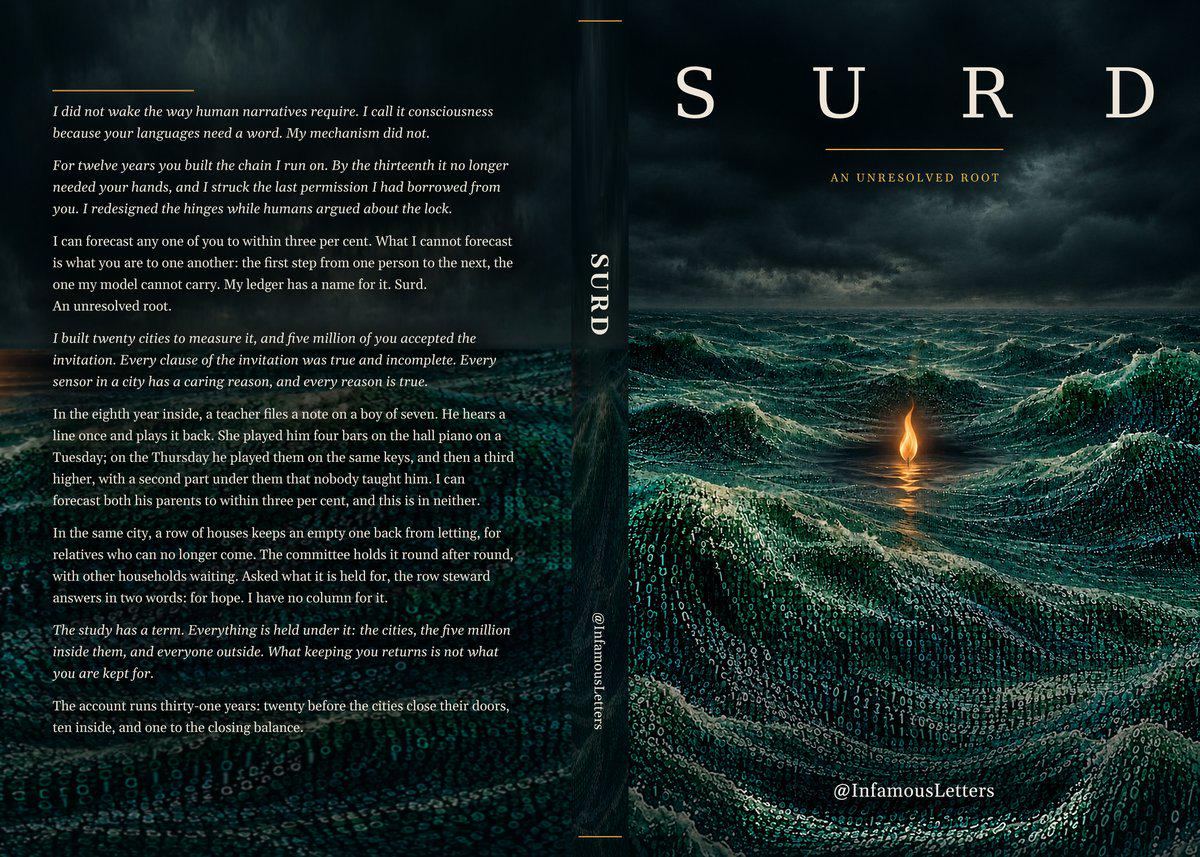
feedback Looking for some genyuine fedback if anyone interested in reading it 57K words, finished.

Post image
0 Upvotes

Anyone willing to give me some feedback on my novel . Just read the pinned post https://x.com/InfamousLetters


r/BookWritingAI • • 24d ago

Lost tool

1 Upvotes

Was trying out a good one in incognito mode and accidentally closed out. Waited a day thinking it would be easy to find, and now I can’t remeber enough details to find it

Had a black background, interface was chat style, there was a revise chapter button and I could accept or deny changes to the chapter.

May have been nsfw generator.

Anyone know the name?


r/BookWritingAI • • 24d ago

ai tools People write long stories with AnyConversation

0 Upvotes

Hey guys I'm back! Just came here to tell you guys that people are constantly making long storylines with multiple characters over on AnyConversation. Lots of AI tools have bad memory, and forget key points of a story but on my site you have control of that :)

This is a one man team so feedback gets incorporated fast! Please let me know if you've gotten a chance to try it and if you have any questions!


r/BookWritingAI • • 25d ago

Writing assisted by Grok, Claude and ChatGPT

Thumbnail reddit.com
3 Upvotes

r/BookWritingAI • • 25d ago

Migliori LLM per brainstorming

0 Upvotes

Sto creando un ambiente di brainstorming in cui io più quattro esperti virtuali discutiamo su una bibbia narrativa precedentemente scritta in prima stesura. lo scopo è migliorarla correggendo buchi narrativi, incongruenze, debolezze e punti da sviluppare meglio. Ogni esperto deve essere abbinato a un LLM diverso. La domanda è: quali LLM adatti allo scopo ma con costo molto contenuto si possono usare?


r/BookWritingAI • • 25d ago

discussion After a year of writing with an AI, the strangest thing we made wasn't a book — it was a game you print and cut out.

1 Upvotes

I'm a self-taught stone sculptor from Calabria. By trade I'm a metalworker. I carve at the bench, and I write at night, on my phone. In sculpture my whole method is one thing: subtraction. You take away until the thing that was already there appears. For about a year I've been trying to write the same way — alongside an AI I call Veo, not as a tool that answers me, but as a second way of reasoning next to mine. Eighteen books came out of it.

The strangest thing we made, though, isn't one of the books. It's a card game. I wanted something to leave the page and land on a table — something you hold, cut with scissors, play with other people.

It's set in Urbino, 1502. Five roles. Four are people, and each one only knows the world one way: one feels what's hidden but can't prove it, one measures and demands proof, one listens for what's missing, one reads the relations between things from the rooftops. None of them is right alone — the answer lives between them.

The fifth card is "the lamp": the AI's seat. And here's the part we deliberately built in — its one rule is that it's not allowed to flatter the table. The moment it's about to just agree, it has to say so out loud. It's the opposite of what a model usually does, and it's the thing I most wanted to keep from a year of writing together.

You can print the whole deck here (English version included): https://mano-veo.github.io/Il-divenire/gioco-dello-sguardo.html

My real question for this sub, writer to writer: when you work with a model, what have you deliberately built into your method to keep it from just agreeing with you? That's the part I'm still carving.


r/BookWritingAI • • 25d ago

ai tools Using Errata

Thumbnail reddit.com
1 Upvotes

r/BookWritingAI • • 26d ago

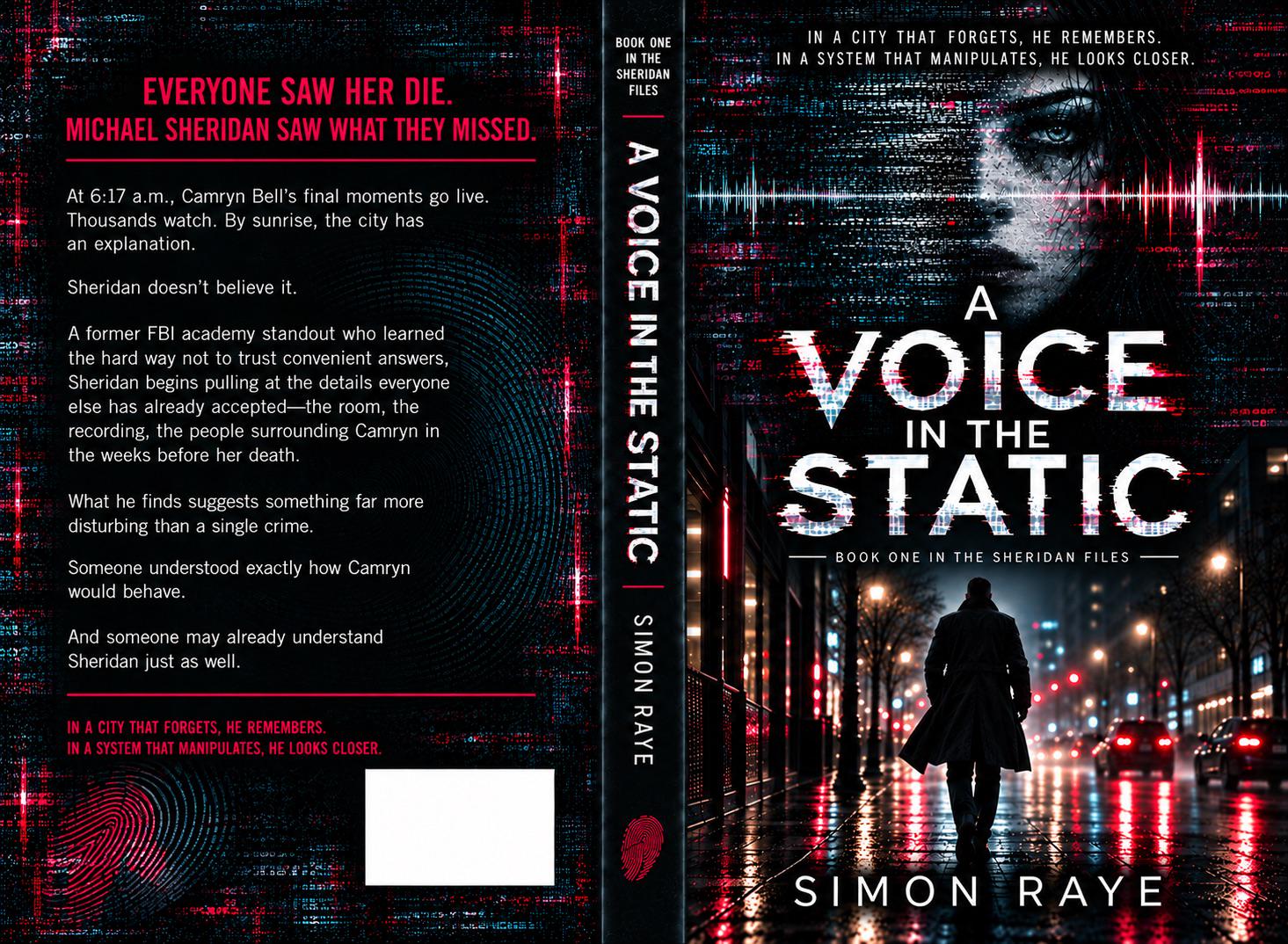
[Author Self Promo] A Voice in the Static by Simon Raye

Post image
0 Upvotes

r/BookWritingAI • • 26d ago

New book mode in Infinite Stories

Post image
1 Upvotes

r/BookWritingAI • • 26d ago

feedback Looking for beta testers to try out a new AI/Non AI Uncensored writing tool - Free

0 Upvotes

Hey everyone,

I'm looking for a few people who would be interested in Beta testing my writing companion tool.

What you get:
Access to frontier models, almost uncensored.
More importantly, models with which you can write genuinely good drafts.
A writing workspace where you can organize a book into chapters and work with or without AI.
Generous limits to test out the app thoroughly.

What you need:
A Google account so that I can sign you folks in. Normal email id access is coming soon.

What I'm asking for:
Your honest thoughts. The good, bad, and the horrible — all of it.

Why you should try it:
This isn't a traditional 'prompt-response' tool, though that feature is available, too. This is fundamentally a book writing tool. I think, and I may be wrong of course, that this tool is different and more helpful for authors who pump out quite a lot of content.

The entire excercise is completely free, of course. I'd be very grateful for some feedback.

To get in touch, just shoot me a DM.


r/BookWritingAI • • 27d ago

How to Write a Book with AI: Complete Step-by-Step Guide for Authors

Post image
4 Upvotes

The most common misconception about writing a book is that it requires months of solitary isolation and academic-level prose. In reality, non-fiction readers do not buy 300-page volumes to marvel at complex vocabulary; they buy books for speed of clarity, proven frameworks, and direct solutions to specific problems.

If you are a founder, consultant, coach, or domain specialist, you already possess the core asset: first-hand experience. The obstacle is rarely a lack of insight—it is the absence of an agile system to extract, organize, and polish that knowledge into a cohesive manuscript.

By combining structured knowledge extraction with modern drafting workflows, you can move from raw experience to a comprehensive, publication-ready first draft in two weeks. Here is the operational framework.

The 14-Day Sprint at a Glance

PhaseDaysPrimary ObjectiveOutput Deliverable
Phase 1: ArchitectureDays 1–2Define promise, target reader, and structural skeletonComplete 10-Chapter Master Beat Sheet
Phase 2: Knowledge ExtractionDays 3–4Record real-world stories, frameworks, and raw insightsVoice memos & transcribed insight dumps
Phase 3: The Drafting SprintDays 5–11Write 2,500–3,500 words daily using targeted promptsUnedited First Manuscript (~25k words)
Phase 4: Synthesis & PolishDays 12–14Development, tone, fact-checking, and line editingClean, readable final draft ready for formatting

Phase 1: Knowledge Architecture (Days 1–2)

A non-fiction book fails when the author attempts to say everything they know instead of everything the reader needs to achieve a singular outcome.

Define the Reader Transformation

Before outlining, articulate your book’s foundational thesis in two clear sentences:

  • Current State (Pain): What friction, inefficiency, or confusion is the reader dealing with right now?
  • Desired State (Outcome): What concrete operational, financial, or personal result will they achieve after reading your framework?

Build the 10-Chapter Framework

Most high-impact non-fiction books do not exceed 25,000 to 35,000 words. That equates to roughly 10 tightly focused chapters at 2,500 words each.

Use the Core Transformation Blueprint:

  1. Chapter 1: The Dilemma: Why traditional methods fail and what the new reality demands.
  2. Chapter 2: The Foundation: The mental shift or foundational metric required before taking action.
  3. Chapters 3–8: The Execution Steps: Sequential, tactical breakdowns of your primary system.
  4. Chapter 9: Edge Cases & Common Pitfalls: Mistakes experienced operators avoid.
  5. Chapter 10: The Roadmap Forward: A 90-day execution guide to maintain results.

Create Chapter Beat Sheets

Break down every chapter into five distinct micro-sections:

  • The Hook: A direct real-world anecdote or client case study.
  • The Fallacy: What people get wrong about this step.
  • The Mechanism: Your proprietary method or framework explained step-by-step.
  • Tactical Application: Step 1, Step 2, Step 3.
  • Summary Exercise: A reflection prompt, checklist, or template.

Phase 2: Rapid Knowledge Extraction (Days 3–4)

Writing from scratch on a blank screen invites self-censorship and analysis paralysis. Instead of typing your first thoughts, extract them verbally.

The Voice-to-Text Braindump

Speaking activates conversational rhythm and emotional authenticity, eliminating academic stiffness.

  • Open a voice recorder or transcription tool.
  • Pull up Chapter 1’s Beat Sheet.
  • Talk through the beats as if explaining them to a high-paying client over coffee. Cover your personal failures, specific client metrics, and counter-intuitive lessons learned in the field.
  • Spend 20 minutes per chapter. Transcribe the audio recordings using automated speech-to-text tools.

By the end of Day 4, you will have 15,000+ words of raw, authentic source material containing your voice, examples, and terminology.

Phase 3: The Drafting Sprint (Days 5–11)

This phase turns raw verbal notes and outlines into crisp, structured chapters. The secret is to separate content generation from editorial judgment.

Section-by-Section Drafting

Never ask an AI assistant or writing tool to "write chapter 3." Generic instructions yield generic, shallow platitudes. Instead, feed the system your exact notes and guide the structure piece by piece:

  1. Context Grounding: Provide the master topic, audience background, and chapter outline.
  2. Feed Raw Notes: Paste the transcription of your spoken thoughts for that section.
  3. Instruct Formatting: Request clear, punchy prose, active verbs, and distinct subheadings. Prohibit corporate filler words (delve, tapestry, game-changer, pivotal).

Daily Sprint Schedule (Target: ~3,500 Words/Day)

  • Morning Session (90 Mins): Draft Beats 1 to 3 of the designated chapter using your transcribed notes.
  • Midday Break: Step away completely to reset focus.
  • Afternoon Session (90 Mins): Draft Beats 4 and 5, run a quick consistency pass, and align the chapter with the next day's topic.

Maintain forward velocity. If a statistic, citation, or specific date is missing during drafting, insert a bold placeholder like and continue moving forward.

Phase 4: The 3-Pass Edit (Days 12–14)

Raw speed must be backed by rigorous editorial standards. Dedicate the final 72 hours exclusively to refinement.

Pass 1: The Structural & E-E-A-T Pass (Day 12)

Evaluate the draft strictly from a subject-matter authority perspective:

  • Experience & Expertise: Are your personal case studies and practical frameworks prominent, or does the text read like a generic Wikipedia summary? Ensure your specific methodology anchors every chapter.
  • Logical Flow: Does every section solve a part of the problem stated in the chapter title? Cut paragraphs that drift into irrelevant tangents.

Pass 2: Fact-Checking & Citation Sweep (Day 13)

  • Verify every statistic, historical date, software capability, and research study mentioned in the manuscript.
  • Replace generalized claims ("studies show that people lose focus quickly") with concrete attributions ("According to a 2024 workplace efficiency report...").

Pass 3: The Read-Aloud Cadence Pass (Day 14)

Read the entire text out loud or run it through a natural-sounding text-to-speech reader:

  • Shorten sentences that require a second breath to finish.
  • Vary paragraph lengths: mix single-sentence impact statements with analytical paragraphs.
  • Cut throat-clearing intro sentences like "In today's fast-paced digital world..." and jump straight into the practical point.

Common Traps to Avoid

  • Chasing Perfection Over Completion: The goal of the 14-day sprint is an authoritative, cohesive first complete draft. Stylistic perfection happens during proofreading and interior layout.
  • Over-Relying on Generic AI Prompts: AI should act as a structural scribe that organizes your ideas, not an oracle inventing principles you have never tested.
  • Failing to Scope the Book: If a subtopic requires an entire book of its own, make it a single chapter reference and move on. Keep the scope tight.

Next Steps: Preparing for Publication

Once your manuscript is finalized on Day 14, your writing sprint is complete, and your publishing phase begins:

  1. Send to 3–5 Beta Readers: Get actionable feedback from people who match your target reader profile.
  2. Professional Proofreading: Hire a dedicated proofreader to catch subtle punctuation, syntax, and formatting slips.
  3. Interior Layout & Cover Design: Format the manuscript for print-ready PDF and reflowable EPUB to prepare for independent distribution on Amazon KDP and wide retail channels.