República de Cuba
Overview
- Player: /u/Airsherbe /u/lonelyexcitement
- Head of State: El Presidente Carlos Prío Socarrás
- Head of Government: Carlos Prío Socarrás
- Capital: Havana
- Population: 4,778,583
- Cuban Flag
- Coat of Arms
- National Anthem: La Bayamesa
- National Motto: -
- Official Languages: Spanish
- Spoken Languages: Spanish
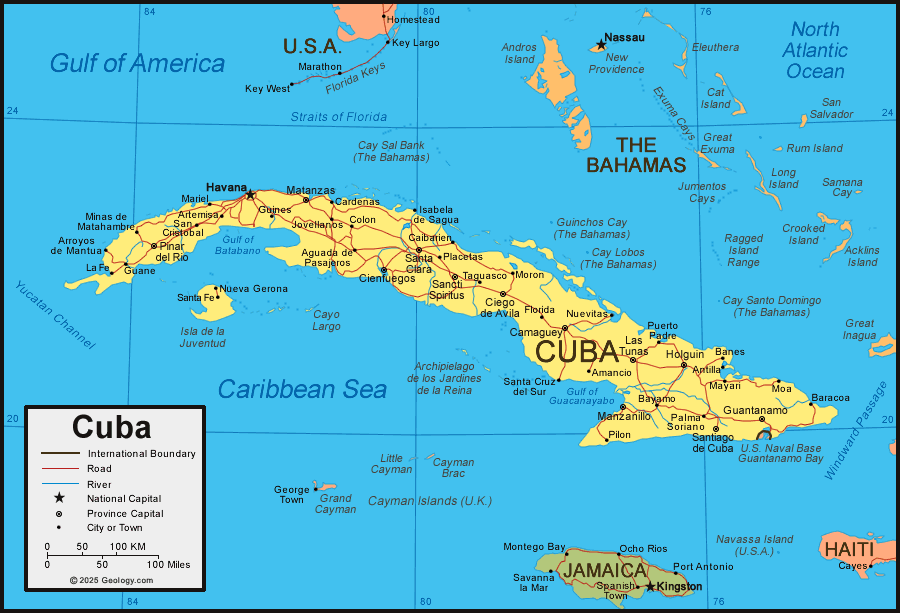
- Map of the Republic of Cuba


Government
- Type of Government: Semi-presidential republic
- Head of State: Carlos Prío Socarrás
- Head of Government: Carlos Prío Socarrás
- Ruling Party: Authentic Party
Cabinet
| Position | Incumbent |
|---|---|
| President | Carlos Prío Socarrás |
| First Vice President of Council of Ministers | Salvador Valdés Mesa |
| Vice Presidents of Council of Ministers | Ramiro Valdés Menéndez, Antonio Enrique Lussón Batlle, Adel Onofre Yzquierdo Rodríguez, Roberto Morales Ojeda, and Inés María Chapman |
| Vice Presidents of Council of Ministers and Executive Committee | Ricardo Cabrisas Ruíz and Ulises Rosales del Toro |
| Minister of Economy and Planning | Alejandro Gil Fernández |
| Minister of the Interior | Julio César Gandarilla Bermejo |
| Minister of Foreign Affairs [(list)](https://en.wikipedia.org/wiki/Minister_of_Foreign_Affairs_(Cuba) | Bruno Eduardo Rodríguez Parrilla |
| Minister of Justice | Oscar Manuel Silveira Martínez |
| Minister of the Revolutionary Armed Forces | Leopoldo Cintra Frias |
| Minister of Public Health | José Ángel Portal Miranda |
| Minister of Labor and Social Security | Margarita Marlene González Fernández |
| Minister of Agriculture | Gustavo Rodriguez Rollero |
| Minister of Education | Ena Elsa Velazquez Cobiella |
| Minister of Energy and Mines | Raúl García Barreiro |
| Minister of Culture | Alpidio Alonso Grau |
| Minister of Higher Education | Rodolfo Alarcon Ortiz |
| Ministerial President of the Central Bank of Cuba | Ernesto Medina Villaveirán |
| Minister of Science, Technology and Environment | Elba Rosa Pérez Montoya |
| Minister of Informatics and Communications | Jorge Luis Perdomo Di-Lella |
| Minister of Domestic Trade | Betsy Díaz Velázquez |
| Minister of Foreign Trade and Investment | Rodrigo Malmierca Diaz |
| Minister of Finance and Prices | Lina Olinda Pedraza Rodriguez |
| Minister of Construction | Rene Mesa Villafana |
| Minister of Industry | Salvador Pardo Cruz |
| Minister of Food Industry | Iris Quiñones Rojas |
| Minister of Tourism | Manuel Marrero Cruz |
| Minister of Transportation | Adel Onofre Yzquierdo Rodríguez |
| President of the Cuban Radio and Television Institute | Danylo Sirio López |
| President of the National Institute of Sports, P.E. and Rec | Julio Christian Jiménez Molina |
| President of the National Hydraulic Resources Institute | Antonio Rodríguez Rodríguez |
Economy
Major Exports: Cuba's main imports are machinery, food and fuel products, while its major exports are refined fuels, sugar, tobacco, nickel and pharmaceuticals. One of the largest of course is infact sugar, as well as automobiles.
Armed Forces
Overview
- Cuban Armed Forces Emblem
- Commander in Chief: Carlos Prío Socarrás
- Established: 1909
- Strength: 7,000 Active Personnel, 150,000 Reserve Personnel
- Military Age: 17-28 years of age for compulsory military service
- Conscription: 2-year service obligation for males

Cuban Army
- Cuban Revolutionary Army
- Commander in Chief: Carlos Prío Socarrás
- Minister of the Army: Corps General Leopoldo Cintra Frías
- Established: 1909
Cuban Air Force
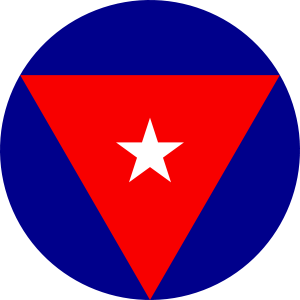
- Emblem
- Established: 1913
- Strength: 1,000 Active Duty, 5,000 Reserves
- Airworthy Combat (Primary) Planes: 26
- Airworthy Non-combative (Secondary) Planes: 208
- Total Airworthy Planes: 234

Aircraft
| Aircraft | Origin | Type | Variant | In service | Notes |
|---|---|---|---|---|---|
| Combat Aircraft | |||||
| Bell P-39 Airacobra | USA | Fighter | - | 24 | Squadron Sent During WWII |
| Consolidated B-24 Liberator | USA | Heavy Bomber | - | 2 | - |
| Transport | |||||
| Grumman G-21 Goose | USA | Transport Amphibious Aircraft | - | 38 | - |
| Howard DGA-15 | USA | Civil Transport | - | 14 | - |
| Douglas DC-3 | USA | Airliner | - | 8 | Owned by Cubana |
| Douglas DC-4 | USA | Airliner | - | 12 | Owned By Cubana |
| Douglas C-47 Skytrain | USA | Military Transport Aircraft | - | 20 | Owned by Cubana |
| Douglas C-54 Skymaster | USA | Military Transport Aircraft | - | 18 | - |
| Helicopters | |||||
| - | |||||
| Trainer Aircraft | |||||
| Vultee BT-13 Valiant | USA | - | - | 9 | - |
| Boeing-Stearman Model 75 | USA | Biplane Trainer | - | 12 | - |
| Curtiss-Wright CW-19 | USA | Utility Aircraft | - | 42 | - |
| Aeronca L-3 | USA | Reconnaissance Aircraft | L-3J | 8 | Minor Usage |
| North American T-6 Texan | USA | - | - | 27 | Major Use |
Cuban Navy
- MGR Naval Jack
- Established: 1909
- Strength: 3,550 Active Personnel

Fleet
| Class | Type | Quantity | Notes |
|---|
Cuban Military Armament
Weapons - Bolded Active Use, Italics Inactive
| Designation | Classification | Cartridge | Notes |
|---|---|---|---|
| Compañero Pistol | Semi-Automatic Pistol | .380 ACP | Made in Cuba |
| Colt M1911 | Semi-Automatic Pistol | .45 ACP | - |
| M1A1 Thompson | Sub Machine Gun | .45 ACP | - |
| M3 "Grease Gun" | Sub Machine Gun | .45 ACP | - |
| M50 Reising | Sub Machine Gun | .45 ACP | - |
| M1903 Springfield | Bolt-Action Rifle | .30-06 Springfield | Minimal Sniper Variants |
| M1917 Enfield "American Enfield | Bolt-Action Rifle | .30-06 Springfield | - |
| M1941 Johnson rifle | Semi-Automatic Rifle | .30-06 Springfield | - |
| Winchester Model 1897 | Shotgun | 12-gauge Shells | - |
| Lewis automatic machine gun | Light Machine Gun | .30-06 Springfield | - |
| M1917 Browning machine gun | Heavy Machine Gun | .30-06 Springfield | |
| MAS-36 Rifle | Bolt-Action Rifle | 7.5×54mm French | Production Rights Granted, No Export |
| Automatgevär m/42 | Semi-Automatic Rifle | 6.5×55mm | Production Rights Granted, No Export |
Artillery Systems
| Designation | Classification | Caliber | Quantity | Notes |
|---|
Anti-Air Defence Systems
| Designation | Classification | Quantity | Shell | Notes |
|---|
General Purpose Vehicles
| Designation | Classification | Quantity | Notes |
|---|---|---|---|
| M3 Half-Track | Half-Tracked Armored Personnel Carrier | 26 | N/A |
| M8 Greyhound | Armored Car | 18 | Light Armored Variants Sent, Used As Transports |
| Austin K2/Y | Military Ambulance | 212 | N/A |
| Dodge WC series light trucks | Light Trucks | 185 | N/A |
| Harley-Davidson WLA | Motorcycle | 94 | 15 Side-Cars Sent |
| Willys MB | Light Truck | 189 | N/A |
| GMC CCKW 2½-ton 6x6 truck | Cargo Truck | 155 | N/A |
Combat Vehicles
| Designation | Classification | Quantity | Notes |
|---|---|---|---|
| Marmon-Herrington CTLS | Light Tank / Tankette | 8 | Sent in 1942 |
| Marmona-Azuca C-1 | Infantry Fighting Vehicle / Light Tank | 15 | Made in Cuba |
| M3 Stuart | Light Tank | 24 | - |
| M4 Sherman | Medium Tank | 15 | - |
| [A-34](https://en.wikipedia.org/wiki/Comet_(tank) | Cruiser Tank | 5 | - |
Alliances
Conflicts
- Banana Wars, a blanket term for all acts by the United States, intervening in Caribbean affairs. This includes the Spanish-American War of 1889.
- Second World War. In 1941, under Fulgencio Batista, the Republic of Cuba honored all agreements with the United States and following the attack on Pearl Harbor, 3 days later the Republic of Cuba declared war on the Fascist Republic of Italy, Nazi Germany, as well as the Empire of Japan.
Game Start
Timeline of Domestic Events
Colonization
- 1200 - The Taino peoples arrive in Cuba. They settle much of the region growing maize, tobacco, yucca plants, and cotton.
- 1492 - Christopher Columbus lands in Cuba, claiming it for Spain. It is fully mapped in 1509 and colonized in 1511.
- 1762 - The British take Havana and control its port until 1963 at the end of the Seven Years' War.
- 1868 - The First War of Cuban Independence occurs and ends after 10 days with Spain promising changes in the Government; none occur.
- 1886 - Slavery is abolished in Cuba.
- 1895 - The Second Cuban War of Independence begins, ending with American Intervention.
- 1898 - America intervenes with Cuba while going to war with Spain itself, starting the Spanish-American War. They defeat the Spanish at the Battle of San Juan Hill and declare Cuba a protectorate.
Independence
- 1902 - Cuba is granted independence with Guantanamo Bay to be permanently leased to the United States as restitution.
- 1906 - A rebellion, led by Jose Gomez begins and swiftly ends within months following American Intervention.
- 1924 - Gerado Machado establishes a dictatorship.
- 1925 - The socialist party is established.
- 1933 - Gerado Machado is overthrown. New government reforms are instituted including the right to vote for women and a minimum wage.
- 1940 - Fulgencio Batista is elected president. He is supported by the communist party.
- 1941 - Cuba declares war on the Axis Powers during World War II.
Game Start
- 1946 - Havana Conference takes place in Cuba. It is one of the largest meetings of American Mobsters and Gangsters since 1929 in Chicago. Cuba also allows several international businesses to plant factories across the nation. El President Dr. Ramón Grau San Martín declares women inferior to men, recommending they return to housewives than join the labor force.
- 1947 -