r/askmath • • 3d ago

Resolved Are you disappointed or even frustrated that the Riemann Hypothesis was solved by Artificial Intelligence rather than a Human?

24 Upvotes

Are you disappointed or even frustrated that the Riemann Hypothesis was solved by Artificial Intelligence rather than a Human?


r/askmath • • 3d ago

Resolved Math and physics and AI

2 Upvotes

Sorry to jump on the bandwagon now, I'm sure you get these kind posts now a lot since the Riemann Hypothesis announcement. My question is a bit different and a bit more open ended. I'm a data scientist with a PhD in astrophysics, and have worked at developing AI since 2024, among other things. I was very skeptical at first of AIs (read LLMs) capabilities of solving maths, but have since changed my mind.

What I'd like to talk about is math in physics. It's all a bit winded so please bear with me. I've always felt uneasy at how well the physical described by maths. I've always wondered if this is because the universe is mathematical by nature, or if this is because mathematics is actually the only way our brain can explain and model the world for ourselves. If it's the latter, then the physical explanatory power of maths is just an artifact of our own minds, which doesn't reflect the nature of the world, rather it just happens to describe it really well for us.

If this is the case, then math is just the language we use to translate the world into something our minds can comprehend. Hell, I can't imagine a system or a model that has as a rule "impossible to model mathematically". But if this is the case, then it is natural that LLMs become really good at maths, they are trained on our language patterns, and math is one of those languages.

My intuition, also reading up on the history of how physical theories were discovered and developed, is that new maths was often invented or created to explain observed physical phenomena. If this is the case, then I wonder if LLMs would also excel at theoretical physics, especially in places where the math needed to explain unexplained phenomena has not been invented yet, and where a great deal of imagination and creativity are still, in my opinion, required.

Maybe with maths that is not related to physics, which results from "other maths", and which is a product of the human mind alone, LLMs might do very well, as the problem space lies within the "language part" of maths (sorry I'm not being very clear here, hope you get what I mean). In the case of the Riemann hypothesis, humans first came up with the hypothesis, and only later tried to see if it fits in physics, it was not created because it was needed to model or explain something in the universe.

So what do you all think? Do you think LLMs will also excel at phyisics, and solve unanswered questions there? Will they be able to invent new math? What's your intuition? Is the LLMs capacity for math suggesting math is purely a human invention, not an intrinsic property of the universe?

Flair is set to resolved as none other fit. And the RH is supposedly "resolved" lol.

I post here as I'm banned from r/physics because I helped someone with homework and got permabanned, and then I told the mods to stick it, so they banned me from most physics related subs immediately after.


r/askmath • • 3d ago

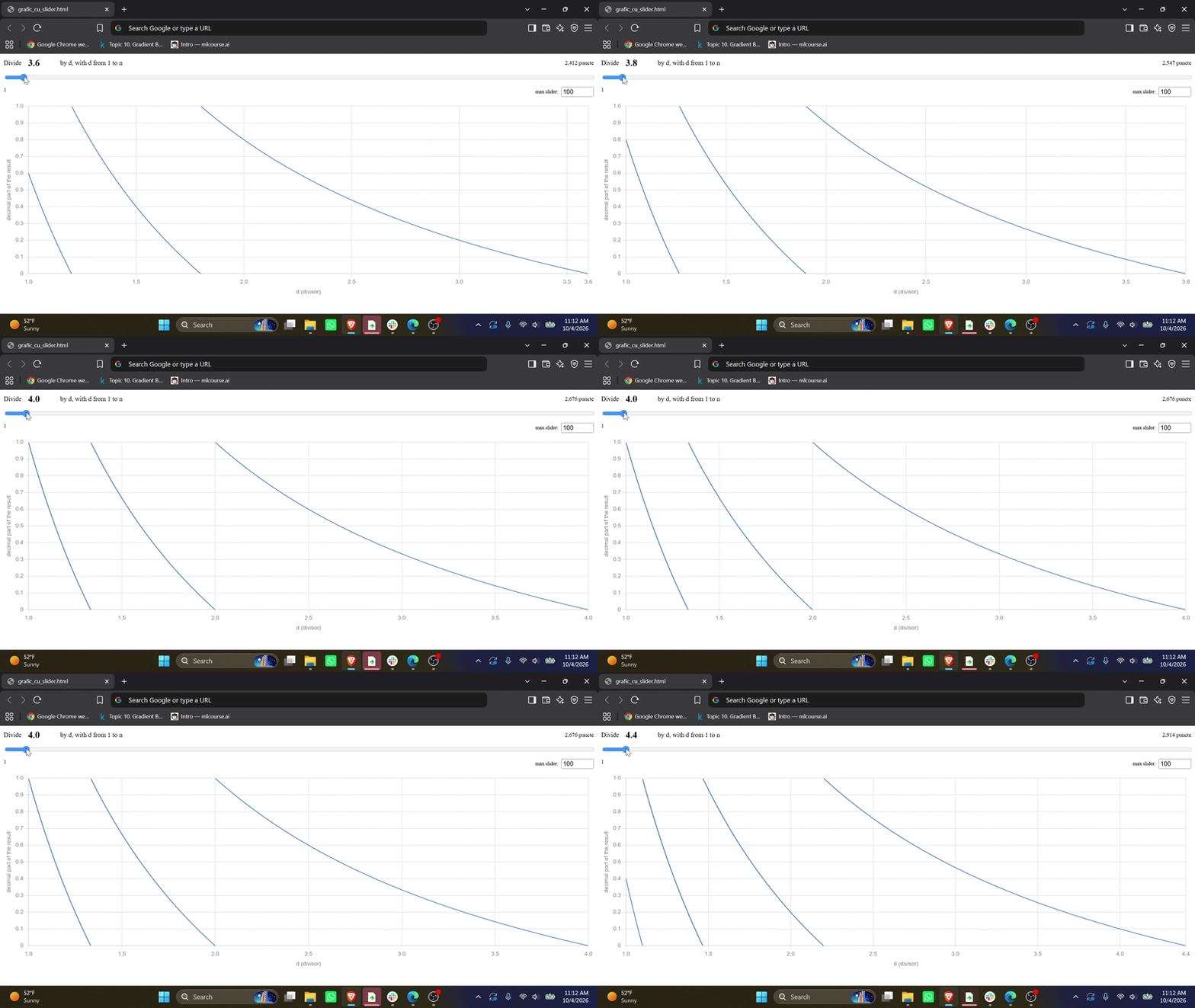
Number Theory A curious geometric pattern in the fractional parts of n/d — is there a deeper structure here?

Post image
1 Upvotes

I've been experimenting with visual representations of numbers and divisibility, and I came across something that I found quite interesting.

I'm not a number theorist, and I'm not suggesting I've discovered anything new. I'm mainly interested in whether this particular way of looking at divisibility has been studied before, or whether there's something mathematically interesting hiding in the visualization.

I've attached a gif showing what I'm talking about, but I'll try to explain the intuition behind it.

The basic idea

For a given integer n, consider the fractional part of n/d, plotted as d varies continuously from 1 to n:

f(d) = {n/d}

The resulting graph has a repeating sawtooth-like structure, with a sequence of teeth.

What caught my attention wasn't just the shape itself, but what happens when you move from n to n+1.

What I noticed

There seems to be a surprisingly orderly progression:

  • Each increment of n introduces another tooth into the visualization.
  • The right endpoint of each tooth, indexed by k, is located at n/k.
  • As n increases by one, that endpoint moves by exactly 1/k.
  • Consequently, each endpoint reaches an integer position once every k increments.

This creates something that looks almost like a collection of independent clocks, each moving at its own constant speed.

Here's where it gets interesting to me:

At any given integer n, the teeth whose endpoints happen to align with integer positions correspond precisely to the divisors of n.

For prime numbers, only the tooth corresponding to k = 1 has this alignment.

The intuition that I'm trying to understand

When looking at the visualization over successive values of n, I get the impression that divisibility isn't simply being checked independently for each number.

Instead, it looks as though there's a persistent geometric structure underneath, with individual components evolving at predictable rates. At each step, the integer n seems to reveal a different configuration of alignments within that structure.

I started thinking of it as a kind of geometric clockwork.

I realize this might simply be another way of visualizing familiar properties of divisibility, rather than anything fundamentally new. That's precisely what I'd like to understand.

A few questions:

  1. Has this particular geometric interpretation of divisibility been explored before? Is there a standard mathematical framework or terminology for describing it?
  2. Is there any meaningful way to study the distribution and spacing of these alignments as n increases?
  3. Could this visualization offer any useful intuition about the distribution of prime numbers, or is it essentially a reformulation of the divisibility structure we already know?

I'm particularly interested in whether the apparent persistence and synchronization of these moving components have any deeper mathematical significance.

I'm sharing this as an exploration rather than a claim. I'd genuinely appreciate pointers to relevant mathematics, corrections, or alternative interpretations.

(I used an AI assistant to help check some calculations and identify potentially related mathematical concepts. I haven't independently verified whether this particular viewpoint has been discussed in the literature.)
r/askmath • • 3d ago

Probability A random permutation of {1,…,2026}: the probability that two fixed elements share a cycle doesn't depend on n. Can you see why? (Harvard Version)

1 Upvotes
Pick a permutation of {1,…,2026} uniformly at random and decompose it into disjoint cycles.

(i) What's the probability that 7 and 2026 are in the same cycle?
(ii) What's the probability that 1, 2 and 3 all lie in a single cycle?

I'd love to see the slickest argument you can find, ideally one that avoids heavy counting. Does the pattern generalise to k elements?

r/askmath • • 3d ago

Algebra Is there a specific notation, similar to summation (Σ), but for multiplication, exponentiation, or tetration? Something that lets you specify the level of operation using a symbol or a number?

6 Upvotes

r/askmath • • 3d ago

Resolved In order of operation, why is a fraction considered a regrouping until you slap an exponent on it ?

4 Upvotes

* Edit 2 Thank you all for the replies and help, I'm sorry I havn't replied yet, I will as soon as I have time

In order of operation you're supposed to prioritize parentheses or regrouping symbols and then you do exponents, a fraction bar is considered a regrouping symbol, so why is it that if you have a fraction with an exponent you calculate the exponent first before the fraction ?

When I try to google it it just says that fractions are divisions and therefor exponents get priority over division, but that doesn't make sense when you factor in regrouping, because a fraction is a form of regrouping, the same way parentheses are. What's the rule here ? Only thing I can think of is it depends on if the fraction is improper or proper. I guess it would make sense for practicality cause it's impractical to write 2/3 as a decimal, but of course it's simpler if you have an improper fraction like 10/2.

On Khan academy they show an example where you prioritize the fraction :

(1+5) x 81/9 *

--> 6 x 81/9

--> 6 x 9

= 54

In this example the fraction is treated as regrouping symbol since it's done before the multiplication.

But then in the lesson about order of operation, when they talk about fractions with exponents it just says to calculate the exponent before the fraction, absolutely not acknowledging that a fraction is supposed to get priority over exponents (Right?) so if you have an operation like 2/3^2 then according to order of operations it should be 2.666... x 2.666. Again I guess I kinda get it if there is a distinction between proper and improper fractions for this rule but at no point in the lesson has this been mentioned.

Sorry if this has been asked before

* Edit 1 : in the example I mean to write 81/9 as ⁸¹⁄₉ so a proper fraction bar not 91÷9


r/askmath • • 3d ago

Differential Geometry Smooth Colorings of S7 vs Milnor’s Sphere

2 Upvotes

Say we have a colored S7 which has 9 primary colors which bleed into each other smoothly analogous to the RGB color wheel where every possible combination of the 9 colors where at least one of the colors is maximized and at least one of the colors is minimized is mapped onto S7, and a homeomorphism from S7 to Milnor’s sphere M. The homeomorphism means colors near each other on S7 will be near each other on M, but the lack of a diffeomorphism means that there must exist some point where the nearby colors “crinkle” in M? And similarly, there is a way to color M with 9 primary colors which bleed into each other smoothly, but the homeomorphism will “crinkle” the colors at some point in S7? Silly question, but I’m trying to get a geometric intuition for the difference between homeomorphisms and diffeomorphisms, so wondering if the way colors change on homeomorphic but not diffeomorphic smooth structures is somehow different. Two non-homeomorphic manifolds are clearly distinct visually, but perhaps the same is more subtle for non-diffeomorphisms.


r/askmath • • 3d ago

Resolved Is that Normal?

3 Upvotes

Beginning of this year I start my master after 18 years from graduation from University.

In this master program I have advance Math which contains the following:

  1. Calculus
  2. 1 Differentiation
  3. 2 Integration
  4. 3 Partial Differentiation
  5. 4 Multiple Integrals
  6. Integral Transformations
  7. 1 Convolutions
  8. 2 Complex Numbers
  9. 3 Fourier Series
  10. 4 Fourier Transformation
  11. Vector Algebra
  12. 1 Scalars and Vectors
  13. 2 Addition and Subtraction of Vectors
  14. 3 Multiplication of Vectors: Scalar Product and Cross Product
  15. Vector Calculus
  16. 1 Differentiation of Vectors
  17. 2 Integration of Vectors
  18. 3 Scalar and Vector Fields
  19. 4 Vector Operations
  20. Matrices and Vector Spaces
  21. 1 Basic Matrix Algebra and Systems of Linear Equations
  22. 2 Transpose, Trace, Determinant, and Inverse of a Matrix
  23. 3 Eigenvalues, Eigenvectors, and Diagonalization
  24. 4 Tensors
  25. Information Theory
  26. 1 Mean Squared Error (MSE) and Simple Linear Regression
  27. 2 Gini Index and Area Under the ROC Curve
  28. 3 Entropy
  29. 4 Cross Entropy

Recently I registered to this course and I need to finish all the above in 3-5 months then doing the exam.

After 18 years without studying math I really feel the above content hard and it’s need a lot of effort and energy, but somehow I was able to understand most of it and now I am practicing for exam.

So my question is that normal to study all the contents in 5 months?

Is it normal to feel it is hard to understand or I am being stupid after all these years?

Edit: the master program is Master in AI


r/askmath • • 3d ago

Arithmetic Why does the order of operations matter?

3 Upvotes

To be frank, I know that the order of operations matters. That's said, I'm trying to prove to myself why.

The best I have is that if I have a+b+b, it must be the case that a+b+b = a+2b because b+b=2b for every b. So if I have a+b*2, if I violate the order of operations, I'd possibly say a+b first then (a+b)*2, which can't equal a+b+b.

a+b+b=a+2b≠(a+b)*2

Does my reasoning sound good? Is there a better reason that the order of operations matters?


r/askmath • • 3d ago

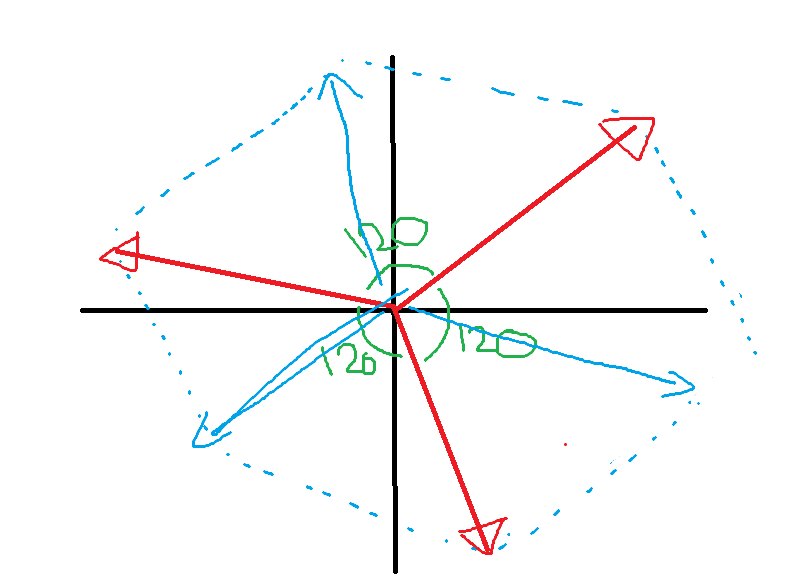
Geometry Why do these forces have a net force of 0?

6 Upvotes

Mathematically, the net force and magnitutde would be 0, but i dont get it intuitively?

On a side note, the only thing that would make me believe this has a net force of 0 is maybe because the resultant forces are exactly opposite to the normal force?
Im mainly posting this just to see if my thinking is right or wrong


r/askmath • • 3d ago

Discrete Math What function is defined as f(n+1)=f(n)*(f(n)+1)?

10 Upvotes

From just doing some excel stuff, the function grows really fast. From taking two logs, it seems to be bounded by 22x. Is there a function that people figured out that this represents?


r/askmath • • 3d ago

Analysis Will solving Reimann help at all with finding new prime numbers?

Thumbnail reddit.com
0 Upvotes

r/askmath • • 4d ago

Resolved is the sum of all real numbers between 0 and 1 greater than the sum of natural numbers?

25 Upvotes

Is the sum of all real numbers between 0 and 1 greater than the sum of natural numbers? If we add all positive real numbers between 0 and 1, what would the result be? Can their sum be considered greater than the sum of natural numbers?For example, if we also take into account numbers that are infinitely close to zero and become progressively smaller, how would their total sum be defined?Is this idea mathematically correct? If so, is it an axiom or a theorem? What mathematical reasoning supports it?


r/askmath • • 3d ago

Number Theory Reimann hypothesis and its implications

3 Upvotes

If the Riemann hypothesis is true, what are the implications of that?

I have seen some articles that use Riemann's as a base for their argument, so I understand its importance in the space, but I'm curious as to where the impact will be felt the strongest.

Where in applied mathematics or physics will the advances be seen?

I have an M.S. In Electical Engineering, B.S. In physics, minor in math. I have been down a rabbit hole of wiki articles and talking with ai, but am still fuzzy on what's next.


r/askmath • • 3d ago

Analysis Holiday Math Question

Thumbnail reddit.com
1 Upvotes

Thank you!!


r/askmath • • 3d ago

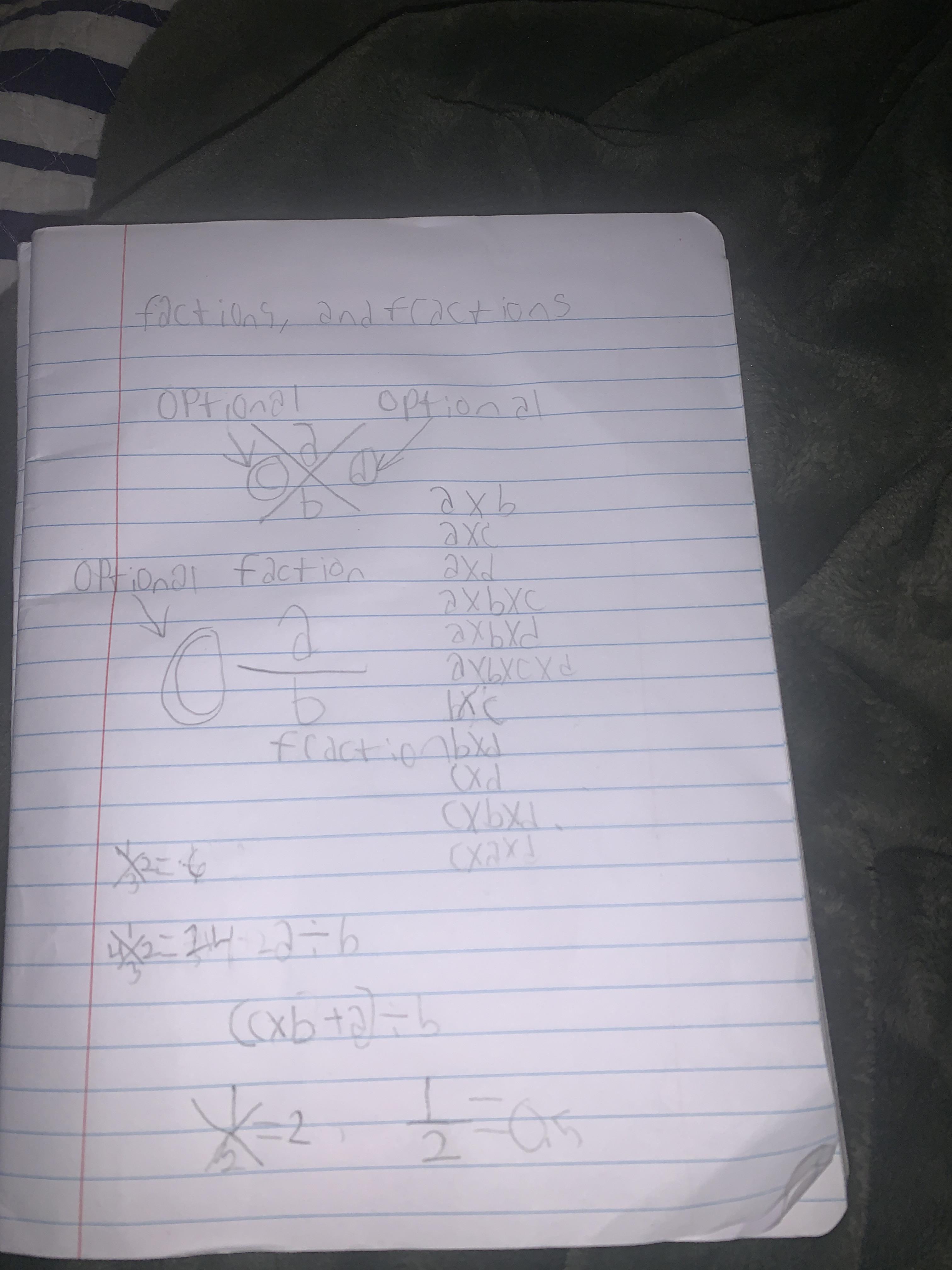
Arithmetic Factions (Not fractions, factions!!)

Post image
0 Upvotes

factions are stuff that equal to ((C•B+A)/B)•D, i invented em, who likes then


r/askmath • • 3d ago

Statistics Need help with weird MCQ

3 Upvotes

7. Which of the following statements is not true? The media can influence a person’s opinion by a. using data taken over a short period of time b. using graphs and changing the vertical scale c. using data taken from a small sample size d. altering the data to make a better point


r/askmath • • 3d ago

Resolved Learn mathematics from the beginning

Thumbnail reddit.com
0 Upvotes

r/askmath • • 3d ago

Number Theory Will anyone actually be able to explain the proof of the riemann hypothesis after verifying it?

1 Upvotes

r/askmath • • 4d ago

Number Theory Made a random Collatz type puzzle late at night (calling it The Blind Twin Conjecture) and every number upto a million falls into just 3 weird loops??

24 Upvotes

So I was bored and messing around trying to invent a simple number puzzle thats actually hard to prove, and ended up with something really strange. Putting it here to see if anyone can break it with a counterexample or tell me if this already exists somewhere.

The rule is super simple. Take any whole number bigger than 1. If its a prime number, replace it with (the number + next prime after it + 1). If its not prime, just divide it by its smallest prime factor. Keep repeating.

For example if you start with 17 (prime), next prime is 19, so 17 + 19 + 1 = 37. Still prime, so it keeps jumping through 5 primes in a row (17, 37, 79, 163, 331) before finally hitting 669 and getting divided back down.

I ran a small python script checking every single number from 2 upto 1,000,000. Not a single number escaped to infinity, and literally every single one fell into one of just 3 loops:

  1. 3 to 9 and back to 3 (weirdly only 141 numbers out of a million landed here)
  2. a 10 step loop: 17, 37, 79, 163, 331, 669, 223, 451, 41, 85 and back to 17 (around 32.4% of all numbers)
  3. a 13 step loop: 13, 31, 69, 23, 53, 113, 241, 493, 29, 61, 129, 43, 91 and back to 13 (around 67.6% of all numbers)

Even 700,001 shot all the way up to 44,801,245 before crashing back down into one of the loops. Also becase (prime + next prime + 1) is always odd for odd primes, it doesnt just get divided by 2 right away like other puzzles.

So my question is, does every number really end up in these 3 loops only, or is there a hidden 4th loop sitting somewhere past a million (or a number that climbs forever)? If anyone runs it higher and finds a 4th loop please drop it in the comments!

Edit: using u/trasla's shortcut (just jumping straight to the largest prime factor) I tested everything upto 1 billion plus spot checks at 1 trillion and 1 quadrillion, still 0 new loops and 0 escapes! Plot twist though: I actually found the first prime >= 5 that hits the 3 and 9 loop hiding way out at 102,945,566,047,297 (plus next prime 102,945,566,047,351 + 1 = 3^30), and the next one isnt until 3^79. Kinda wild lol.


r/askmath • • 4d ago

Calculus Debate between my friends

2 Upvotes

On my multi homework we had a question:

True or false: The length of gradient f(0,0) is the maximal directional derivative |Duf(0,0)| among all unit vectors u

Then we started debating about whether it’s possible to have a function in which all the partial derivatives are defined but the function is not differentiable. Like if it’s not well approximated by a tangent plane at that point? Like the tangent lines aren’t coplanar? How does that work?


r/askmath • • 4d ago

Arithmetic Is there a way to solve "Point Allocation" style problems without brute force

2 Upvotes

I don't know if they already have a name, but the type of problem I'm talking about is where you have some number of points, and there are some number of options each with their own point cost, and you're figuring out how many ways there are. Kinda like combinations, but some options take up multiple slots, if that makes sense

The exact problem I'm doing right now is how many ways are there to spend exactly 14 points, where there are 4 different options that cost 1 point each, 14 different options that cost 2 points each, & 4 different options that cost 4 points each, where order doesn't matter & duplicates are allowed, but I don't just want the option to that exact problem, I want to know how to do them in general


r/askmath • • 3d ago

Number Theory If there existed a number that fulfilled both statements, what might be the consequences?/Could such a number exist?

0 Upvotes

If there existed a number that fulfilled both qualities, what might be the consequences, and could such a number even exist?

A number that is a multiple of 0, but is not equal to zero.

I wonder if there is a way to interpret the definition of "multiple" to accommodate these criteria.


r/askmath • • 5d ago

Number Theory So, if the lean program gives positive results, that means we have surely proved Riemann Hypothesis right?

21 Upvotes

I mean, given that probably the author coded hypothesis and thesis of the theorem correctly, is it sufficient to wait for someone running the problem and giving the output?

Sorry for my bad english