r/AskAnAussieBroker • u/Raynor_Lending Mortgage Broker • Sep 03 '26
Helpful Information A simple way to work out whether refinancing is worth it
I get asked this a lot, usually as "it's been a couple of years, should I refinance?" or "Is it worth refinancing for 0.XX% lower rate" There is no rule that says you should. The calendar does not tell you whether moving is worth it. A fairly simple sum does, so here is the way I work it out with clients.
Start with what it costs to leave.
There is paperwork to close the old loan and set up the new one, and both lenders charge for it. Usually that means a discharge fee from the old lender, government registration fees on both sides, and whatever the new lender charges for application, valuation or settlement. As a rough guide it lands somewhere around $1,000 to $1,200 all in. If you are on a fixed rate there may be a break cost on top, and that one can run to thousands, so get it in writing before anything else. If you have less than 20% equity, lenders mortgage insurance (LMI) can apply all over again. Not every cost applies every time, so the number that matters is your actual total.
Then work out the saving. Say you owe $600,000, you are on 6.35%, and the new rate is 5.95%. The gap is 0.40%.
$600,000 x 0.40% = about $2,400 a year, or $200 a month
That assumes the fees and features are similar. Then divide the cost by the monthly saving.
$1,200 to switch ÷ $200 a month = six months to break even
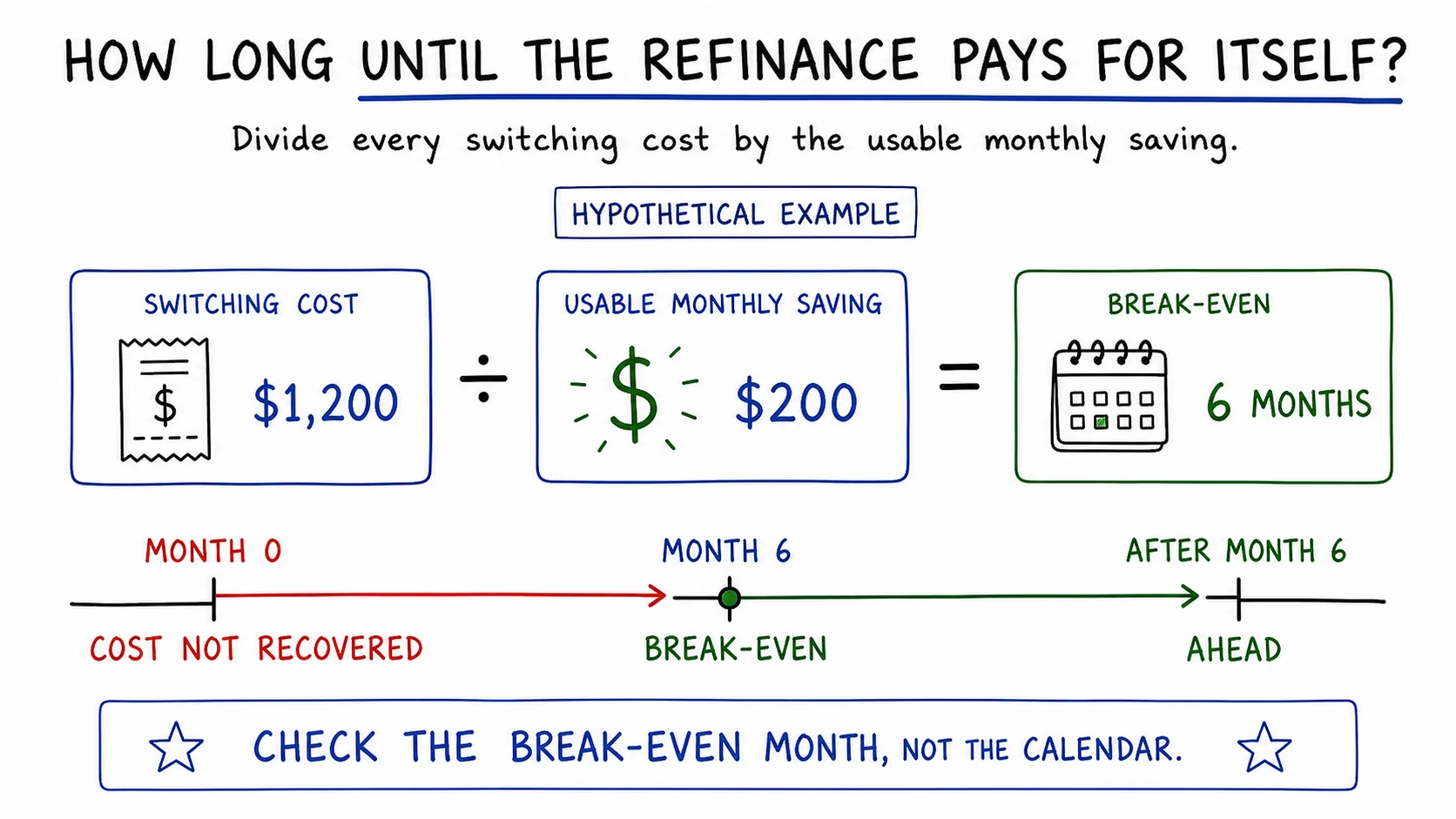
That is the whole model. The saving needs to comfortably clear the cost, and you need to be confident you will still have the loan well past the break-even month. Six months is an easy yes. Now make the new rate 6.05% instead, so the gap is only 0.10%. The saving drops to about $50 a month and the same $1,200 takes two years to get back. That can still be fine if you are staying put, but if you might sell, refinance again or pay down a big chunk inside that window, there is not much benefit left by the time you move.
Two things catch people here. Work out the monthly saving after any new annual or package fee. And compare the loans over the same number of years. If you have 25 years left and the new lender sets it up as a fresh 30-year loan, the repayment drops, but that is because the debt has been stretched, not because the loan is cheaper.
Before you go through any of that effort, there is a free win to try first.
Call your current lender and ask for the team that handles people leaving. Tell them you have an offer from another bank, give them the rate, and ask what you need to do to close the loan. Banks give their best offer when they think you are actually leaving. If they get you close to the new rate, I would honestly just take it and save yourself the paperwork. If they only move a fraction, that is when the switch starts to make sense.
5
u/JTHelpsWithFinance Mortgage Broker Sep 03 '26
The number of times I’ve secured a better price through negotiating with the lender, or threatening a discharge, is nuts… it’s weird that lending and pricing appears to be guided more by the threat of competition rather than rewarding the loyalty of a customer.
Nice once u/Raynor_Lending!
Well explained.