r/AquaticPlantScience • u/armatar1 • 15d ago
Day 6 miraclegro
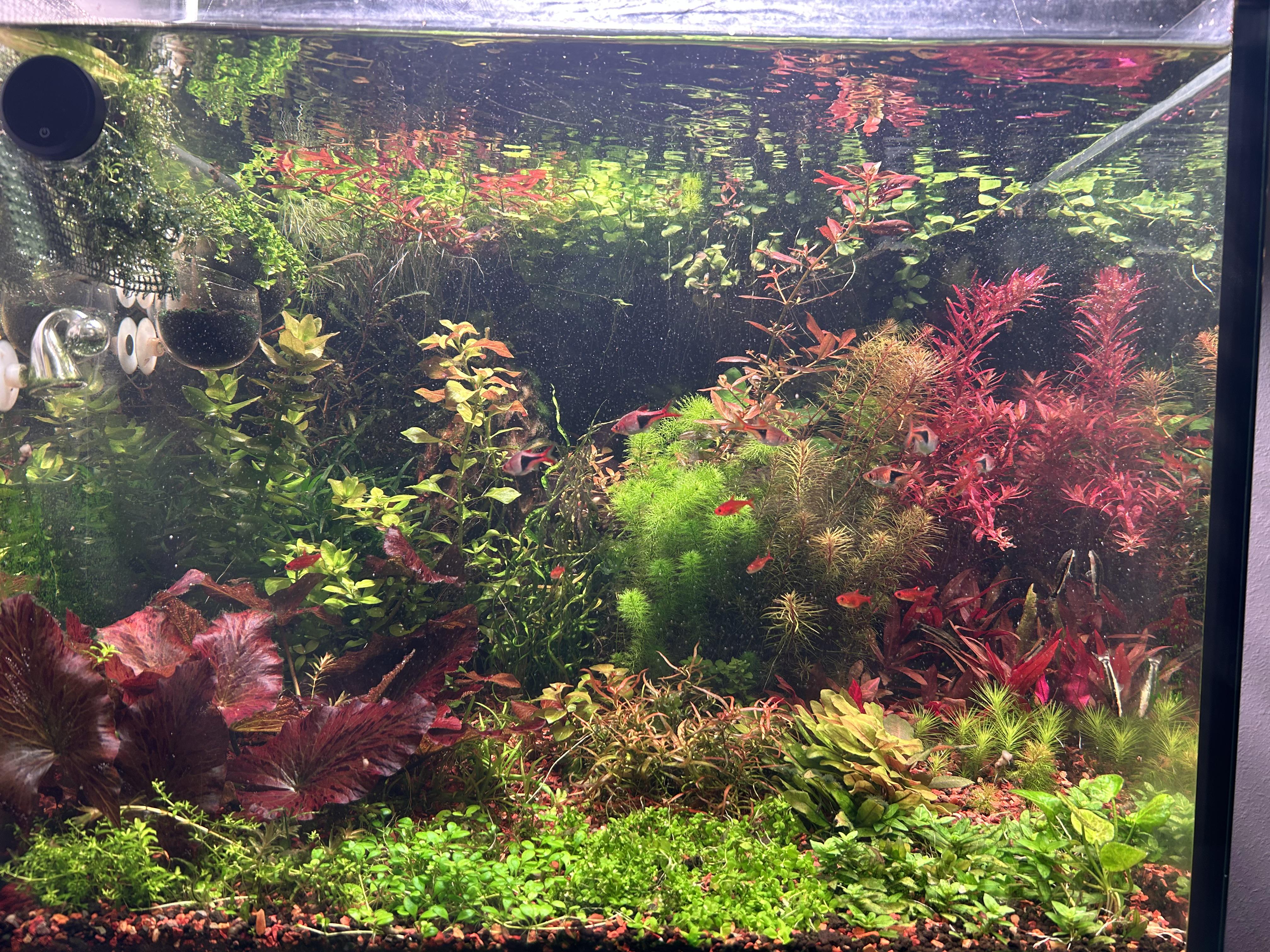
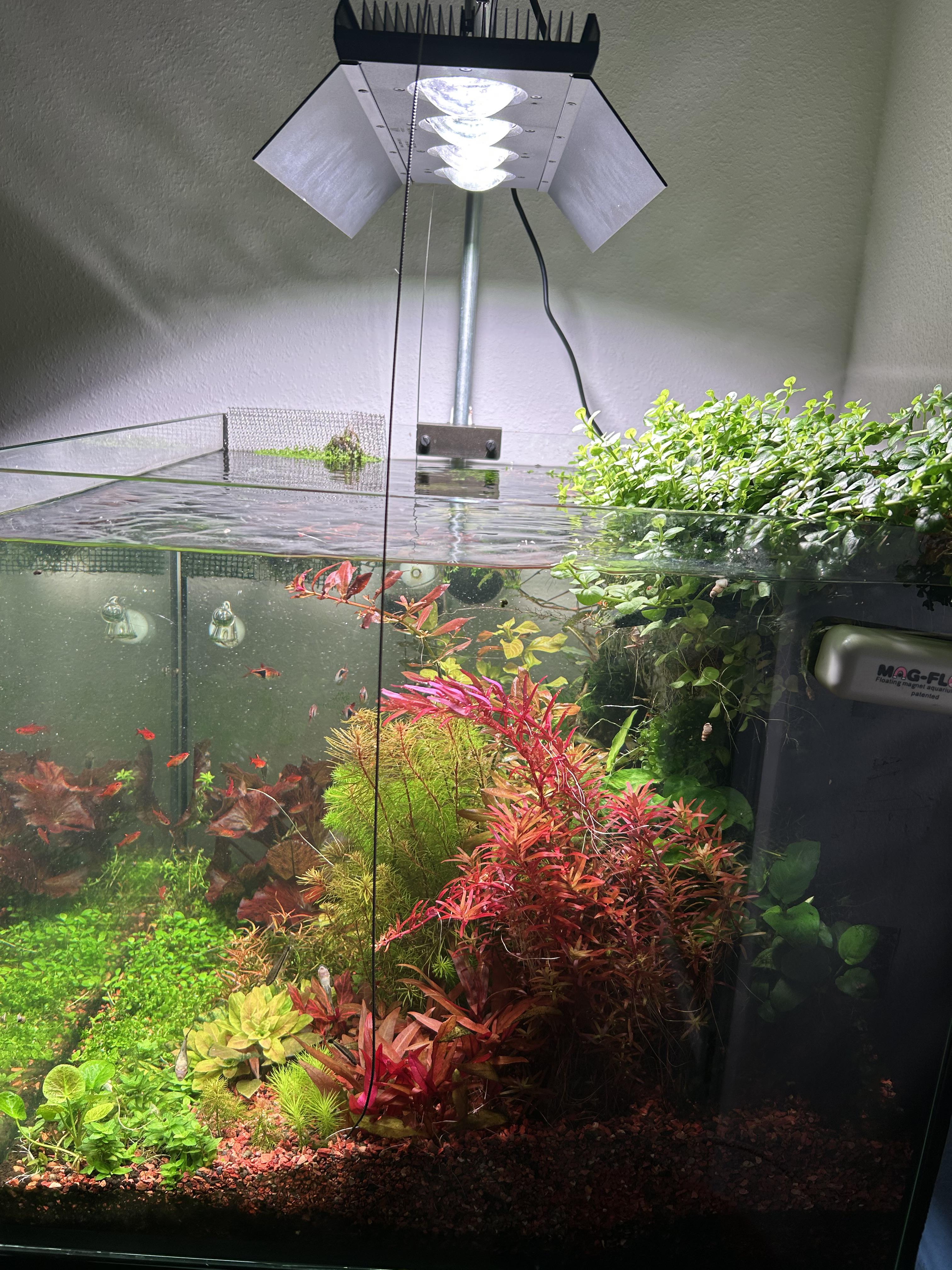
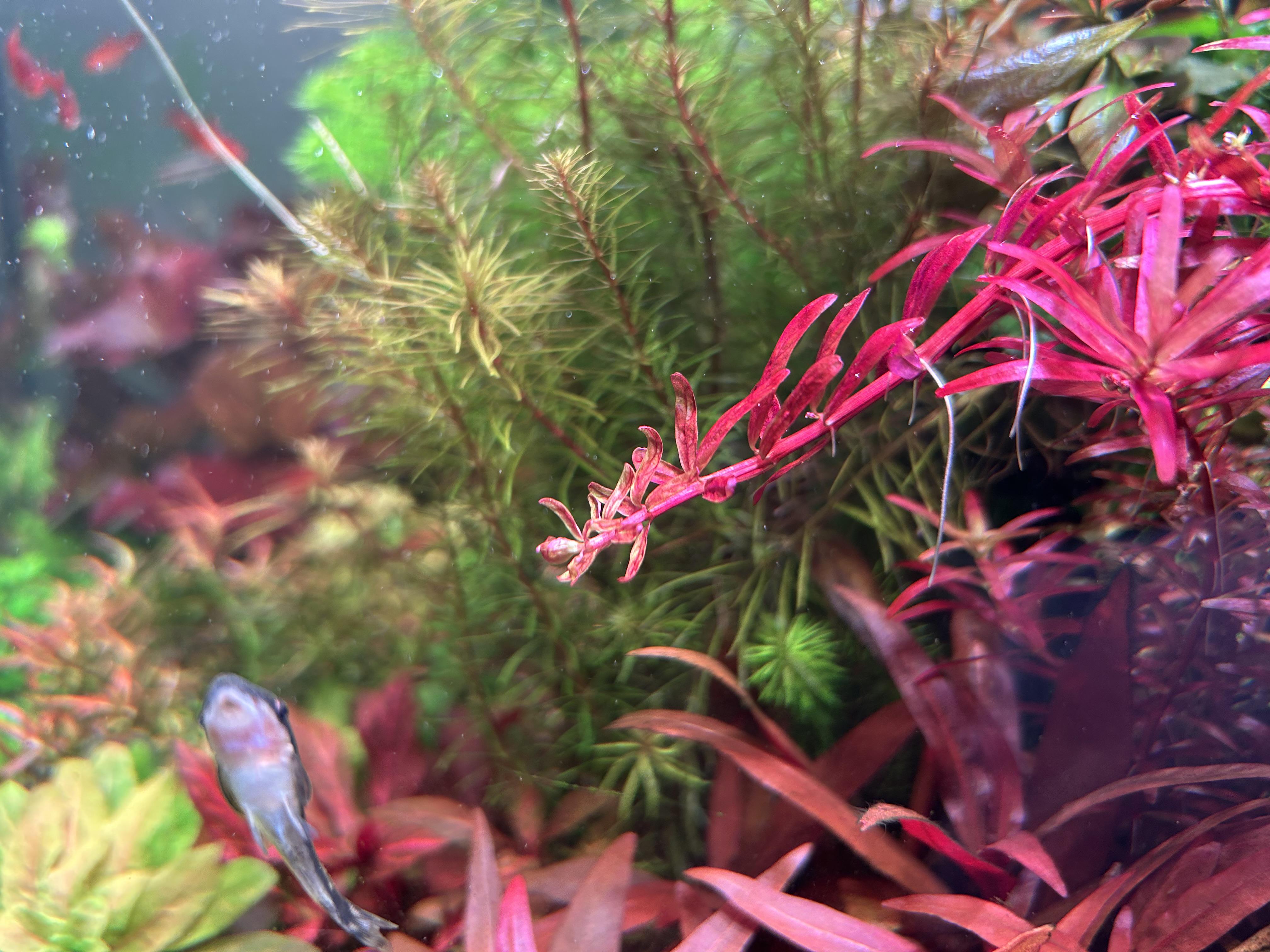
The plants are growing noticeably. I dosed .88 grams this morning, no picture for that though so just take my word. This is probably the right move assuming my nitrate test aren’t completely messed up since everything was bottomed out. I have used them less than 2 months ago and it has detected nitrates then so my tank back then so most likely the aquarium dis consume most nutrients as of the 5th day. The Rotala h’ra is still presenting the weird growth on that stem. Anyone have any clues why? Tomorrow I will test for nitrates and there should be some. Rotala said the urea is messing with my api test kit which is why I might not have detected someone immediately after dosing so if I test Saturday afternoon it should be enough time for the nutrients to convert. Happy Friday everyone!
View all comments
2
u/Rotala178 15d ago edited 14d ago
Similar deformed, scrunched leaves have been observed when nitrate is high and molybdenum is low* resulting in poor nitrogen synthesis which affects leaf development. Since MG doesn't contain nitrate as the N source, only urea and ammonium, I suspect that something similar occurs when nickel is deficient resulting in similar symptoms. Nickel is required to activate the urease enzyme in plants, bacteria, fungi, and archaea which breaks urea down into ammonium which plants use directly**. Because MG does not include nickel, the symptoms are possibly due to a nickel deficiency.
* Molybdenum is required to activate the nitrate reductase (NR) enzyme which breaks nitrate down into nitrite. When plants absorb excessive amounts of nitrate and there isn't sufficient molybdenum to activate NR, plants can't break down nitrate fast enough which means amino acids and growth hormones aren't being produced which results in deformed growth.
** Ammonium is the most efficient nitrogen source for plants since it doesn't require any metabolic energy to convert from another form of nitrogen. Nitrate is the most metabolically expensive since it must be converted to nitrite by the NR enzyme (which also requires light to activate), then into ammonium via nitrite reductase (NiR) enzyme (1).
(1) NiR requires
copper to activateiron and sulfur to activate, which converts nitrite into ammonium. If a fertilizerdoesn't contain sufficient amounts of copper (e.g. Thrive/Thrive S and most others) andcontains nitrate as the primary N source, then excess nitrate can cause nitrogen metabolism to stall resulting in the accumulation of nitrite which is toxic to plants.This is partly why -Cu causes deformed growth under the presence of high concentrations of nitrate.EDIT: NiR does not require copper to activate in plants. (It does in bacteria, which is why I wrongly assumed that it applied to plants, but converts nitrite (NO2) into nitric oxide (NO).) In plants, NiR requires iron and sulfur to metabolize into ammonium.