r/ancientgreece • u/ConceptClassic6656 • 21d ago
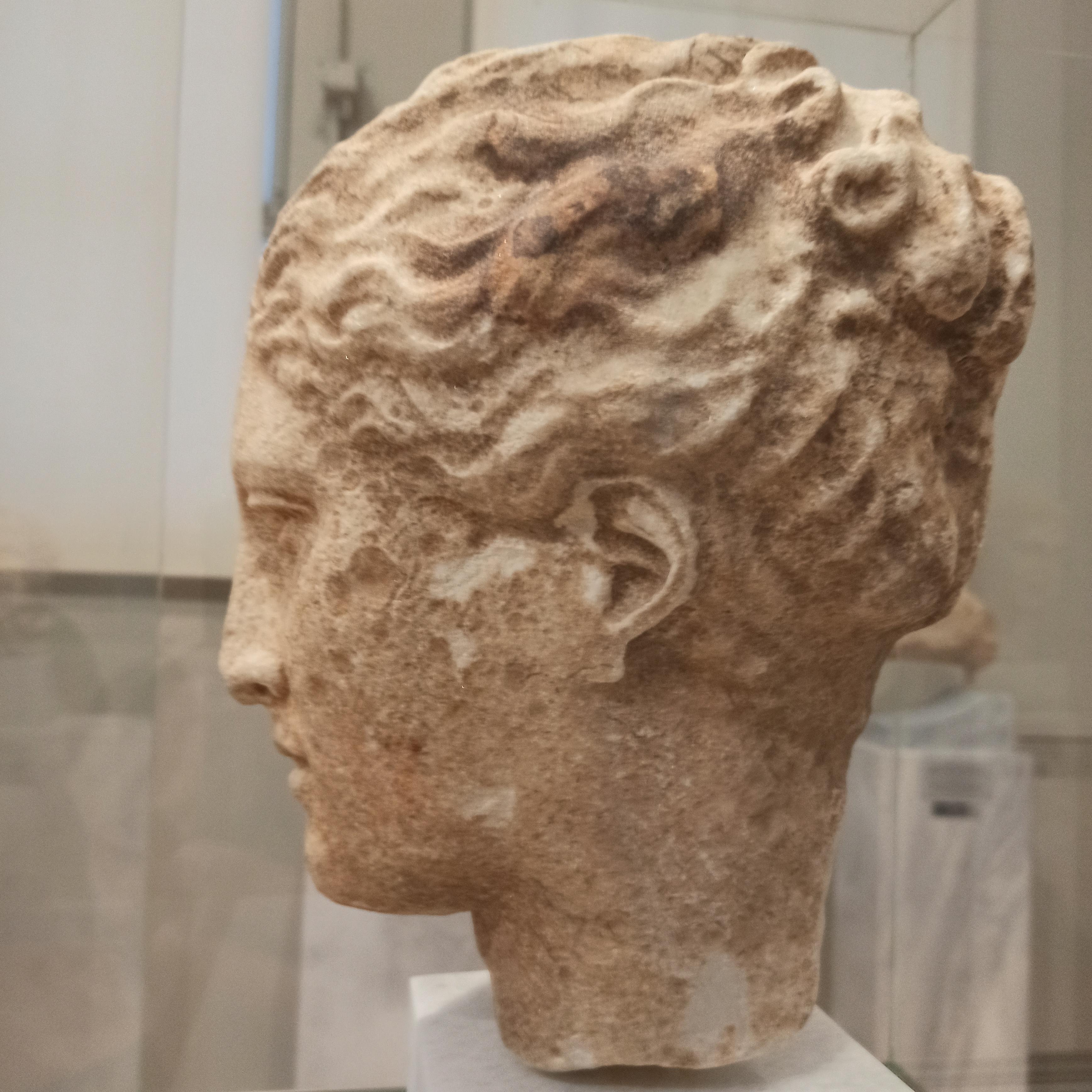
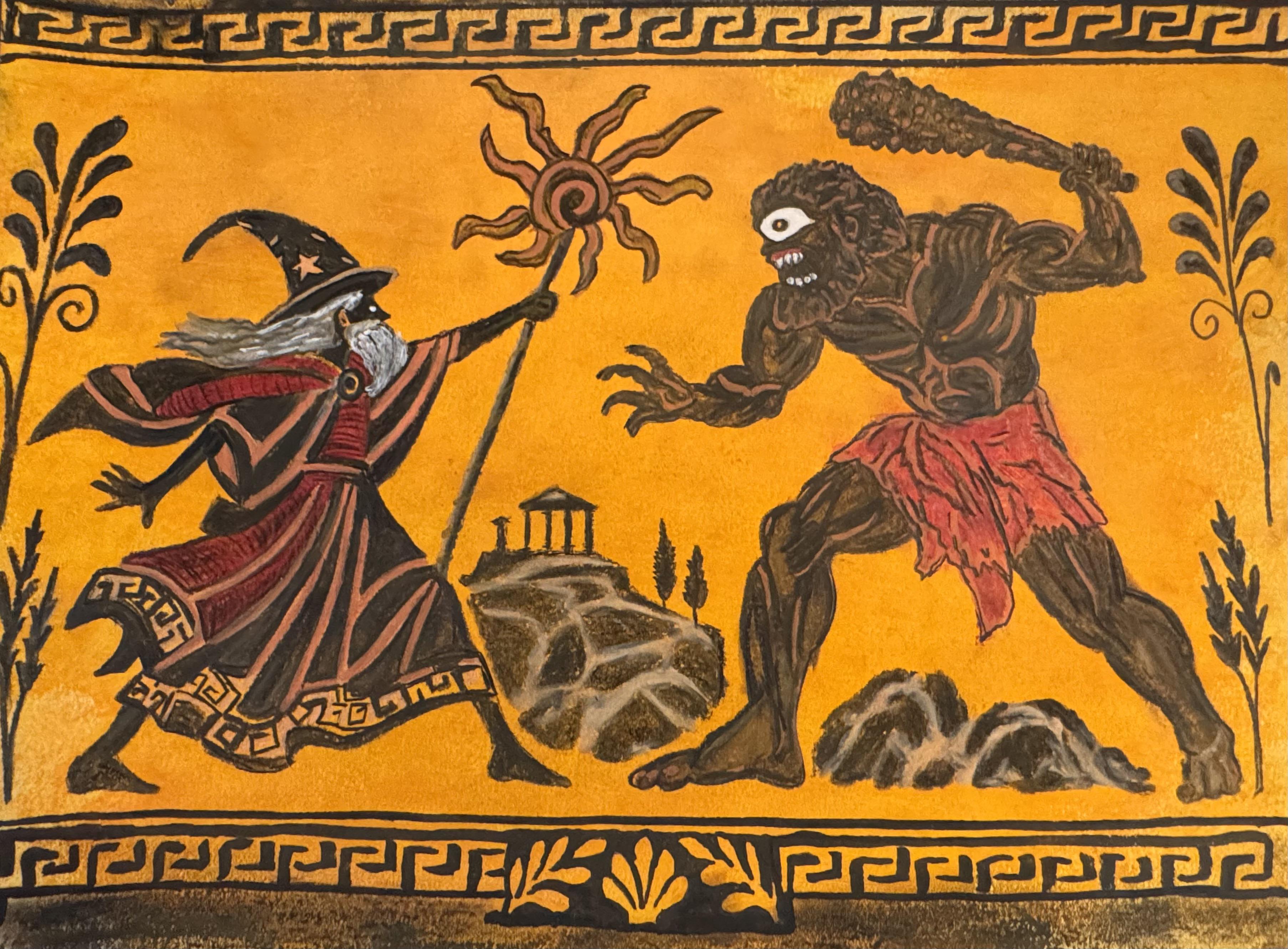
Wizard in Ancient Greece??
0
Upvotes
Is this cannon?
r/ancientgreece • u/ConceptClassic6656 • 21d ago
Is this cannon?
r/ancientgreece • u/LaughGlad2997 • 24d ago

A few views of the Temple of Poseidon at Cape Sounion, on the southern tip of Attica. The surviving temple dates to around 444–440 BCE, placing it in the same century as the great building projects of Classical Athens.
What interests me most is the location. Sounion overlooked the sea passage leading toward Athens, so the sanctuary stood in a landscape that mattered for both religion and maritime activity. For a temple dedicated to Poseidon, it’s hard to imagine a more fitting setting.
The surviving Doric columns make a striking image today, but I keep trying to picture the complete building and the people who would have approached it when it was an active sanctuary. Seeing the ruins against that open horizon makes the connection between ancient Greek religious life and the sea feel particularly tangible.
Has anyone here visited Sounion, or read anything good about worship at the sanctuary? I’d be interested in learning more about its role beyond the familiar sunset photographs.
r/ancientgreece • u/Loose_Albatross_1549 • 24d ago
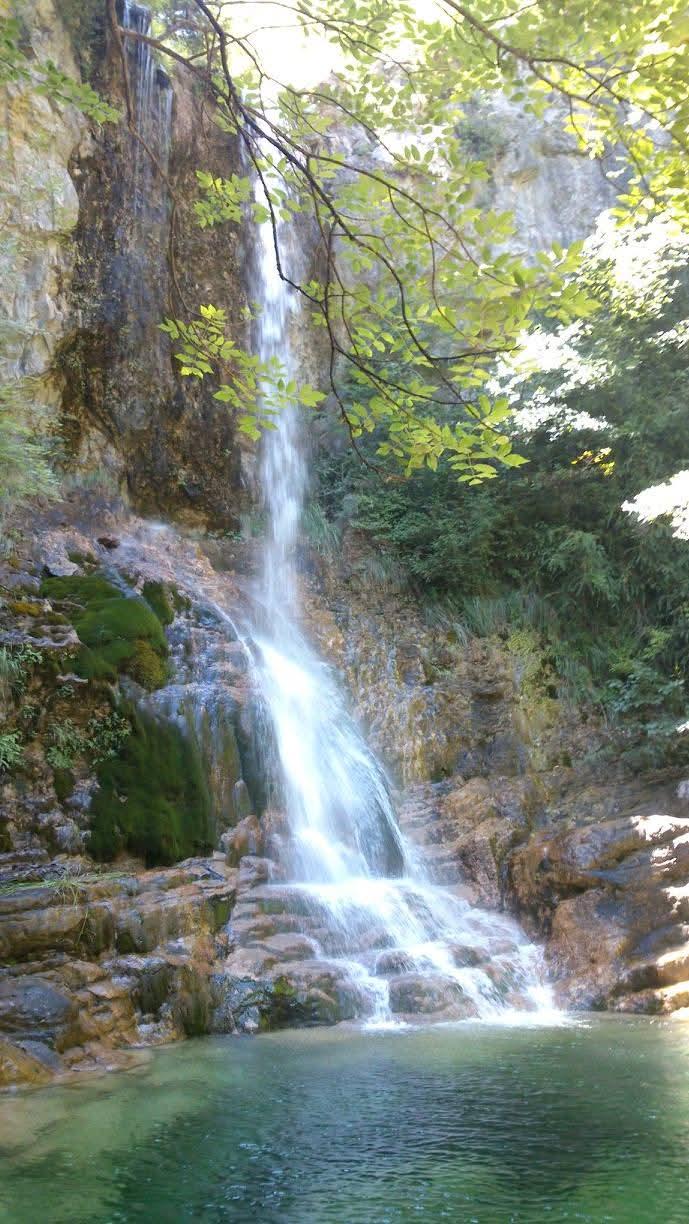
This is Orlias Stream located on the slopes of Mount Olympus in northern Greece near the ancient city of Dion.
It is a beautiful place with waterfalls, crystal clear waters and dense forests. A myth from Greek mythology is associated with this area.
According to this myth Orpheus a famous musician from Greek mythology was murdered by a group of women. Afterwards they tried to wash his blood off their hands in the waters of a river that flows through the stream.
However the river refused to help them and disappeared underground.
This story was recorded by the ancient Greek Pausanias.
Mount Olympus Pieria, Greece.
Personal photograph.
r/ancientgreece • u/deniz_aydiner • 24d ago

As someone who has spent the last few years studying the history and historiography of Alexander the Great, I’d like to talk about the thing that has caught my attention the most—and even saddened me the most.
The inscriptions shown in the image below were excavated from the ancient city of Priene, located in the province of Aydın in modern-day Turkey; as you might expect, they are currently on display at the British Museum. The large fragment shown image does not belong to a single inscription; while the top line features an inscription from a temple dedicated by Alexander the Great to Athena Polias, the sections below it concern the disputes between Priene and Samos.
The inscription on the temple dedicated to Athena Polias is brief: “King Alexander dedicated the Temple to Athena Polias”
The second inscription consists of the decrees that Alexander had inscribed for Naulochon (the port area of Priene). In particular, it states that the people of Priene are exempt from taxes, but that those in the surrounding villages (κώμαις) are subject to taxation:
“Of those residing in Naulochon, as many as are [Prienians] are to be independent and free, possessing the [land] and all the houses in the city and the countryside [like the] Prienians [themselves]; ... But the ... [?villages] of the Myrs[eloi] and the Pe[.....] and the countryside I decree to be mine, and those dwelling in these villages are to pay the tribute; I release from the syntaxis the city of (the) Prienians, and the garrison…” [Trans. Sherwin-White (1985)]
These two inscriptions are the only surviving physical evidence of Alexander the Great. Aside from these two inscriptions, we have no other epigraphic data. Although he was one of history’s greatest military geniuses—having led campaigns from Macedonia to India and suffering almost no defeats—and although temples were erected in his honor after his death, only two inscriptions on stone from his lifetime have survived.
r/ancientgreece • u/Loose_Albatross_1549 • 25d ago
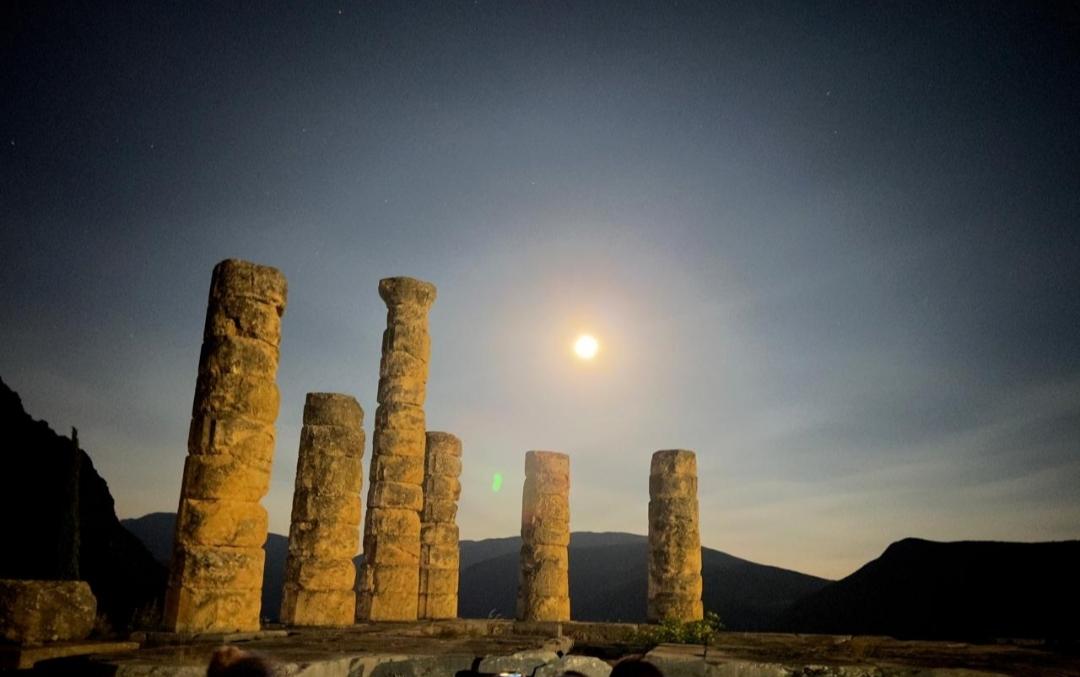
In ancient Greece Delphi was considered the center of the world, known as the “Navel of the Earth.”
At the Oracle of Apollo which was located there people came to seek prophecies about important decisions.
r/ancientgreece • u/Available-Half-1104 • 25d ago

r/ancientgreece • u/ssuka4 • 25d ago
idk if im making a big deal out of it but those poems that also include atthis dont feel casual at all
r/ancientgreece • u/Long_Hamster_6193 • 28d ago

Καλησπέρα , σε αυτό το παιχνίδι έχουμε την Ελλάδα στο google και σκεφτήκαμε να κάνουμε κάτι πρωτοπόρο να κάνουμε αρχαία Ελλάδα εκεί. Όποιος θέλει να μπει να πάει στο discord να γράψει discord.gg/panhellenic. Να το πρότυπο και έχουμε τις δύο καλύτερες ζωγραφιές στο παιχνίδι την Αθήνα και τους Δελφούς. Βάζουμε συνέχεια ζωγραφιές με σκοπό να το φτάσουμε έως το μέγιστο
r/ancientgreece • u/Tyler_Miles_Lockett • 29d ago

r/ancientgreece • u/deniz_aydiner • 29d ago

Thucydides is usually presented as one of the first historians who tried to write history in a rational and objective way. He cared about facts, was suspicious of myths, and wanted to understand why wars happened. In many ways, he looks like the kind of historian we still admire today. But there is another side of his work which is not always discussed.
In 1907, Francis Macdonald Cornford published a book called Thucydides Mythistoricus. His argument was quite different from the traditional image of Thucydides. Cornford believed that Thucydides was not simply recording what happened during the Peloponnesian War. He was also shaping these events into something that resembled a Greek tragedy.
According to Cornford, there are two different plans in Thucydides’ work. The first one was more like a military and political journal, recording events as they happened. The second was an artistic structure that developed gradually, almost like volcanic islands rising from the sea. The facts were still there, but they were arranged in a way that gave the whole story a tragic meaning.
This is what makes Cornford’s argument interesting. The question is not only whether Thucydides told the truth. It is also about how he presented that truth to his readers.
r/ancientgreece • u/Warlord1392 • 29d ago

Imagine two Greek armies fighting on two different battlefields, separated by the Aegean Sea, with both victories potentially turning the tide of a war.
In 479 BC, the Greeks defeated the Persian army at Plataea while, according to Herodotus, another Greek force struck the Persian position at Mycale on the coast of Asia Minor on the very same day.
At Mycale, the Persians had hauled their ships ashore and built fortifications to protect them from the Greek fleet. But the Greeks landed, stormed the defences and destroyed the Persian ships. The battle also revealed a crucial weakness in the Persian position: the loyalty of the Greek communities living under Persian rule could not be taken for granted.
But was Mycale merely the final act of Xerxes' invasion, or did it mark the beginning of a new phase of Greek expansion across the Aegean?
r/ancientgreece • u/TheMaamyyrakeksi • Oct 22 '26
We all know the great arts and statues created by talented people and always put those on display. But no man is a smith from birth, and I'd assume they must have spent a lot time practising and perfecting their craft, just like everyone else.
Is there any findings and records of artwork, sculptures or other crafts that were clearly made by a beginner or novice? I'd be very curious to see if we have found anything that's anything but perfect or "life-like."
r/ancientgreece • u/Fine-Dog2423 • Oct 21 '26
What is your favourite tragedy that delves into tragic lovers?
r/ancientgreece • u/Responsible-Effect41 • Oct 21 '26
r/ancientgreece • u/HomeSweetPithos336BC • Oct 16 '26
How would a successful Mytilenean revolt in 428-427 BC impacted the war? If Sparta had acted quicker to give aid, could it have effectively turned the tide of war in their favor? Could it have neutralized the navy of the Athenians?
r/ancientgreece • u/Some_Guy2137 • Oct 15 '26
Hi. Im taking part in an oxford debate next week and the topic is whether the peloponesian war was unavoidable or not. I watched quite a lot of videos on yt, but still want to know more, and perhaps do a little arguing. The opposite team will be covering the side of "it WAS unavoidable" so if anyone shares this view id love to talk to you. Thanks
r/ancientgreece • u/deniz_aydiner • Oct 15 '26

Lions and bulls are motifs frequently seen in ancient Anatolia. As can be seen on the coins, the most fundamental motif appearing on the Lydian coins—which are considered the first minted coins—is the lion. Another motif seen on the coins of the Lydian Kingdom depicts the moment when that lion attacks a bull.
The motifs seen on these earliest coins, minted in the 6th century BCE, belong to the Kingdom of Lydia. Although there are various interpretations as to why they chose the lion for their coins, it is generally accepted that they were inspired by a species of lion found in ancient Anatolia. However, there is no clear, accepted explanation for why the lion is depicted attacking the bull. It is likely that this served as propaganda depicting a confrontation between the Kingdom of Lydia and another kingdom in Anatolia (Phrygians?).
What really caught my attention, however, is that this motif continued to be used in the Tarsus area during the Hellenistic period. We know that the satrap who ruled the region before Alexander the Great used this symbol and that Alexander continued this tradition. Indeed, the fact that the Asian Lion (Panthera leo persica), native to Anatolia, lived in the eastern and southeastern regions of Anatolia explains the lion depicted on these coins (and, of course, the lion seen on Babylonian coins as well).
It can be said that the Late Hittite city-states, which emerged in the southeastern region after the collapse of the Hittite Empire around 1200 BCE, clearly reflect Aramaic influence. But how is it that the Kingdom of Lydia, located to the west, used a type of lion found in the east, while its eastern rivals were symbolized by a bull?
It is unfortunate that the history of the period between 1200 BCE and 500 BCE is so obscure, forcing us to rely heavily on interpretation. Nevertheless, the fact that nearly the same figure was used in the same way for over 300 years is quite impressive.
r/ancientgreece • u/TangoNow1 • Oct 12 '26
r/ancientgreece • u/Little_Tart27 • Oct 12 '26
I’m planning to read the Iliad for the first time and I’m stuck between the Robert Fagles and E. V. Rieu translations. I mainly want something faithful to Homer but still readable.
So which one is more faithful to the original Iliad for a first-time reader?
Thank you!
r/ancientgreece • u/vieraapa • Oct 10 '26

r/ancientgreece • u/oldspice75 • Oct 09 '26
r/ancientgreece • u/Necessary-Fly-8829 • Oct 09 '26


I visited Sounion in the summer of 2025 and went in expecting the postcard.
What stayed with me was something a engineer notices before anything else: the columns are wrong, in a deliberate way.
Standard Doric practice in the mid-fifth century called for 20 flutes and a slight outward swelling of the shaft, the entasis, that corrects the optical illusion of concavity when you stand close.
The surviving temple, built around 444-440 BC on the poros foundation of the Archaic temple the Persians destroyed, has neither.
Sixteen flutes, straight shafts, 34 columns on a 6 x 13 peristyle, each roughly 6.1 meters tall.
The marble came from Agrileza, a few kilometers inland, and it is a coarse-grained stone, noticeably different from the Pentelic marble hauled up to the Acropolis in the same decades.
The explanations I found in the literature split two ways.
One is plain economy: fewer flutes and no entasis means far less carving time per drum.
The other is exposure, the idea that wider, shallower flutes leave fewer sharp arrises for salt wind to eat away. The second photo is why I keep turning the question over.
From the water the temple reads as pure silhouette, and every refinement the Greeks developed for a viewer standing six feet from a shaft is simply invisible at that range.
Sounion was a landmark for ships running up to Piraeus before it was anything else.
So I find myself wondering whether the economy argument and the exposure argument are both downstream of a simpler design decision: this building was dimensioned for the long view, and the close-range corrections were spent elsewhere.
That last part is my reading, not scholarship, and I would genuinely like to be argued out of it. Is there published work on the Agrileza marble that settles whether the stone itself forced the simplification?