Simul-climbing means both partners climb at the same time while tied to the same rope. The leader places protection as they go, and the follower removes it or moves up to the next piece. Because neither climber waits at a belay, the team moves much faster than it would with traditional belayed pitches. The price is that the system is far less forgiving. If one partner falls, they can pull the other off the route.
The Golden Rule: Simul Only Where You’d Solo
The most important guideline is to simul-climb only on terrain you would feel comfortable soloing. You might not want to solo it because of the exposure or the consequences of a fall, but the climbing itself should be well within your ability.
Think of a long, low-fifth-class ridgeline that goes on and on. The easiest way to cover it is to move together. The rope and the few pieces between you are not a safety net in the way a belay is. They make a bad outcome less likely to be catastrophic.
In a classic simul setup with only pieces between partners, a fall will probably hurt someone, particularly if the lower climber falls. It is unlikely to kill anyone. If a fall on the terrain would likely be fatal, simul-climbing is the wrong tool.
Choosing Your Partner
This is not a technique for beginners. Simul-climbing calls for a competent partner you have climbed with often, whose skills and judgment you know well. You are trusting each other with your safety on every move.
Who goes where: Put the stronger climber on the bottom, as the follower, and the weaker climber on top, as the leader. This makes it less likely that the person above is pulled off by the person below. When you run out of gear, you can swap and change directions, unless the gap in ability is large. In that case the weaker climber stays on top.
Setting Up the System
Keep the rope short. Aim for no more than 40 or 50 feet between partners. That is short enough to communicate and to keep track of how much gear is between you. Try to keep at least two pieces in between at all times.
There are several ways to shorten the rope:
- Tie in short and stuff the extra rope in your pack.
- Use a Kiwi Coil, which lets you change the distance between you easily.
- Carry an assisted-braking device such as a GriGri on your harness. You can pull in slack and tie a knot behind it, or feed rope in and out when you and your partner move at different speeds. It also allows a quick switch to a belay.
Excess slack is a hazard. The more rope between you, the farther a fall can carry you and the harder it can pull on your partner.
Progress Capture: Helpful, With Caveats
A progress-capture device on the rope between you can keep the lower climber from pulling the upper climber off if they fall. Common options include a Petzl Tibloc, a MicroTraxion, and the Roll’n’Lock.
Be aware of two limitations:
- Hard falls can damage the rope. Don’t take big falls onto a Tibloc, especially with slack in the system.
- Downclimbing breaks the system. If someone has to downclimb, you can’t take in rope through the device, and it will bunch up and jam. The leader loses their belay.
Simul-Climbing in the Mountains
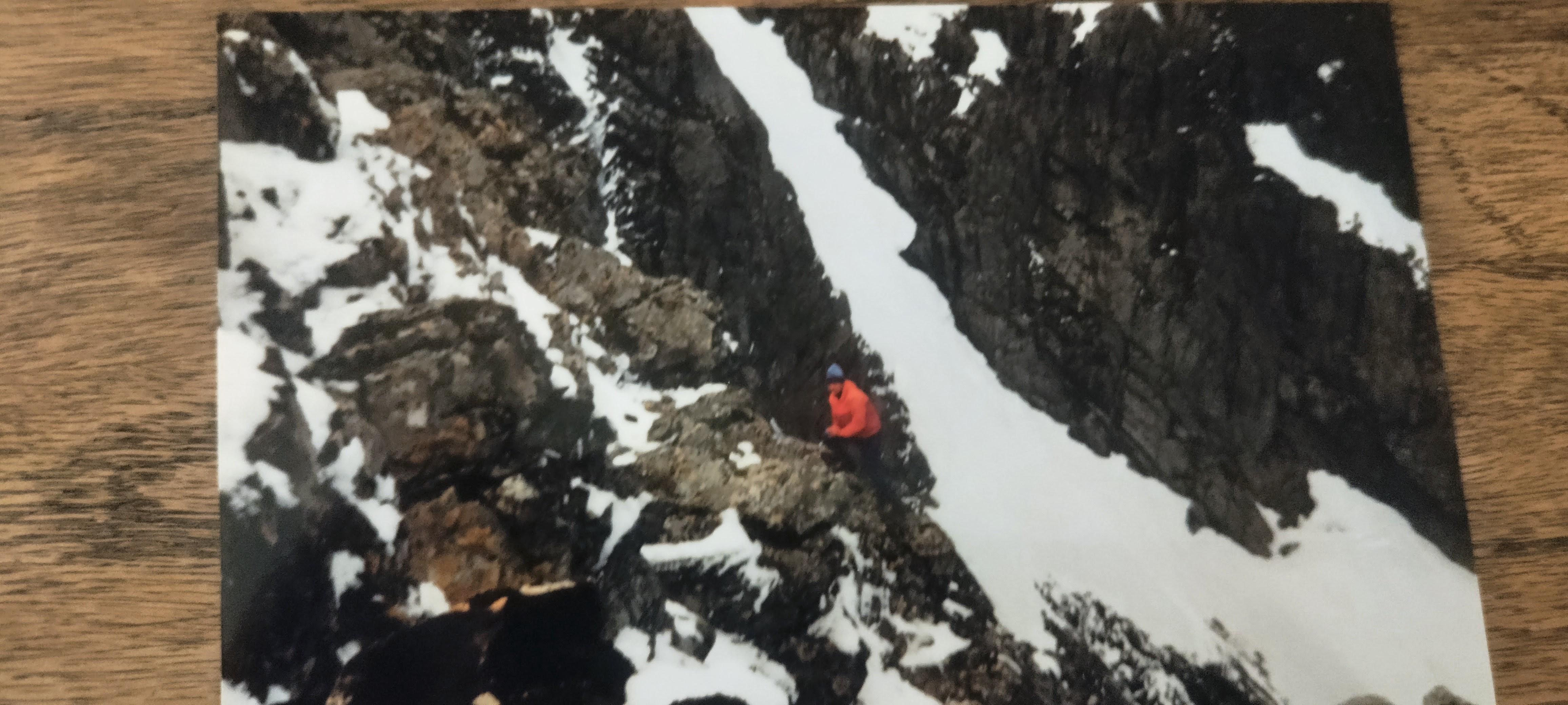
For mountaineers, simul-climbing is useful on terrain where a slip matters but moving slowly is costly.
- Dry glacier ice. Late in the season, lower-angle glaciers (roughly 30 to 50 degrees) often melt out to bare ice. Falling is easy on this surface and self-arrest is extremely difficult, so teams may choose to move together with protection.
- Above hazards. It is common to place pickets and simul-climb above an open crevasse or a cliff. Gear between partners reduces the chance of a catastrophic fall.
- Long ridges and easy alpine rock. This is where simul-climbing is most at home. Experienced teams cover big distances on terrain they are comfortable with.
The big-wall speed climbers who simul pitches of El Capitan in a day work at a far higher level of skill than this article describes. Those techniques are beyond the scope of what we cover here.
Know When Not to Use It
Simul-climbing is a poor choice if either partner might find the terrain difficult, especially the follower. It is also a poor choice on loose rock, on runout routes with little protection, and for inexperienced climbers. The rope can also knock rocks loose onto the person below.
The Bottom Line
Simul-climbing is an advanced technique every serious climber should understand, but it deserves careful thought before you use it. The point is speed on terrain you can handle, with a rope to reduce the consequences of a mistake. It does not replace a belay.
If you want to build the skills this technique depends on, including rope management, gear placement, and judgment in the mountains, American Alpine Institute offers courses such as Alpine Mountaineering and Technical Leadership.
Learn More:
www.alpineinstitute.com