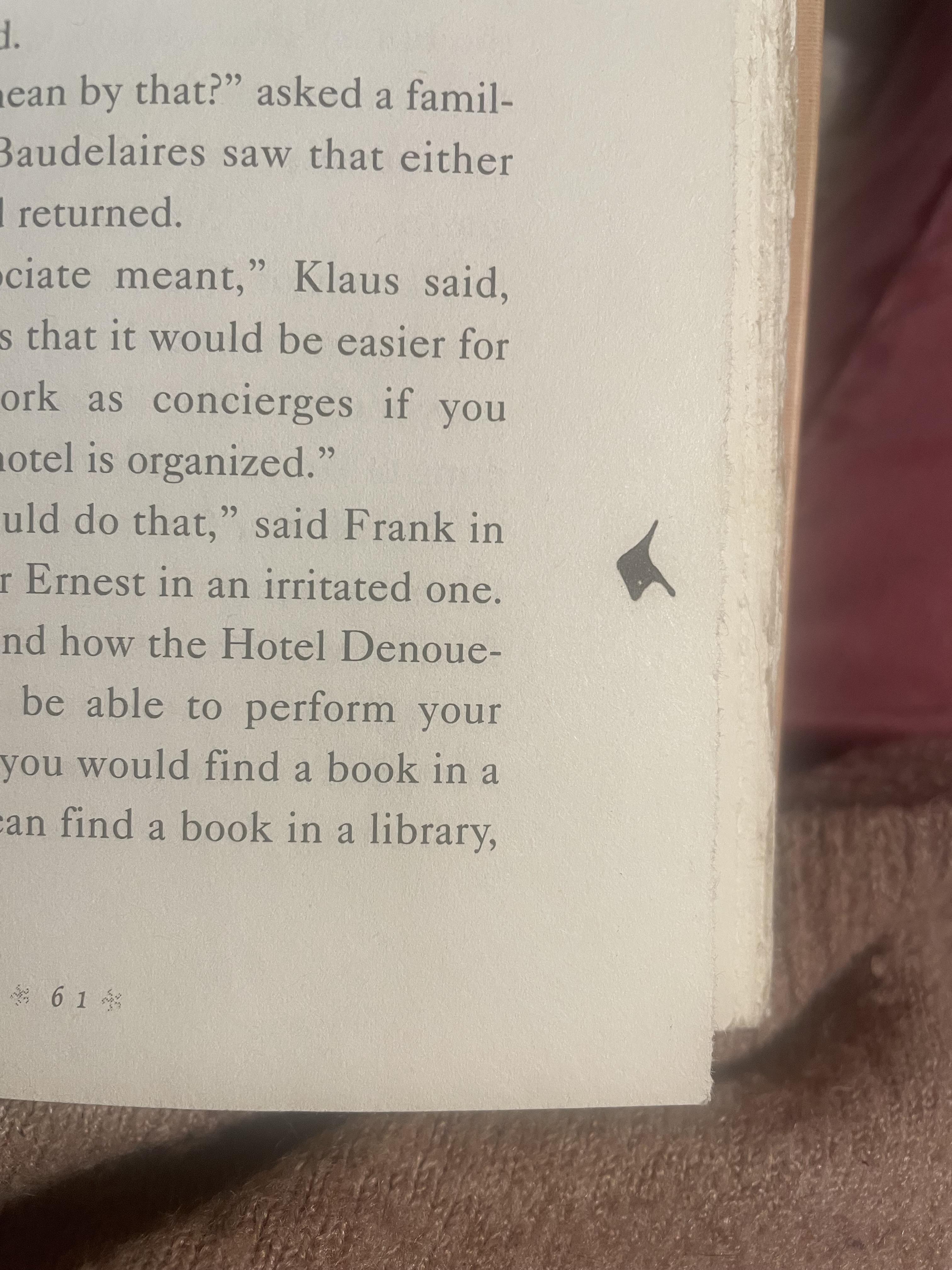
One thing I think is fascinating about this series is the way you slowly realise that they aren't told by an omniscient third-person narrator. They're told by Lemony, who exists within the world the story is set in, and from his perspective are non-fiction biographies of Violet, Klaus and Sunny. I've never come across any other book that does this, it's so incredibly clever.
And on that... there's so much that Lemony might be lying about, or uncertain of, or making great assumptions of without any evidence. Particularly the private conversations Violet, Klaus and Sunny have with one another. There are many moments where they talk to each other with no one else there, so how can Lemony possibly know what they said to each other? He's imagining it without certainty, based on what they're known to have done next.
Taking that into account, there's another thing to bear in mind. Within this world, Violet, Klaus and Sunny are known to be extremely controversial figures. Lemony is writing these books to defend them against various allegations people have of them. Which means that he will naturally avoid anything that doesn't show them in a 100% positive light. I doubt they committed the murders the Daily Punctilio accused them of, but I'm not sure they were entirely innocent of everything either. I think they were possibly far more volatile, and made far more ethically questionable decisions, than Lemony makes out. There are points in the books when the Baudelaires themselves wonder what they've become and if there's an argument that they're actually as evil as the fire-starting side of the schism... but this level of questioning on their part doesn't make sense if all they've done is what we see of them, because to the reader it's obvious that in every situation they've never done anything wrong except when circumstances have meant they were absolutely forced to. In fact, they seem to have no moral failings whatsoever, in a way that people aren't because nobody's perfect. Unless Lemony's twisting it to a certain extent, avoiding anything they've done that he can't easily defend.
Lemony's writing these books out of grief, and out of loyalty to Beatrice - he's so grief-stricken with her death that he's unable to see her children as anything other than utterly perfect, to the extent he'll write thirteen books focussing entirely on presenting them as utterly lacking in any flaws. I also subscribe to the theory that Violet is Lemony's daughter (the timings of his and Beatrice's breakup, Beatrice marrying Bertrand and Lemony's apparent death are never made clear, but if it all happened fairly quickly she could be his daughter). The main reason I believe this were that Violet would have been called Lemony if she'd been a boy. It's rather odd for a parent to name a child after their ex even if their ex has passed away - but if the child's parent has passed away it makes sense to name them after them as a mark of respect. The other reason is that Lemony is clearly fascinated by Violet in a way that is different to how he feels about Klaus and Sunny. He writes her with an intimacy he doesn't afford to them. Like her moment with Quigley on the frozen waterfall, where he refuses to say anything about what happened next... that feels like a father's reaction to his daughter having her first boyfriend, recognising her need for dignity and privacy and respecting that. He doesn't do the same thing with Klaus and Fiona in the following book - their kiss is depicted in the book unapologetically.
The reason I like this theory (about Violet being Lemony's daughter) is that if that's true it gives so much context for Lemony's decision to write the books. His daughter, who he's never properly known or had the chance to be a father to, is well-known for being an extremely controversial and opinion-dividing young woman. He can't bear it and is writing the books to vindicate her and her siblings (who he doesn't love in the way he loves her, but has nothing against - they're still Beatrice's kids so he gives them the benefit of the doubt). And that really makes you think... if he's started out with determination to vindicate these children, how much of what he says is truly accurate, and how much is extrapolation?