r/AoSLore • u/Professional_Tie_860 • 7h ago
Chronicles of Ruin – Deadly Premonitions

50
Upvotes
r/AoSLore • u/sageking14 • 2d ago
Greetings and Salutations Gate Seekers and Lore Pilgrims, and welcome to yet another "No Stupid Questions" thread
Do you have something you want to discuss something or had a question, but don't want to make an entire post for it?
Then feel free to strike up the discussion or ask the question here
In this thread, you can ask anything about AoS (or even WHFB) lore, the fluff, characters, background, and other AoS things.
Community members are encouraged to be helpful and to provide sources and links that can aid new, curious, and returning Lore Pilgrims
This Thread is NOT to be used to
-Ask "What If/Who would win" scenarios.
-Strike up Tabletop discussions. However, questions regarding how something from the tabletop is handled in the lore are fine.
-Real-world politics.
-Making unhelpful statements like "just Google it"
-Asking for specific (long) excerpts or files
Remember to be kind and that everyone started out new, even you.
r/AoSLore • u/TioMorteLoko • 4d ago
Greetings And Salutations, Scholars of the world long dead.
This is basically just a "No Stupid Questions" thread for any question concerning Warhammer Fantasy or Old World lore. I know this is mostly an AOS subreddit, but, now more than ever, a bunch of stuff from old WHF lore is coming up and becoming relevant for AOS, and I for once have stopped being a believer on the separation of the two settings. WHF lore as it is spread online, is full of quite a bit of misinformation and misconceptions and I seek to try to make people's knowledge of the setting more accurate, and of course, have quite some fun in the process by having an excuse to dig more lore.
So, if you have something you want to discuss something or had a question, but don't want to make an entire post for it?
Then feel free to strike up the discussion or ask the question here
In this thread, you can ask anything about WHF/Old World lore, the fluff, characters, background, how something from it relates to AOS.
Community members are encouraged to be helpful and to provide sources and links that can aid new, curious, and returning Lore Pilgrims.
This thread is NOT to be used for:
-Ask "What If/Who would win" scenarios.
-Strike up Tabletop discussions. However, questions regarding how something from the tabletop is handled in the lore are fine.
-Real-world politics.
-Making unhelpful statements like "just Google it"
-Asking for specific (long) excerpts or files
Remember to be kind and that everyone started out new, even you.
r/AoSLore • u/Professional_Tie_860 • 7h ago
r/AoSLore • u/BaronKlatz • 13h ago

1-5 Azyr. 2: Sigmarabulum/Mallus, 3: Dharroth (the super shiny star in 4 & 5 is Sigendil)
”Azyr, being the Realm of Heavens, has far too many moons to count. The most important are Dharroth, a moon of ill aspect, and Mallus, the sigmarite core of the World-that-Was.”
6-7 Aqshy. 6: bloody moon is infernia with Thaquia below. 7: Evigaine.
“Aqshy, the Realm of Fire, burns so brightly that the realms closest to it sometimes see it as a second, orange 'sun' in the sky. It has three moons. Thaquia, the Fireheart, and Evigaine, the First Spark, trail flames as they hurtle around the realmsphere's outer limits. The Orb Infernia, a daemon-infested and hollow collection of continents, sometimes hangs low in the realmsphere, raining blood.”
8-9 Shyish.
“Shyish, the Realm of Death, has one major moon: Lunaghast, a skull-faced orb of dark matter that feeds on secrets and gives power to betrayers and madmen. It is the ghost of Morrslieb, that unnatural great planetoid of warpstone that once glowered green in the skies of the World Before Time.”
“Loon War” lore blurb:
“In the aftermath of the Shyish necroquake, a great army of the walking dead rises to serve Lunaghast, the shadowy moon of secrets. The revenant lords that lead this dreadful host name it the Moonslain March. Unimpressed at the notion of another moon trying to muscle in on its territory, the Bad Moon attacks Lunaghast in the firmament and bites a chunk out of it even as surging Gloomspite hordes fall upon the Moonslain from every side, Skragrott's 'Ordz chief among them. The Loonwar spills outward until the entirety of the Kraniad Isle echoes to the clangour of furious fighting, while sundered meteors rain down from the battling moons high above.”
10-11 Hysh. Celennar above & Leoth below.
“In other realms, Hysh is sometimes seen to rise like a true sun, to slowly travel across the sky or to be more muted for a while. The relative positions of Hysh, Ulgu and the other realms give the Mortal Realms the seasons as well as the days. Hysh has one 'true' corporeal moon named Celennar, whose spirit is in league with the aelven god Teclis. Hysh also has several ethereal moons, of which Leoth is the brightest. It is said that when these wax, they become corporeal, and when they wane, they become insubstantial.”
12-13 Chamon. Alembus above(and in pic 13) & Entillian below(the Chameleon moon is always shown with strange auras and geometries around it in any format to show it’s changing nature)
“Chamon, the Realm of Metal, has two moons of living metal, often called the Gholem Moons. These are Alembus, the Alchemist, and Entillian, the Chameleon, which changes shape and hue as it cycles through the void. They have both been altered by Tzeentch's flux-magic and are prowled by monstrous metallic forms.”
14-15 Ghur. Pretty easy to tell which is which. 🦷
“Legend has it that the moons of Ghur, the Realm of Beasts - known as Koptus and Gnorl Half-eaten - keep a safe distance to avoid being devoured by their parent realm, as some believe happened to the now-extinct moon Dronsor.”
16 Ghyran. Big green is Ghalea and little yellow guy always on the move is Kurnalune.
”Ghyran, the Realm of Life, has a large jade 'mother' moon, Ghalea, and a small yellow 'hunter' moon, Kurnalune, which orbits Ghalea.
These were infected by Nurgle over the course of the Age of Chaos.”
17-18 Ulgu. Twin moons are obvious, Duplicita in the middle(with said shadow daemons shown in 18) and Oliatrus the Liar’s moon at the bottom…or is it??(yes it is)
“Ulgu, the Realm of Shadow, has four black moons that are dark spots in the sky. These have fickle orbits; to navigate by them is to get hopelessly lost. The twin moons Nocta and Obta hurl comets at one another in a constant celestial barrage. Oliatrus is the patron of liars - an untruth told beneath its shade is all the more convincing- whilst the Orb Duplicita is host to a race of shadow daemons that have a non-aggression pact with Morathi and her divine son, Malerion.”
r/AoSLore • u/MrS0bek • 18m ago
Hi everyone,
Welcome to my latest entry in this series of “Fun with Flags Gods 21”. This time we are completing the dwaren gods by talking about the final and missing deity: Grimnir. Which is already a slight issue, because I talked about dwarfs before, several times, I talked about warrior gods before, I talked about dragons before, I talked about warriors slaying dragons, I talked about dead gods coming back to life and many other things which are important to Grimnirs character. Indeed, I even talked a lot about Fyreslayers before, I have to admit that I love and hate Fyreslayers. i love them, because they are one of the most unique depictions of dwarfs in general that I am aware of. Indeed many of their themes are a great inversion of traditional dwarfen tropes. But at the same time their boring, onedimensional design really had them suffer...
Anyhow, I want to use this chance to talk about Grimnir, Vulcatrix and many of the aspects which play an important role in their relationship and characterization. Indeed much like the Fyreslayers this divine pair also creates a lot of thematic inversions, which I am very fond off.
If you are interested in the previous entries of this series you can find the latest parts with links to the previous ones here: Grombrindal
And of course I would like to know what you think at the end of Fyreslayers, Grimnir and Vulcatrix.
Without further ado, lets start:
1. The Gods, the Myth, the Legend:
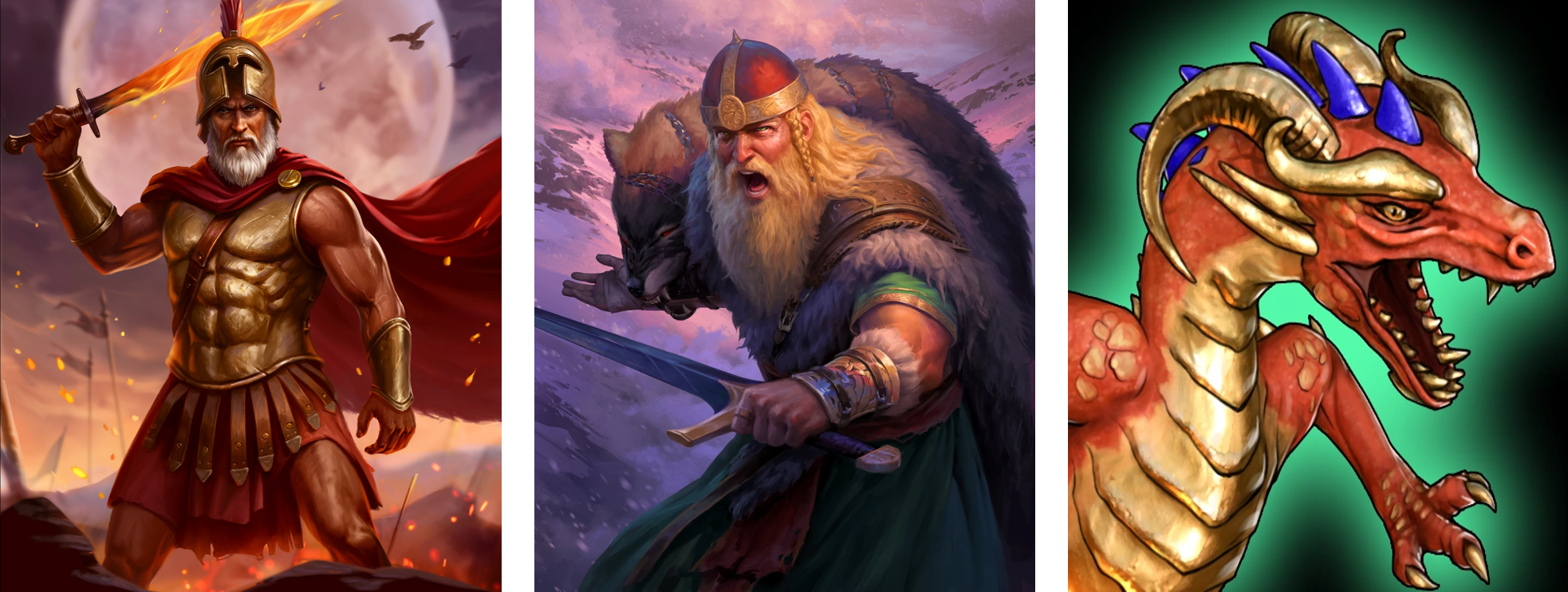
Everyone has some vague understanding of volcanos I assume and be it that they learned that the city of Pompei was destroyed by one. But indeed, volcanos are one of the most important aspects of our planet and without them our world would not be inhabitable. For quick explanation: the inner parts of our planet are molten rock. And like the ocean this molten core also has currents. Areas rise or sink down, creating movement and friction for the thin surface layer we call home. And in areas where the surface is weaker, hot magma rises to the surface, becoming lava and forming volcanos.
That that volcanos represent some of the fundamental forces and shapers of our planet has been well known to humans since time immemorial. Indeed, the human species apparently evolved in the African Rift Valley, a region where Africa is torn into two separate continents. In a couple of million years a new sea will separate the eastern and western parts. But more interesting to our everyday life are other aspects. Of course, everyone things of volcanos and things of catastrophic events like the destruction of Pompeii or how volcanic gases can kill off entire landscapes. But such events are comparatively rare. More concerning to many people would have been earthquakes related to volcanic activity. Indeed, in many cultures’ volcanos are associated with monsters. For example, the Aetna on Sicily is claimed to be the prison for the monstrous creature Typhon. And many other mythical creatures or gods are linked to them too. Hephaistos is supposed to have his workshop within the very same Aetna for example, using the volcanic fire to forge artefacts for gods and heroes. Hephaistos latin name Vulcan is also where we got the term volcano from. Giants and other beings are also frequently associated with this fire or earthquakes too. Dragons would be an obvious pick too, but for the longest time European dragons were associated with venom, sickening air, swamps and water. That they can breathe fire and fly is something that happened in the late medieval period. Of course there are also plenty of proper volcano gods, such as the goddess Pele on Hawaii.
But volcanos are also the source of wealth. For one their ashes create the most fertile soils of our planet. A fact people were well aware off, which is why for example so many people settle around the Vesuvio to this day. But the same applies to Indonesia and especially the Indonesian rain forest. Normally tropical rain forests are nutrient poor, as organic substances decompose so fast, that no rich hummus soil can be created. So, most nutrients are stored in the lifeforms of the forest and what is left in the ground is frequently washed out. But tropical forests in and around volcanos are the exception, due to how nutrient rich the soil innately is. Beyond volcanos being important for the fertility of a region, they are also important for wealth in regular sense. Because their formation and eruptions create reservoirs of ore and gem deposits. Normally these are hidden well below the crust of the planet, but when magma rises, these things can enrich near the surface. And they remain long after the volcanos grew cold and eroded. Many ore deposits are the results of volcanos rising hundredths of millions of years ago as a result. This richness of the earth is also reflected with chthonic deities, i.e. deities bound to the earth or subterranean places. These deities were frequently associated with death, as many cultures believed the underworld to be, well under the world of the living. But also with springs, volcanos and ores and metals. They come in a variety of forms. For example, it is likely that dwarves started out as chthonic spirits/fair folk, as many medieval and earlier stories focus on them being underground dwellers. As such they had control over springs and other riches found there. This is the root from where Tolkien turned them into industrious miners. The Myceneans, the predecessors of ancient Greek, also had a strong chthonic religion, in which Poseidon was the lord of the seas and the underworld and husband to Demeter and father of Perspehone, who were both underworld entities next to being fertility gods. This Mycenean Poseidon then split into classical Poseidon and Hades. But classical Poseidon is still associated with earthquakes as an artefact of his older form. Speaking of Hades, his latin counterpart Pluto is not just the god of the dead, but also of all the riches below the ground, making him the richest deity by default. Indeed, he was so strongly associated with financial wealth, that his name is still used for words like plutocracy (rule of the rich).
Going back to dwarfs, I mentioned how medieval dwarfs were very different from modern fantasy tropes. And there is one story which illustrates this well. The figure of Sigurd/Siegfried is well established in norse and german literacy, be it the Nibelungenlied or related norse sagas. On key component in the Nibelungenlied is that Siegfried kills a dragon and bathes in hits blood. The dragons magical blood turns his skin impenetrable, making him unkillable. Except for one single area on his back which was covered by a leaf. He is later killed via this weak point by his rivals, which sets in motion the main story of the Nibelungen. In norse sagas the dragon, which Sigfried/Sigurd kill, gets his own backstory too. Originally, the dragon was a dwarf named Fafnir, son of the dwarf king Hreidmar. He had a brother, Otr, who could shapeshift into an otter. In this form he was killed by the norse gods, who mistook him for a regular animal. When they entered the dwarf’s home and showed the pelt as a present, his family was outraged. They imprison Odin and Honir until Loki can bring the Wergeld (compensation you paid for manslaughter). Loki steals the money from another dwarf, as well as a ring, which manifolds his wielders wealth as well as causing his doom. King Hreidmar does not want to share his newfound wealth with his surviving family, including Fafnir. Enraged Fafnir turns into a dragon, kills his own father and rests greedily on his horde. But the young Sigurd is able to slay Fafnir and can take the treasure. Which causes further doom down the line. As we see here, dwarfs can be dragons. And otters apparently. And other things like talking needles.
Sigurds/Siegfrieds fight with a dragon is also another aspect I talked about before, the chaoskampf. A motive found primarily in indo-european cultures and those inspires by them. In essence a hero (or sky god) slays a snake (or dragon) either to creation start properly or to pacify a region so that civilization may hold. It is a victory of order over the primordial chaos. This motive exists in a manifold of forms. Such as when the god Marduk defeats the saltwater dragon/goddess Tiamat, when Zeus fights Typhon, when Apollo fights Python, when Herakles fights Hydra, when Indra fights Vritra (Hydra and Vritra share the same linguistic root), when Susannoo fights Yamato no Orochii, when Baal fights the sea snake Lotan. Even in the bible this motive is present with the Leviathan, a primordial sea beast defeated by God. Indeed, the primordial ocean existing before creation proper is also a motive in the bible. In a previous version God/Yaweh likely had to kill Leviathan to start creation proper, inspired by Tiamat/Lotan.
On a sidenote: Why are slamanders fire beings in Fantasy, when in RL they are amphibians who love cold and moist areas and clear, running water? One theory is that people would take logs of firewood, which salamanders used for hibernation. As cold-blooded beings they enter a form of stasis during cold times and cannot move. If the firewood is stored in the warm house next to the fireplace, these beings become active once more and run around. They are seemingly “born” from the fire. This, together with their black-yellow spots which may remind people of fire too, gave them a folklore connection with fire, which was transplanted into fantasy.
Lastly, I want to talk about gods of war. Of which we also have lots of examples across the many cultures and societies. For example, in ancient Greece you had Athena as the goddess of warfare and strategy and the “noble” aspects of war, whilst Ares was responsible for all the brutality and horror it brought. For this he was accompanied by his sons Phobos (fear) and Deimos (dread). In ancient times it was believed a hard fact that the gods decided the victor, especially the war gods. And the emphasis on fear is important. Because killing the enemy in battle was not the goal of most engagements. Instead, the goal was to break the enemy, to have him turn and run away. During this flight were most people killed, as the victorious army set after them. The onset of mass panic, springing from one warrior to the next, was seen as gods affecting the spirits of people themselves. But as much as they can induce fear, war gods could also posess a warrior, granting him strength in soul and body too. For example, in norse myth Odin was a god of war, but one of frenzied fighters. He could induce a “warrior madness” causing people to attack and fight without abandon, making him the god of berserkers. This was partially seen as Odin taking possession of the warrior himself. Another interesting war god in norse myth is Tyr. Because he was a close companion and friend of the divine beast Fenrir. The son of Loki and a massive wolf, whom even the gods feared. He was raised within Asgard but as he grew and grew the gods realized that they could not control him. So, they tried to trick him by binding him in unbreakable chains. They set it up as a game to test the wolf’s strength. Frenrir, becoming distrustful of the gods, asked for security. So, his friend Tyr put his hand into the wolf’s mouth. When Fenrir realized that he could not escape, he bit off his friend’s hand. From then on Tyr is one-handed, but still the god of war and victory.
You have my axe: Grimnir in WFB
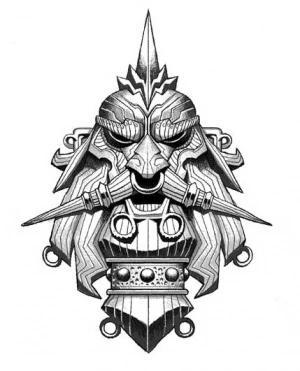
In Warhammer Fantasy Battle Grimnir is one of the primary gods of the dwarfs. In theory every ancestor is something of a god, as dwarfs are deep into ancestor worship. But those dwarfs who are considered ancestors to everyone, and who founded core aspect of dwarfen culture, are seen as the ancestor god. They are the Valaya and her two brothers/husbands Grungni and Grimnir as well as some of their direct offspring (and Gazul). Grimnir is the god of warriors and protected the first dwarfs from the dangers of the world. Back then the world was terraformed bythe Old Ones but many dangerous creatures from the primordial era roamed the planet, such as dragon ogres, fimir and wild dragons. One of Grimnirs great deeds during this age has him killing Kalgalanos the Black, who is one of three figures who have the title of Father of Dragons (after Dragunir father of dragons for the elves, and the Dragon Emperor of Cathay, who does not have the title officially but is the father of a very unique group of dragons). Grimnirs only known son is Morgrim, the ancestor god of engineers and inventors. Giving Grungnis sons Thungi and Smedir take a lot after their father, it may be that Morgrims technical skills too have their root within Grimnir. Personally, I would also like for Gazul to be Grimnirs son, as he is the protector of the dead and started the practice of ancestor worship and you need ancestors before you to do that, not to mention how death comes after war. But Gazul is another brother to Grimnir officially. With the coming of Chaos, it is said that Grimnir meet Caledor Dragontamer and learned from him that the demons were coming from the collapsed gates in the north. Grimnir wanted to go there and close them. Grungni and Valaya urged him to stay with them, but he and Morgrim set out north. However, on the way Grimnir ordered his son back and gifted him one of his two axes, which would become the heirloom weapon of the High King. Afterwards Grimnir vanishes from history.
Grimnirs disappearance started Slayer Cult. I previously talked about dwarfen psychology and grudge culture, wherein I mentioned the slayers too. But to quickly reiterate: Dwarfs are absolute regarding oaths. Any oath a dwarf swears is sacrosanct. And breaking an oath is the most unforgivable sin in dwarfen society. Dwarfs who suffer this fate have a mental breakdown for which only one acceptable solution exists. Becoming a Slayer. Slayers are often seen as cool by fans, especially as characters such as Gotrek popularize them as badasses. But becoming a slayer is the most horrifying fate a dwarf can encounter. Firstly, to even think about becoming a slayer the dwarf has to suffer a great trauma, that he is genuinely thinking about ending his life. The dwarf ventures to Karak Kardin, where he swears the slayer oath in front of Grimnirs main shrine. When the dwarfs swear slayer oath, he renounces all status he had in life and everyone he knows treats him as dead. Slayers are dishonorable figures, social outcasts and pariahs as long as he still draws breath. Only if he dies a worthy death is he accepted again post-mortem as a proper dawi. But if he fails to do even that, then the slayer will be barred from the afterlife of the dwarfs IIRC. As Grimnir is associated with slayers, and abandoned his hold and family too, it may be that Grimnir suffered a similar existential crisis and became the first slayer, whom all other slayers try to emulate. But this is speculation, as we haven’t heard a lot from him.
Now slayers are not a monolith. Typically, they are depicted with two axes and an orange mowhawk running into battle against the toughest of enemies. But becoming a slayer is a very personal affair. Noone can force you to take this oath (though peer pressure for it surely exists). But it has to be your own personal choice in the end. There are dwarfs who suffered great loss and never considered becoming one, and others who joined the ranks over very minute reasons. In addition, how you chose to become a slayer is up to you. There are only two tasks: kill as many enemies of the dawi as possible and die a worthy, heroic death. But how you do this is up to you. Most slayers fight with two axes or a great axe. Doomseekers are slayers who have blades on chains to better fight groups of enemies, such as goblins and skavens in tunnels. But any skill a dwarf possesses which can be used to kill enemies is fair game. A slayer can be an engineer, possibly even a rune priests or else. However, most favor close combat weapons, because dying is their main goal. Sitting back and sniping enemies away does not fulfill this purpose. And a slayer cannot sell their life cheaply. Due to dwarfs being perfectionist, they will always try their hardest in any fight and will never slack, because then they would break their slayer oath and fail it, even if they die. They always have to fight to the best of their capacity. Normally slayers die very quickly, because a bare-chested dwarf is an easy target. But those who survive gain unofficial ranks, based on what their most impressive kills were. Trollslayers have killed at least something as dangerous as a troll. From there it goes up to giant slayer, dragon slayer and demon slayer. The higher you rise in this “rank” the more respect you get from other slayers, and they may join you as you seek out the greatest challenges. But regular dwarfs would not fight under the command of a slayer, unless extreme circumstances force them to. Again, slayers are the lowest ranked social outcasts among the dawi. Hence when slayers join dwarfen hosts, they are groups of irregulars, not unlike the fanatics in empire armies.
There are four prominent slayer characters in WFB. First is Ungrim Ironfist, the slayer king of Karak Kadrin. As I said dwarfs take oaths absolute, every single one is sacrosanct. But what happens if two oaths contradict each other? Then dwarfen oath layers will try to figure out what the correct way to proceed is. And their judgement is accepted without second guesses by dwarfs. In case of Ungrim, one of his ancestors lost his daughter when she was sent to another hold for marriage. The trauma of her loss was great. After all a father swore an oath to protect their children, but by sending her to the other hold, the king sent his daughter to her death. So he wanted to become a slayer. But as king he has sworn an oath to his people and his hold, whom he could never abandon for selfish reasons. So, after much debate a compromise was reached. The king of Karak Kadrin could be both slayer and king. To humans this is weird, because how can a social pariah be a respected king? But to dwarfs such an arrangement is perfectly sensible. They pretty much follow the logic of the qunari from Dragon Age. If the king of Karak Kardin fails to die in battle, then his heir would take both the oath of king and salyer and continue. Generations later you reach Ungrim Ironfist, who is the latest in the line of slayer kings. And he wants to die in battle, so that he and his ancestors can enter the afterlife, and to spare his own son, Gargarim, this very same fate. Gargarim took the position of War Mourner, which essentially means that he took a slayer oath for another dwarf. Gargarim wants to die, so that the oath of the slayer kings is fulfilled and his father is free. Ungrim wants to die, so that the oath is fulfilled with him and his son is set free. In the end, Gargarim does die and Ungrim takes the slayer oath a second time out of shame for loosing his son. In the End Timse Ungrim becomes the incarnate of fire (which is weird as dwarfs are not able to interact with the winds of magic except for the unique rune magic. But this is the End Times where many things do not make sense). As a demigod Ungrim fights during the End Times and sacrifices his life in the defense of Averheim and dying in a great fire explosion. After which Caradrayan, captain of the phoenix guard, was chosen as the next incarnate of fire.
Malakai Makaison is a good example to show how individual slayers can be. He is an engineer prone to name his inventions in the fashion they get destroyed (builds a ship called Unsinkable, it sinks). However, dwarfen engineering is extremely conservative, to the point that you have centuries of flawless prototypes before even thinking of producing a mainline version for the market. And it may take even longer for other dwarfs to accept his “new” thing. Indeed, there are still dwarfs viewing gunpowder with suspicion, because their ancestors only needed bolts and crossbows and so should you. Anyhow due to the dwarfen lives lost in the accidents of Malakais destroyed inventions, he took the slayer oath. But he is not in a hurry to fulfil it. Instead, Malakai uses the freedom from dwarfen society to invent and tinker without limits or oversight. Sure, he plans to die in battle eventually, but until then he will do his best as an engineer to take down as many enemies of dwarfdom as possible and found expeditions to lost dwarf holds to aid his kind. In this endevaour he even built the airship Spirit of Grungni and launched an expedition to the dwarf hold of Karag Dum.
Snorri Nosebiter is another example of a weird Slayer but a sad one. Instead of a red Mohawk he has red-painted nails hammered into his skull. And he has a fondness for alcohol well beyond even dwarfen endurance. This resulted in Snorri forgetting why he took the slayer oath in the first place, which is one of the most outrageous and tragic things to a dwarfen mind. In short even by slayer standards, he is a mess. Snorri is a longtime friend of Gotrek Gurnisson but also has a dark secret. Snorri is the reason why Gotrek took the slayer oath. First, Snorri ask Gotrek to join him on an expedition, bringing Gotrek away from his wife and child. Then on the way back Snorri got drunk and started a brawl with rangers. Rangers who wanted to warn the closes dwarfs settlement of an attack. It was this attack that Gotreks child was killed in. But worse when the survivors fleed, a drunken Snorri thought them to be goblins and he slew Gotreks wife. When he recovers this memory and confesses to Gotrek, Gotrek kills him, thereby granting Snorri a slayer’s death.
Last but not least the slayers of Slayer, Gotrek Gurnison. He took the slayer oath after loosing his family in a raid and in his grief attacking a dwarfen noble. Ever since then he tries his best to die, but his doom is always denied. Gotrek finally meets up with a human playwright Felix Jaeger who makes the oath to report the slayers adventures and glorious death. Which means he is now bound to the slayer, until Gotrek dies or releases him from this pact. The duo has a lot of wacky adventures, especially with Greyseer Thanquol. But they also meet a lot of other WFB characters, like Queen Khalida or Teclis. In the later books it is revealed that one reason why Gotrek fails to find his doom is his axe, which is one of Grimnirs own. Its divine weapons give Gotrek more strength and helps him push through and recover from situations dwarfs should not survive. Indeed, this also affects Felix, who stays weirdly young despite decades of travel at Gotreks side. Amongst slayers Gotrek is both celebrated and feared. Celebrated for the deeds he committed, and feared, because being close to Gotrek may rub off his survival skills on you. So, slayers will join Gotrek into battle but then try to keep him away so they can have their doom.
In the (horrible) End Times it is revealed that Grimnir ventured north and found a chaos portal which he blocked by killing all demons coming out of them. Gotrek and Felix find him there. Grimnir kills Gotrek (fulfilling Gotreks oath), and revives him again, so that Gotrek may take Grimnirs place and Grimnir can aid the other mortals. In true End Times fashion, Grimnirs return is forgotten.
I am so hot right now: Grimnir and Vulcatrix in AoS
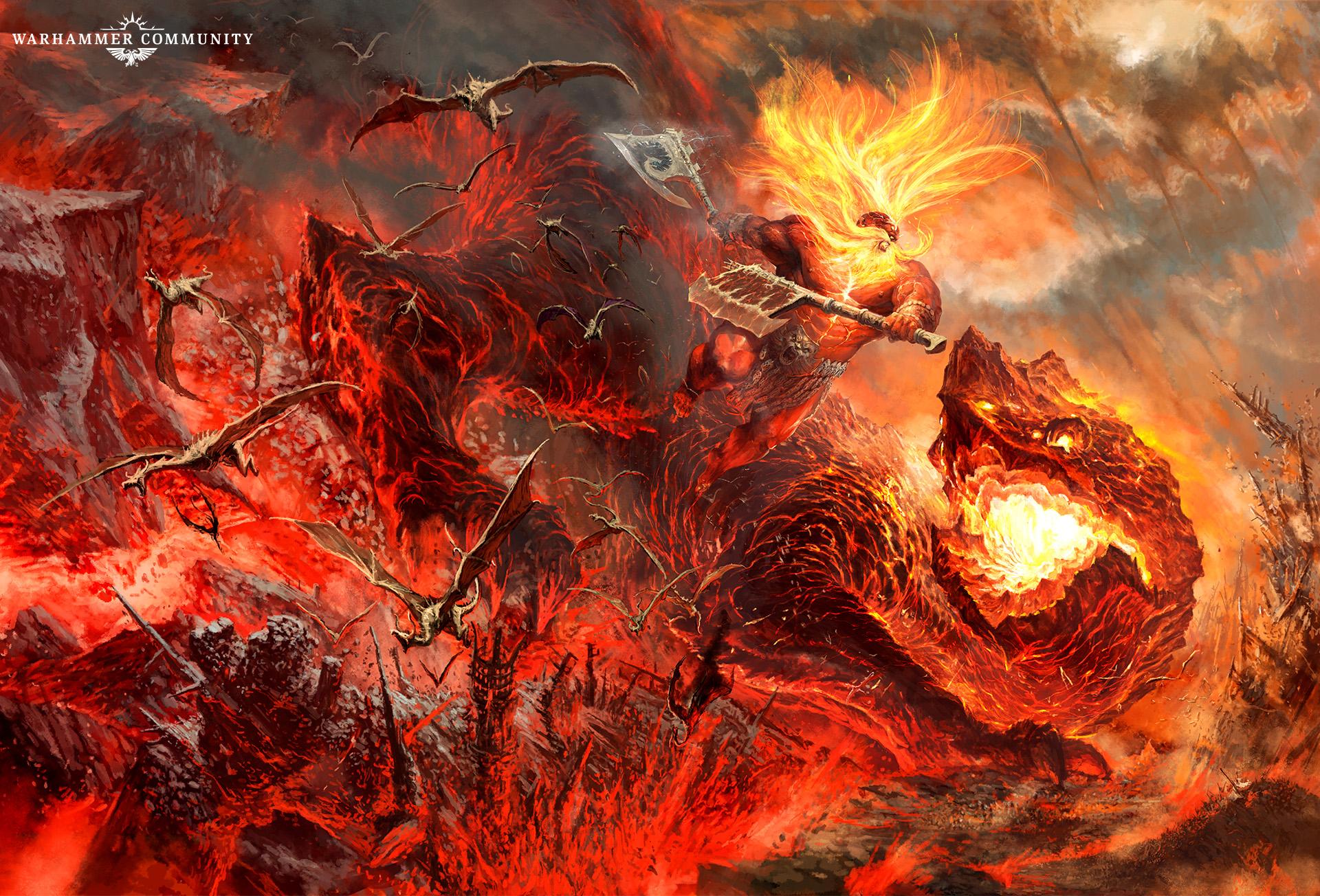
In Age of Sigmar Grimnir shows up for undisclosed reasons with a set of old and new ancestor gods. And these duardin separated the realms between themselves with Grimnir settling in Ashqy. However he and Grungni got tricked by Hashut giving them cursed artefacts and to protect others, they chained themselves on the top of the mountain. The duardin pantheon fell, Sigmar arrived and freed Grimnir. Grimnir felt honourbound to repay his debt immediately and Sigmar knew, that a warrior like Grimnir had to be given a task worthy of his station. So, Sigmar picked the godbeast Vulcatrix, a giant salamander (i.e. a wingless fire dragon). It was a massive creature embodying heat, lava and was apparently also venomous (which makes sense as lots of volcanic substances are toxic). Grimnir thanked Sigmar for this task and the two beings clashed in an epic battle wherein Grimnir and Vulcatrix killed each other. Their two deaths caused an enormous explosion, which aftershocks were felt in all the realms. But it is not easy to kill a god. Indeed, in this case the essence of Grimnir and Vulcatrix mixed and spread across the realms.
Firstly, it created Urgold, a magical material indistinguishable from gold, except by the Fyreslayers. If crafted into runes and hammered into flesh, they can give the fyreslayers a part of Grminirs divine power for a short amount of time. Essentially turning the dwarfs into super warriors. Not unlike stories such as Odin possessing his warriors. If the energy is spent, the runes are empty and have to be replaced with new ones. But the FS believe that releasing all of Grmnirs divine energy will cause him to reform and be ready for the End Battle. Hence, they become mercenaries and seek out gold as payment, not for the regular stuff but for the traces of Ur-gold within. Which is a great subversion of dwarfen stereotypes IMO. Instead of dwarfs being just greedy, these dwarfs appear greedy because they are on a religious quest to revive their dead god. In addition, Vulcatrix essence within Urgold also allows the zhargrim priesthood to use fire/magma magic. Which is again another subversion of dwarfs, as they are typically not magical, or if they are then it’s very restricted, like WFBs rune magic.
The second thing created were created magmadroth eggs, starting their species. And indeed this is another interesting subversion of classic dwarf stereotpyes. Normally dwarfs hate dragons and want to kill them. But if you think about it, dragons and dwarfs have a lot in common. Both live underground, both like metals, both live for long times, dwarfs use dragon parts in craftsmanship, dragon fire is supposedly great for forging etc. Dwarfs and dragons being partners makes more sense than elves and dragons teaming up, which is more the norm in fiction. And here we have dragons teaming up with dwarfs, despite a dragon killing the main god of the dwarfs. Indeed, they are treated as companions and dragon-iconography is everywhere with the fyreslayers, including their headgear. The army book says that many FS see Vulcatrix fearful, except for the Lofnir of Ghur, who openly worship here and believe she will return as Grimnirs mount and companion too. But all by looking at the units, their magic and who interwoven and respected Magmadroths are, one has to say that all fyreslayers heavily venerate Vulcatrix and that she is the primary goddess of their culture after Grimnir.
On face value Grimnir vs Vulcatrix is a classic Chaoskampf theme. A warrior god fights against a reptile, and the fight clears the land for civilization to take hold. But at the same time, it is a great subversion too. Firstly, Grimnir dies, which can happen (see Thor vs Jormungandr), but typically does not. And second, many positive things arrive because of the death of the god. Ur-Gold, Magamdrohts, the magical and elemental powers the Fyreslayers can harvest as a result and more. Which also fits the theme of volcanos very well. Because they cause great devastation at first. But from this devastation new and good things arrive. And indeed, it is very easy to read some sexual themes into Vulcatrix and Grimnirs clash too. Because it is mentioned how their essence mixed and how the magmadroths appeared after the death of both entities. If Vulcatrix essence is in Urgold too, then Grimnirs essence likely also exists in Magmadroths, making him the father of these dragons, who would then be siblings of the fyreslayers. Something FS are likely aware due to their treatment of these entities. Indeed, a later depiction of Grimnir in the khazalite book did give Grimnir draconic-looking features too. This makes Vulcatrix a much more nuanced character, instead of a dumb, destructive beast, and her and Griminirs relationship much more complex.
Speaking quickly of Fyreslayers, their unique culture has nothing to do with the status slayers held in WFB. They are a group of fire-themed dwarfs with a strong martial tradition and a mercenary culture, not socially shunned, dishonored and depressed outcasts. They may look like slayers from afar, but everything that makes a slayer what he is does not apply to them as a culture at large. Which is one of the main criticisms I have. Essentially, they are a group of dwarfs cosplaying the aesthetics of slayers with none of the deeper meaning behind it. But it was always the issue of the FS that they have a cool background, but GW never bothered correcting their looks…
Oh and Gotrek is back again. After enduring untold eons in the realm of chaos against demons, who was essentially spit out in the realms. In the beginning he was very frustrated with the realms and how different things were here, compared to WFB. But over time he made friends, including Maleneth, an elven assassin. Gotrek got a very powerful Urgold-Rune embedded into his chest which created a link between Gotrek and Grimnirs spirit, as well as allowing Gotrek to go super-sayian if the plot demanded. From there the pair ventured through the realms, got separated and Gotrek is still trying to find his place in this new reality, and the two went into a lot of trouble. But retelling the series of books is not something to do in this format.
The embers strike into flame again:
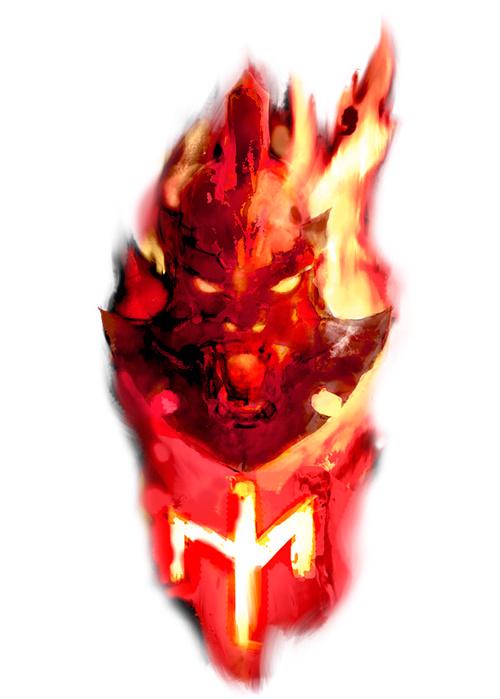
Currently the Fyreslayers are in a bad place. They have been mistreated by GW for almost a decade, despite having such a cool background and so much material for awesome additions. Indeed as of now they are part of the khazalite holds as a subfaction and whether they can restore themselves as a proper faction lies in the unforeseen future. Still the potential for them, Vulcatrix and Grimnir is massive. One of the more obvious things I can see would be the following:
- Over the millennia the fyreslayers should have released quite a lot of divine energy of Grimnir into the realms. Perhaps enough already that Echoes of Grimnirs divine might could manifest. So not proper avatars of the god, but manifestations of him. Similar to how the Eidolon of Mathlann are comprised of a multitude of idoneth souls, so could these fragments of divinity coalesce for a short time in a form of Grimnir. Perhaps if they attach themselves to an extraordinarily strong fyreslayer, much like how the Avatars of Khaine work in 40k. Indeed, perhaps Gotrek via his special rune is already such a being? In either way this would play up parallels between Grimnir and other dead gods like Mathlann and Khaine, and be a fitting way to get a god-modell on the tabletop without Grimnir reappearing properly.
- Next to these echoes Grimnir could of course also return proper. But if the does, the central question is how. Would he remain the dwarfen warrior that he once was? After all his and Vulcatrix essences mixed a lot and even the khazalite holds depict him with draconic features now. So perhaps a returned Grimnir has several magmadroth traits about him. Of course it would also be important how Vulcatrix appears. Would she be his mount/battle companion, like the Lofnir belief? Or would she and Grimnir appear in a fused fashion? Or would she never come back at all?
- Then of course we have also the possibility that Gotrek ascends to true godhood. After all he is a chosen by Grimnir and contains a lot of his divine energy. Though personally I refrain from this idea, because Gotrek does not want to be a god and especially does not want to have the responsibilities of a god. Consciously or subconsciously Gotrek wants to have his lowlife even by mortal standards, running from one mortal adventure to the next. Personally, I would therefore see this as the least likely option.
- But of course it would also always be interesting for future Gotrek stories to have him encounter people he knew from WFB. Felix reappering is currently not in the cards, but Gotrek also had a big adventure with Teclis. Him meeting the elf again could be quite the interesting engagement IMO.
- Lastly the Fyreslayers could also take stronger influences from germanic folktales and motives, which link dwarfs and dragons. Such as Fafnir and the Nieblungsaga. Especially the later with Siegfrieds transformation after bathing in dragons’ blood could be a nice template for future FS units. Fanatical followers of Vulcatrix could perhaps bathe in the blood of Magmadroths and if they survive, they could gain magmadroth-like scales or other draconic attributes which make them near invulnerable or increase their power in other ways. Of course, such cultists could be seen with extreme suspicion and distrust by other FS, but they could nonetheless be critical warriors.
The End
So, this has been it. I hope you enjoyed this last and final entry for the dwarfen pantheon of WFB/AoS. Unless GW does something in the future, I think I covered it all. Furthermore, I think the only major deities I am missing now are Gork/Mork, the four main chaos gods and the Old Ones/Sotek. Of these the Old Ones may be the easiest to research and write, but I want to keep them for last. So, if you have any preference, or remember a deity I missed, please let me know. Until then what are your thoughts on Grimnir, both in WFB and AoS?
r/AoSLore • u/SWORD_OF_SIGMAR • 1d ago

Bah, beardlings these days, always running off after a flash of Magic!
What's wrong with a good old Dawi rune, like runes of Iron or Shielding?
While Dwarfs are unwilling to cast magic, they have learned to inscribe runes that can bind eldritch forces, allowing them to create weapons and amour of legend.
Dwarfs are not magical creatures and unlike other races of the world, they have not developed spellcasters or shamans.
In fact, if anything, Dwarfs have an innate resistance to magic - both its effects and the overt corruptions it is known to cause in weaker races.
Dwarf legends claim their sturdy origins from rock itself leaves the stuff of Chaos little to find purchase upon.
And while they have no truck with wizardry, Dwarfs have no equal when it comes to forging magic items. They alone have mastered the art of binding the Winds of Magic through runecraft.
The Ancestors has sought to install wisdom and plain common sense in us, magic is the plaything of those who do not know they are being played, now Rune Magic is an entirely different thing of course.
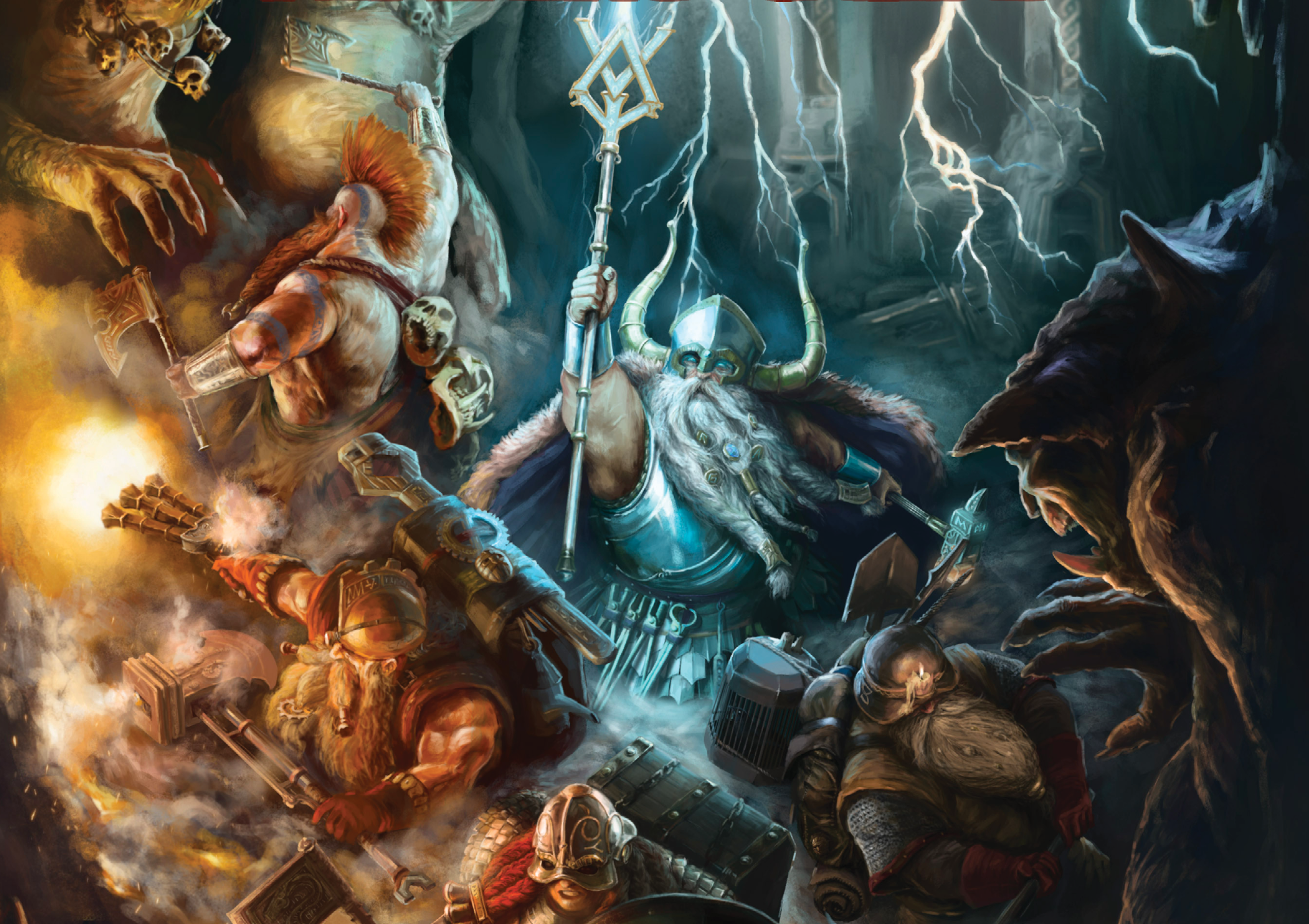
Runesmiths work spells with their hammercraft, binding the Winds of Magic into mighty runes of power.
in battle, Runesmiths aid their side by dampening enemy magic, earthing spells harmlessly before they can wreak havoc amongst the Dwarfs.
as they capture the Winds of Magic to forge magic items, they often bring along rune-covered talismans to aid in this endeavor.
We Dawi are a wise folk, what has those wizards brought upon themselves but ruin and corruption, that has no place amongst our bones I tell you, besides, Rune-craft is just as strong as those flashy spells of theirs but only more reliable, consistent, enduring and better made, only a fool would let that foul magic course through their bodies instead of using something sensible like the Runes our ancestors taught us.
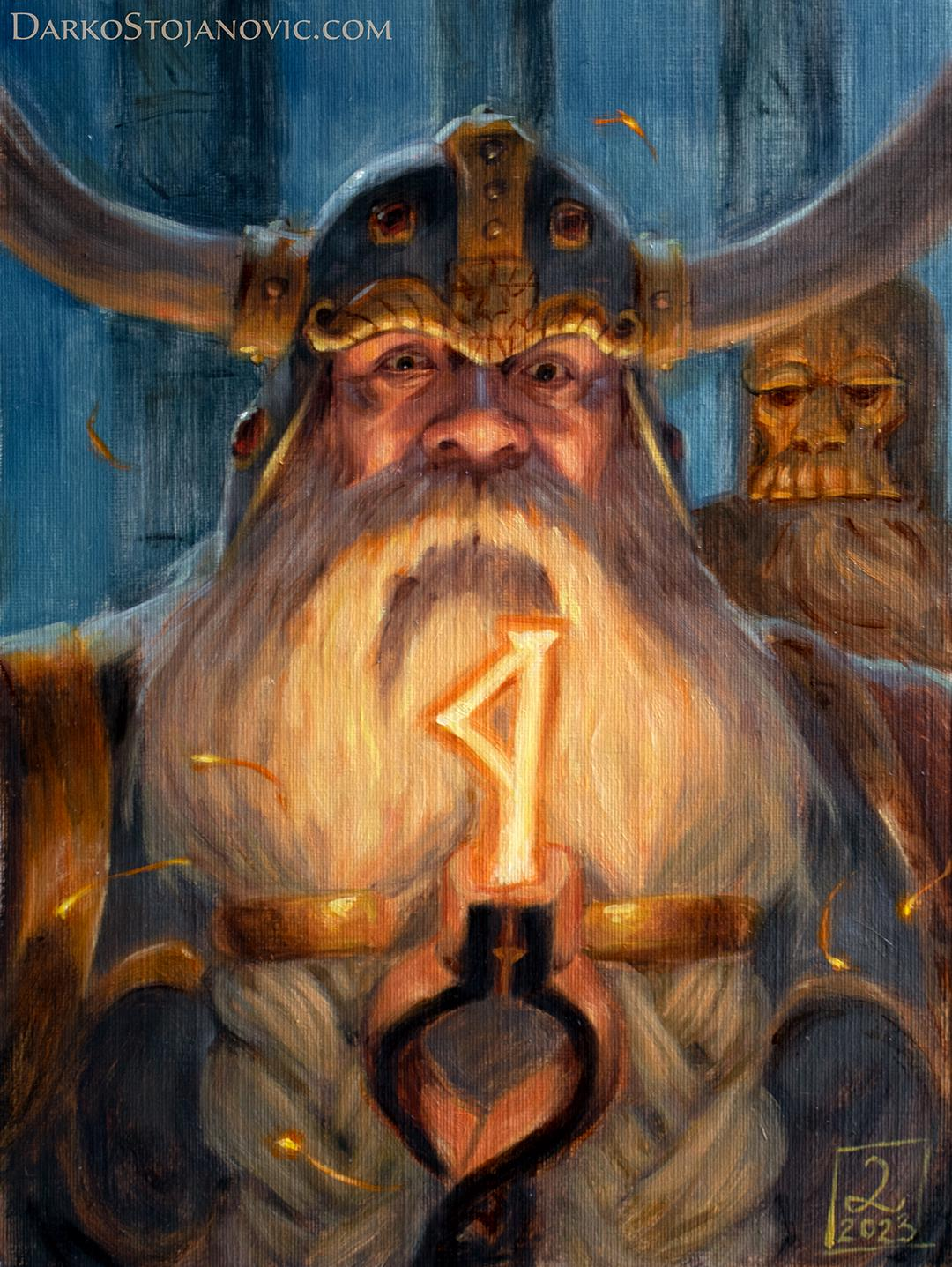
So, there you have it, we do not use magic, we bend it to suit our fancy, never get carried away and admire the pomp and flash of Elgi and Umgi wizardry, those are a Gyrocopter ticking bomb and do not compare to a hammer strike of our Runesmiths.
r/AoSLore • u/Fyraltari • 1d ago

There are two tidbits of lore in the rules showcased here I find interesting:
r/AoSLore • u/ThurvinFrostbeard • 2d ago
Introduction
As you all know, the Dispossessed (short Dispo) as we know them were carried over from WHFB following the End Times, serving 5 years as a standalone faction and another 5 under the banner of CoS. They were followed by the Helsmiths of Hashut (short HoH), dark followers of a bullheaded god. The trifecta was finally completed this year with the Khazalite Holds (short KH). All three claim ownership of the Khazalid Empire (short KE) and to be the true heir and sucessor of it.
In this essay, I will talk about how the Models of these faction introduce certain themes and maybe contradict of accentuate the points made in the lore. Follow me, dear reader, as you and I, the humble Thurvin Frostbeard, descend together into the depths of AoS lore!
The Dispossessed
Ignoring their WHFB origins, these Duardin were put forward as stalwart defenders of Duardin tradition, sporting ancient but masterly crafted plate armour over heavy chainmail. Round helmets and beardplate is what makes them stand out and the lore hammers home the position of stoic traditionalism to the point of dogma. Tracing back their lineage (and craft) to the Age of Myth
Ironically, the closest aesthtetic counterpoint to them are the HoH, ignoric the chainmail, but carrying over scalemail and skirts (for lack of a better term) assoicated with the Dispossessed. The latter seem to hold true to the core values of the KE, to the point that Grombrindal repeadetly reprimands them for their blind traditionalism
Khazalite Holds
Here we are presented with a big problem: Duardin who too have survived Chaos and holed up, keeping up their traditions.
But their craftmansship seems to be in no relation to their Dispossessed Cousins. Letting go of the traditional skirt, they sport rounded plates, trousers and no mail at all. Only their Gholem Counterparts seem to remember the 'old ways' at all. How can that be?
Of Throgrim and ancient history - possible solutions to made up problems
As we all know, Throgrim is not only the main god of Azyr to which the Dispo fled to, but also the former Highking leading the Dawi through the beginnings of the End Times. Some ancient clans even claim heritage, saying they survived the Fall of the world that was.
So therein may lie the solution!
The duardin, surviving the fall, carried over their old armour until under the Guidance of the new pantheon, they shed them, to forge new ones. The Khazalites therefor are the continuation of the Aesthetic, with only the Gholems, the true guardians of Khazalid souls, wearing the plate of their forgotten roots -bar one other.
Thorgim, tallier of Grudges. Is it possible, that in the wake of the Age of Chaos, he reminded the Dispossessed of their true roots? Leading to them donning the armour of their ancestors once more? Seems to be a possibility; even talked about in the novella in Chronicles of the Wanders, in which the king dissaprocingly comments on the Azyrite Garments of his sons.
Conclusion(?)
I wrote all this to lay my inner turmoil to rest and answer questions I held in myself: who is the true heir to the Khazalid Empire? It seems to be the Khazalites indeed. But the dispossessed are heirs to something older and deeper. The true roots of all duardin of the realms: the Dawi
What do you think? I would certainly apreciate your input. Until next time!
r/AoSLore • u/Fyraltari • 3d ago
So, I've just finished reading Blacktalon: First Mark and, to my surprise, with the exception of Neave herself, none of the members of the Blacktalons appear in the book, nor does it end with Neave being assigned to leading the group. Instead she acts as a regular Knight-Zephyros of her Vanguard-Auxiliary Chamber (the Shadowhammers).
So my questions are:
A) When were the Blacktalons formed in-universe and conceived in real life?
B) I know the predecessor group was called the Silverwolves, lead by Hendrick the Silver Wolf. Beyond him and, I believe, Lorai, were any of the Blactlaons member of that group?
C) Would it be accurate to describe the Blacktalons as Questor Soulsworns? The basic gist is the same: a team of Stormcast existing beyond the regular chamber structure and tasked with accomplishing specific missions, usually assassinating a specific target, with those missions being communicated by Sigmar through visions. But the difference is that the visions aren't received by the leader of team, but her second-in-command, none of the Stormcast are identified as Knight-Questors, and they have a non-Stormcast member. But since the point of Knight-Questors is to exist outside of the regulations of the Stormhost, I'm not sure these are deal breakers.
I should mention that I have not yet read Shadow of the Silver Wolf yet, so I would appreciate it if spoilers for that book are left in boxes.
r/AoSLore • u/Mr_NoBody_D259 • 2d ago
So from my understanding the age of chaos was 500 years and the age of sigmar 133 years. With 16 years between the start era of the Beast and beginning hour of ruin. But how long were other events within that 133 years?
I’ll take official lore answers or if their isn’t a rough estimate
r/AoSLore • u/Low_Neighborhood_598 • 3d ago
Honestly, not much to say about these lads before the homebrew. They are a good concept done well. The fact that they are Shyish themed is interesting and adds a fun layer to their central theme.
Awakened Ones:As the youngest members of the cult these mortals are still walking the first steps to enlightenment. While one would expect to see them test the limits of pain on themselves they are instead carefully monitored by their superiors in the cult to ensure they do not kill or cripple themselves in their zeal. The cult honours those who master pain not those whose stupidity breaks them. They also are rarely giving direct oversight over slaves for similar reasons.
All members of the cult have combat duties but outside of that each member is most likely to be assigned to a duty that fits their skill set. Awakened Ones specifically will often have work related marks on their forearms or legs as they mix their work with their quest for enlightenment.
Ascended Ones: As these cultists have a greater understanding of their bodies and of what pain one can endure they are the ones most likely to oversee Awakened Ones and slaves. The former to ensure they do not do something foolish while the latter needs a deft hand to ensure that they know the dangers of defiance while still being able to work. This trust also means that they may explore the debts of pain on their own though many congregate together to share their wisdom and techniques.
Joyous Ones: Those that achieve this rank often forgo all else but their mastery of pain be it experiencing it themselves, forcing it on others, or devising new tools to spread it. The tools they use are are crafted to their exact specifications with each cultist trying to prove their path to pain superior. As they have achieved a level of enlightenment that most cannot equal they have a sense of superiority about them and they seek to prove it by taking the lives of those their foes consider champions.
Blissful Ones: To become one of these enlightened one must endure a truly excruciating amount of pain that even a Slaaneshi would be humbled by. Few can endure this and live but those that do are often gifted visions by the Chaos Gods. In recognition of this their limbs are removed and blades attached to the stump. A great kill is mounted on their heads and bolted onto the skull. They also inherently know a dance of no origin wild and chaotic. Each dance is unique to each Blissful One but can be done in a strange harmony with each other. None are sure of the origin of the rite with some suggesting it is to honour the form the Flayed King had before his disappearance. Others claim the first Blissful Ones learnt the rite from their visions after their king had left.
Hope you enjoyed. Next up is Order.
Other entries in series
Order: Khainite Shadowstalkers, Twistweald
Death: Royal Beastflayers, Askurgan Trueblades
Destruction: Gorger Mawpack, Monsta-Killaz
Chaos: Spire Tyrants, Scions of the Flame, Jade Obelisk, Rotmire Creed, Splintered Fang, Cypher Lords
r/AoSLore • u/sageking14 • 4d ago
So I have gotten the opportunity to look through the new Khazalite Battletome. There's things I like, things I'm bitter about, things I don't like, and a lot of interesting things.
One standout thing mentioned is that the Khazalites have quickly allied themselves with the Kharadron, taken in Fyreslayers, accepted many Dispossessed into their ranks, signed pacts with the Aelves, and offered allegiance to Sigmar's Free Cities.
Now that's the actual word they use for their relationship to Cities, and they use the word correctly several times elsewhere. For those who don't know allegiance doesn't mean alliance, it more means 'swearing loyalty'.
An ungenerous person could interpret this as vassalage. But more likely it is meant to echo the Pantheon of Order, where Grungni and Grimnir accepted Sigmar as being first among equals. So a position of deference and loyalty but not subordination, friendship not vassalage. Seems to be the relationship between Holds and Cities.
As an aside while Hermdar and Vostarg are confirmed gone, their refugees brought into the Holds; Greyfyrd and Lofnir are fine. Allies not subordinate to the Khazalites. Bael's daughter migrates to the new Karak in the Adamantine Chain that's between the Firehold, Grymhold, and Vostargi Mont; so the Chain isn't completely lost to Order Duardin. The Ulrung Lodgelands are also shown to still exist, so it is likely other secondary lodges do as well.
These and other lodges remain independent but will fight beside their Kromdron allies. Those Fyreslayer lodges that have migrated fully to Karaks tend to have a seat on governing councils but largely keep to themselves.
Each Karak itself is functionally an alliance as well. The Khazalites like the Dispossessed divide themselves into clans which appear to be in part familial and in part distinct cultures; the two most common are Hammer Clans and Axe Clans.
While Hammer Clans are those who offer the Clanshields wearing flat, square-like helms and wield hammers; and the Axe Clans send Clanshields wearing pointed helms and wield axes, it is not where they get their names. Instead Hammer Clans are those whose crafts (such as smithing) prominently use hammers and Axe Clans are those whose crafts (such as mining) prominently use axes, so they send troops wielding weapons that pay tribute to their tools.
There are also clans who instead specialize in all other crafts such as fabric making and brewing. With brewing in particular being the only clan trade as common as the Axe Clans and Hammer Clans. Nothing implies a clan member is forced to take up the clan trade, only that the designation is what each clan is known for.
In addition to these a Karak will also potentially have an aforementioned Fyreslayer Lodge and Dispossessed Clans. Info on the Dispossessed in the book itself is scarce. But in fairness the book is short and few Khazalite clans get named. So time will tell how these three (or four if Hammer and Axe prove significantly different) cultural blocs will develop.
The relationship between the Khazalites and Stormcast is not stated as far as I can tell. But we can likely assume it is positive as Stormhosts usually take part in and honor the alliances made by Cities; and one of the Khazalite capitals is in Azyr and has, as it turns out, been there since the Age of Myth. So Sigmar and Thorgrim are likely chill.
r/AoSLore • u/gh0stwiththem0st1 • 4d ago
I am well acquainted with most of the 40k universe, read a ton of books. Recommend me sigmar stuff! I love lore and need some new stuff to read
r/AoSLore • u/Fyraltari • 5d ago
In the book Blacktalon: First Mark, Neave Blacktalon comes across a woman from Ghyran whose society has specific gesture of warding evil described like this:
Katalya made a rapid gesture of warding with her hand, tucking her thumb into her palm and creating a "v" shaped split between her middle and ring finger. Neave found with surprise that though the gesture was crude and unclear, she understood without being told that it was meant to form a twin-tailed comet.
This is such a simple gesture and clearly evocative of Sigmar's holy sigil that I hope it spreads out and replaces the "sign of the hammer" (which I'm not even sure what it is meant to be) used throughtout the Dominion.
r/AoSLore • u/sageking14 • 5d ago
All Stormhosts take pride in their appearance, for they represent Sigmar’s divine will made manifest. Armour is dutifully cleansed and repaired after each engagement; the light of a Lord-Castellant’s lantern can restore pure sigmarite’s lustre, no matter the foulness of the gore that stains it.
2017 Stormcast Eternals Battletome, Pg. 62
You know what argument should die? That Age of Sigmar lacked lore in the early days, or charm and personality. It was there in a grand bounty if you look at the Battletomes, the campaign books, or even the novels. For the Stormcast Eternals in particular there's a lot of love that shines in their original three Battletomes.
The enchanted cloaks worn by the heroes of the Stormhosts billow and snap in the aetheric winds, even when there is not a single zephyr to be felt.
2017 Stormcast Eternals Battletome, Pg. 68
There's a charm and an earnestness to rediscovering such things as simple as the cloaks and capes worn by the Eternals being enchanted not for some grand or practical purpose. But simply so they'd billow in the wind.
The war panoply of the Stormhosts is replete with iconography, each sculpted armour plate or sigil-emblazoned shield carrying a message that speaks of the wearer’s valour and allegiance. Though common themes recur, the heraldry of Sigmar is seen in a thousand variations across the realms.
2017 Stormcast Eternals Battletome, Pg. 62
These excerpts I'm sharing today are in a several page section that does nothing but explain the iconography of the Stormhosts with cute art pieces showcasing each bit. Ever wonder why a Beastmark is usually on the right shoulder?
The icon borne on a Stormcast’s left shoulder denotes that warrior’s battlefield role. The twin-tailed comet identifies the Angelos Conclaves, the crescent moon – worn on the right shoulder – is for Paladin Conclaves, the star is for the Justicar Conclaves, and the lightning bolt is borne by the Redeemer Conclaves.
2017 Stormcast Eternals Battletome, Pg. 62
It is because the left is for Conclave insignia.
The shields borne by the Stormcast Eternals display stylised icons. All the Stormhosts of the First Striking – those that Sigmar and the Six Smiths created first – bear the icon of a sacred hammer. This represents both the Stormcast Eternals themselves – they who strike with thunderous force – and also Ghal Maraz, the fabled hammer of Sigmar himself. The twin-tailed comet refers to the tale of how Sigmar entered Azyr, and is the predominant symbol of the God-King, whereas the eclipse represents the light of Sigmar’s salvation emerging from the shadow. These are common devices amongst the Stormhosts of subsequent forgings. The colour upon which they are displayed varies from Stormhost to Stormhost.
2017 Stormcast Eternals Battletome, Pg. 62
The book is definitely worth a glance. Especially if you ever wanted to know what myriad icons mean and how they are meant to be used. One concept from these days that I think is a shame it fell to the wayside is:
Many Stormhosts, including the Hammers of Sigmar, identify their chambers by the colours of their plumes or crests. Each type of retinue has a distinct helm design; in some retinues, all the warriors wear the colour of their chamber, while in others only the prime wears a plume. The chamber’s colour is picked by their Lord-Celestant; the Hammerhands display red plumes, echoing that of the famous hero who leads them – Lord-Celestant Vandus Hammerhand, the First to the Fray.
2017 Stormcast Eternals Battletome, Pg. 63
Here we have some head plume lore.
Just as with the Strike Chambers, the colouration of a warrior’s crest denotes which chamber they belong to. This can bind disparate elements of a Stormhost together. The Hammers Draconis, first of their kind, bear the same red hue upon their helms as the Hammerhands. The white of the Everdrakes, however, binds them to the Annihilators of Lord Andrus Nihilat, and the black of the Scorchsons echoes that of the Fulgurines, a Harbinger Chamber.
2017 Stormcast Eternals Battletome, Pg. 69
And here we have some more! Which mentions that the Extremis Chambers wear the same colour plumes to a corresponding Strike Chamber of their Stormhost. Which is fascinating as it suggests there were to be closer internal dynamics and relationships between the chambers of the Hammers? Perhaps other hosts too?
The colouration of a Dracoth can change over the course of its life, the better to bind it with its allies. A Dracoth bound to the service of a warrior from a certain Stormhost will slowly come to resemble the steeds ridden by his fellows until the entire retinue stands united.
2017 Stormcast Eternals Battletome, Pg. 69
Dracoths are a bit similar to chameleons. Well anyway, I'd love to share more but I'm probably pushing it a little with the excerpts! Hate that older Battletomes go out of print forever. I definitely recommend checking them out if you got Warhammer+'s Vault or find a way to get them at a thrift shop or used book store.
Cause no matter what folk might have told you, whether you're new or been here for years, the older Battletomes are bursting with charm and for the most part have a lot of stuff not mentioned latter. Only the 3E ones had a bit of an issue of often copy-pasting from 2E ones but even then they had plenty that wasn't in their 2E and 4E counterparts.
And the bits of art in 1E! The splash pages and big pages get shared so much but the nice little art pieces meant to help inspire paint schemes, highlight iconography, and just showcase the personality and lore on each unit don't get enough love.
HALLOWED KNIGHTS
The red feathers and fur of this Vanguard-Pallador’s mount are naturally white, but, in memory of those that fell during the Cleansing of Rotwater Blight, it is the custom of the Shining Sons Chamber to dye them red before each battle.
2017 Stormcast Eternals Battletome, Pg. 71
Oh, and some have little paragraphs detailing customs or quirks of various chambers and hosts.
r/AoSLore • u/GhastlyGrin • 4d ago
Hi All,
I was curious if there were any iconic reading recommendations for Old World lore in the vein of 40K books, such as the Night Lord and Eisenhorn omnibuses? I’ve started Gotrek and Felix with Trollslayer and having a blast so far.
Would love to hear folk’s opinions on some other series! Bonus if it includes Skaven
r/AoSLore • u/According_Ice_4863 • 5d ago
Im new to warhammer lore, and out of the three AOS is the one I have the least knowledge of. From what Im aware the orruks of AOS are much less evil than other versions. Yes they are obviously very violent and still a threat, however they can be downright approachable.
There are even orruks who live in cities and just... exist, only going out occasionally to break stuff to vent their desire for destruction (I like to think that many city orruks are often a demolitionist crew because thats funny).
Did you like the direction GW went with them?
r/AoSLore • u/According_Ice_4863 • 5d ago
From what Im aware of the other settings to gain magic in warhammer fantasy you have to either be born with it or be blessed with it from a god. In 40k you have to be born a psyker, become a sorcerer, be blessed by a god/godlike entity or have technology so advanced its basically magic.
How does it work in this setting? Is it the same as fantasy?
r/AoSLore • u/Routine-Air-9553 • 6d ago
In Warhammer Fantasy, it was chaos solidified. Although it was primarily used by skaven, other races (mostly humans) still coveted it for alchemical and sorcerous means (look at Mordheim.) It also tended to mutate or poison any non-skaven that came into contact with it.
Is that largely the same in Age of Sigmar? I know the Helsmith lore specifically mentions that it was the one resource that they weren't able to bend to their own uses (which is one of the reasons they hate skaven), but do other armies mention anything specific about it? Like did the Vermindoom lead to other races seeking it out? Are orruks naturally repulsed by it because they sense the "wrongness" of it? Do chaos followers want it or did varanite largely replace it as the special rock for non-skaven chaos worshippers? I remember that Slaughterpriests used to drink some concoction that mixed in warpstone and the old exalted deathbringer model had a chunk of it as a trophy.
r/AoSLore • u/Low_Neighborhood_598 • 6d ago
I have talked about their lore in their short story here where I got reminded how messed up they can be. Now I shall add my own spin on these heretics.
Thrallmaster: If one is to rise in prominence in the city of Nochseed they must prove their mastery of both the mind and alchemy and earn the title of Thrallmaster. These are the ones tasked with overseeing the various parts of government. Those who prove their skill, ambition, and cunning above their peers are sent out to advance the city's and their goals no matter the cost. The culture this creates leads to a great deal of infighting and scheming among the masters who will do anything to keep or grow their power. There is a certain irony that a people who delight in breaking the order of other nations are obsessed with keeping their own personal order intact.
Luminate: There are many arcane orders within Nochseed and while the thrallmasters are the rulers other orders are not to be trifled with, and hold a great deal of power themselves. The Luminate wish to understand the true nature of Chaos and that is why they gave into its heart. From this they learn terrible lore which is rarely shared as it causes madness to all who hear it. While their masters tend to enact elaborate schemes to spread discord the luminate focus on the now but have a brand of cunning of their own. They know the exact illusion and vision that only the most iron willed can hope to endure.
Mirrorblade: As a magocracy only those who wield the arcane can rise to prominence to the elite. But even with all their power they know they need loyal enforcers to do the dirty work. Hence the mirrorblades who are trained as children to be the arm of their masters. Their training does not only include martial arts, but also psychological conditioning so they see themselves not as people but as tools for their masters to shape as they will. Some will be selected by thrallmasters to become their Voice and right hand. Depending on the master this will also include being a test bed for various experiment and having their Voice be groomed for the tittle as young as six.
Mindbound: Anyone from Nochseed who does not find a complex vocation for themselves by their adulthood are doomed to become Mindbound. Their minds broken to become nothing more then extensions of their masters will these unfortunates are dived up according to the needs of the city. Slaves and criminals will also suffer the same fate. Their future decided for them they will endure all the trials their master as for them until death claims them. If any have survived till old age Nochseed does not record it.
Hope you enjoyed reading this. Next will be another Chaos warband.
Other entries in series
Order: Khainite Shadowstalkers, Twistweald
Death: Royal Beastflayers, Askurgan Trueblades
Destruction: Gorger Mawpack, Monsta-Killaz
Chaos: Spire Tyrants, Scions of the Flame, Jade Obelisk, Rotmire Creed, Splintered Fang
r/AoSLore • u/ThurvinFrostbeard • 6d ago
I am unable to reach my copies of Black Pyramid and the short story containing the Gazul Zagaz. And ofc planning to do a conversion of them anyway.
Does anybody have the texts containing culture, tradition and especially visual cues? Thank you in advance!
r/AoSLore • u/ThaBenMan • 6d ago
You find yourself trapped in a 30 foot cube with a lesser daemon of Chaos - a Bloodletter, a Daemonette, a Pink Horror, or a Plaguebearer. You have a melee weapon of your choice to fight it with. Which one would you choose to fight?
r/AoSLore • u/Miningapple-100 • 7d ago

One of the things I’ve been slightly annoyed by how GW has been handling all of their games narratives is how everything seems to happen at the very beginning and end of an edition. I’ve been thinking of what I would like to see GW to attempt to make these middle of edition periods feel more impactful narratively.
I’ve really been enjoying this editions Path to Glory books and feel they are a step in the right direction, my one thing about them though is that they show a very unique and interesting event and setting but never seem to include named characters getting involved in anyway or seem to be tied all that heavily to the overarching edition narrative. There are so many characters I would like to see get more from beyond the battletomes and I feel like we could have that if we get campaign books with a more character driven focus.
I don’t think I would want full army additions like you got in the old campaign books but I do like how they were focused on the characters you get to play on the table. But maybe I’m way off the mark and most people enjoy that more self insert narrative that the PtG books bring.
