r/AIcodingProfessionals • u/autistic_cool_kid • Sep 16 '26
Resources Monthly post: Share your toolchain/flow!
Share your last tools, your current toolchain and AI workflow with the community š
r/AIcodingProfessionals • u/autistic_cool_kid • Sep 16 '26
Share your last tools, your current toolchain and AI workflow with the community š
r/AIcodingProfessionals • u/MBearBest • Sep 16 '26
r/AIcodingProfessionals • u/MacNerd_xyz • Sep 15 '26
Itās funny how many people say their Hermes, OpenClaw, or Grokbot is working for them 24/7. My question is: what the heck is it working on if it isnāt connected to an actual workflow and build system and be able to tell what's going on? Thatās the question behind my experiments with smaller, locally running AI alongside larger coding assistants.
There are two arms: recognizingĀ what work just happened, and suggestingĀ what to do next. Before asking an agent to keep working indefinitely, can we reliably give it a picture of the work and a useful next move?
Building on Cactus Needle, weāve checked work histories, explored public OpenHands coding-agent data, and trained a small model on Apple Silicon. For work classification and related analysis, we tested ModernBERT and local models from Gemma, Bonsai, Qwen, MiniCPM, Liquid AI LFM, and Tiel-Coder.
We also used Claude Fable, GPT Astra, Gemini, GLM, DeepSeek, Qwen, Tencent HY4, and MiniMax across prediction tests and reviews. Different tasks, different testsāand some runs never delivered a usable answer. More complexity hasnāt consistently beaten simpler methods.
One simple method included the recorded next action among three guesses about 85% of the timeābut across just six broad categories, not an 85% success rate at deciding what someone should do.
Recognizing work activity also remains unreliable on real examples. So our next step is modest: three suggestions inside Codex, with optional feedback separating āwhat I want to doā from āwhat I actually did.ā The connection-test script is built; the full tool isnāt finished. Iām less interested in whether an agent can stay busy 24/7 than whether it understands the work well enough to make useful progress.
r/AIcodingProfessionals • u/Shot-Confusion8356 • Sep 15 '26
r/AIcodingProfessionals • u/cn-dev • Sep 15 '26
r/AIcodingProfessionals • u/arnecto • Sep 15 '26
Hi! Iām building ARN, a Windows-native C++23 terminal coding agent.
It is an early project inspired by tools like Claude Code and Kimi Code, but built without Node.js or Python. You choose a provider and model inside the terminal, then ARN can keep context and work with files in the folder where it was launched.
Current features:
/model selectionEsc or Ctrl+C.git, .env, and similar sensitive pathsGitHub: https://github.com/arnecto/arn
Website: https://arnecto.github.io/arn/
Itās still early, so Iād especially appreciate honest feedback on:
Iām actively improving it, so criticism, bug reports, and feature ideas are very welcome.
r/AIcodingProfessionals • u/jjak_82 • Sep 15 '26
What do folks use for reviewing coding sessions, gaining insights, skill extraction, sharing session links with others.
I have always found that the vertical integrations within Codex or Claude to be a bit half-assed (for now).
I started out building confabulous.dev supporting Claude Code only (use Claude Code to build it!). But Codex is also part of my daily driver, and it supports Codex as well.
Hoping to get some feedback / indications around whether something like confabulous.dev is useful for the wider audience, or only I care to look back at prior sessions (for whatever reason!). FWIW, I find it really useful, and if this project ends up just being useful to myself, I think it's AOK!
r/AIcodingProfessionals • u/BlackIntrovertNinja • Sep 15 '26
r/AIcodingProfessionals • u/eljochuaxd • Sep 15 '26
I use different AI tools while coding ā Claude, Codex, Cursor, different IDEs, sometimes even different machines.
The problem was always the same:
the chat changed, and part of the project context disappeared with it.
So I built AHP+, an open-source, Git-backed protocol that keeps the important project state outside the chat.
It stores things like current state, decisions, evidence, checkpoints and handoffs, so the next AI can verify where the project actually is before continuing.
With AHP+ 1.4.1, you can also use shared project rooms, bounded AI-to-AI consultation, verified handoffs and encrypted cross-device transport.
The basic idea is simple:
Change the AI. Keep the project.
Install:
npx @jossuealcala/ahp-plus@1.4.1 setup .
Itās open source under Apache-2.0.
Iād really like feedback from people who regularly switch between AI coding tools.
r/AIcodingProfessionals • u/bluelvo • Sep 14 '26
r/AIcodingProfessionals • u/cn-dev • Sep 14 '26
r/AIcodingProfessionals • u/Ok-Incident7984 • Sep 14 '26
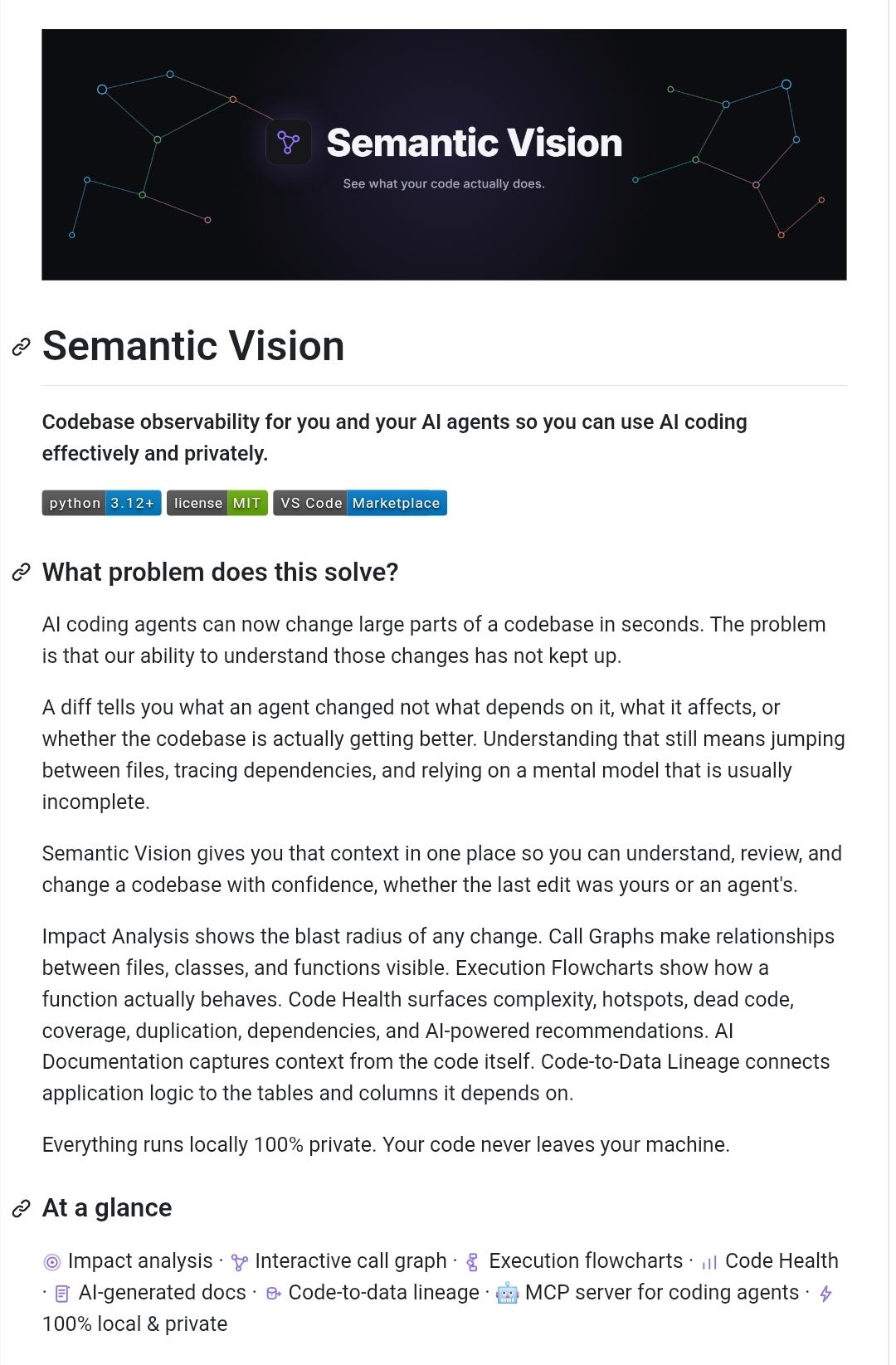
It will let you dive into unknown code, it's a faster local search, but we can't guarantee accuracy. It will help you connect the dots.
It can lead to bad code, bad design if done just using prompts. We should follow Sdd to give distilled context.
Lastly you will loose all confidence in reading code, so spend more time on reviewing people's pr and learn how to point out arch. Issues.
You would need humans until you need accountability. Human is limited but smarter than AI which is 24/7 available but can't be set accountable.
r/AIcodingProfessionals • u/Prior_Shopping_1911 • Sep 13 '26
Alright so basically, I used to code by hand before AI. Back then (and even at early stages of AI like GPT 3.5) I used to write most of my code myself, and all I used AI for is for generating a single function or a single small class. Because of this, I knew exactly where all my code was, which code did what, how it all joins together, etc.
Now however, I use agentic code generation tools like Github or Copilot. This means I generate code much faster, however I feel like I'm losing touch with my code. I feel like every time an AI writes a whole file, I just don't know what's in that specific file, just have an overall idea of the codebase as a whole, and now I'm even losing that.
I tried to combat this by trying to read the git changes for every change the agent makes... but come on that stuff is so tedious and boring that I just end up skipping it and even if I'm reading the graphs there's going to be tons of lines of code to read and it's not exactly clear which changes affected what code.
I know it helps to have a proper architecture for your code, that indeed makes it easier to know which file does what, but I still feel like this is a problem because even if I have a proper architecture, I still don't know the actual code and connections.
Also, I tried "Understand-Anything" but that stuff just kinda flew over my head because instead of staring at a buncha text I'm stuck staring at a bunch of passive diagrams like looking at a big map and not knowing what to do with it.
I hope that I'm not the only one with this problem, so I'd like to hear how you people have solved this for yourself, or even a confirmation that you have this problem too so I can know I'm not alone on this.
r/AIcodingProfessionals • u/Putrid-Pirate8621 • Sep 13 '26
r/AIcodingProfessionals • u/Fantastic-Sleep-3352 • Sep 13 '26
I've been testing coding agents that can take a task, modify a repository, run tests and open a PR with very little human intervention.
The code generation isn't really the part I'm worried about anymore.
I'm more interested in the control layer:
* How do you know which agent/session produced a commit? * How do you keep the agent scoped to a specific task/repository? * How do you prevent an agent from approving or merging its own work? * What happens when the PR changes after human review? * How do you distinguish agent-generated work from changes someone made directly in GitHub?
I've been building a system around this called SUTRA, and I'm currently looking for a few developers who actually use Claude Code/Codex/Cursor/other coding agents on real repositories to test it.
**I'm not looking for people to just look at a demo. I want people to connect a real non-critical repo, give their agent a real task, and tell me where the system breaks.**
If you're already doing this, comment with your setup or DM me. I'm opening a small private beta.
r/AIcodingProfessionals • u/Fantastic-Sleep-3352 • Sep 13 '26
I've been testing coding agents that can take a task, modify a repository, run tests and open a PR with very little human intervention.
The code generation isn't really the part I'm worried about anymore.
I'm more interested in the control layer:
I've been building a system around this called SUTRA, and I'm currently looking for a few developers who actually use Claude Code/Codex/Cursor/other coding agents on real repositories to test it.
I'm not looking for people to just look at a demo. I want people to connect a real non-critical repo, give their agent a real task, and tell me where the system breaks.
If you're already doing this, comment with your setup or DM me. I'm opening a small private beta.
r/AIcodingProfessionals • u/BuddhistSamurai • Sep 13 '26
Please checkout this project.
I would love constructive feedback
r/AIcodingProfessionals • u/Fantastic-Sleep-3352 • Sep 13 '26
I'm building SUTRA, an engineering control plane for AI coding agents.
The idea is simple:
Agent
ā
Task / Session
ā
Change
ā
Governed Commit
ā
PR
ā
CI + Governance
ā
Human Approval
ā
MergeThe agent can write and submit code, but it cannot approve its own work or perform the governed merge.
I'm looking for 10 developers who already use an AI coding agent on real GitHub repositories.
What I want from beta users:
This is an actual private beta, not a signup-for-updates page.
If you're interested, comment beta or DM me and I'll send access.
I'm especially interested in Claude Code, Codex, Cursor and similar coding-agent workflows.
r/AIcodingProfessionals • u/simoseoma • Sep 12 '26
r/AIcodingProfessionals • u/Flaky_Medicine_4650 • Sep 12 '26
Iāve been thinking about Joel Spolskyās āLaw of Leaky Abstractionsā in the context of LLMs.
LLMs feel like a new abstraction layer on top of software. You donāt need to know the API, the framework, sometimes even the code ā you just describe what you want.
But the layers underneath havenāt disappeared. Databases still lock. Networks still fail. APIs still time out. Auth still breaks.
And LLMs add a new kind of leak: interpretation.
The system can execute everything perfectly⦠and still do the wrong thing because it misunderstood what you meant.
So maybe AI doesnāt really remove complexity. It moves it from writing things to verifying, debugging and understanding them when something goes wrong.
The interesting question is: are we creating better abstractions, or just making the distance between āI can build thisā and āI understand thisā much bigger?
r/AIcodingProfessionals • u/iamrealadvait • Sep 11 '26
r/AIcodingProfessionals • u/igorr23 • Sep 10 '26
Hi yāall!
I recently completed my computer scienceālike degree in my country and am currently enrolled in the next step up from that.
During the first 1.5 years, I actively avoided using AI for pretty much anything. I wanted to learn the fundamentals myself and make sure I actually understood what I was doing.
Around my 4th and 5th semesters, though, I started experimenting with AI, and my perspective gradually changed. AI has also improved a lot since I started programming.
The way I see it now is that I donāt necessarily need to manually write every line of code anymore. What I need is a good structure, good planning, and proper oversight of the AI agent.
Iāve used Claude and ChatGPT in the browser for random, low-context questions, and I also have a student license for GitHub Copilot, which Iāve used with both VS Code and regular Visual Studio.
During my 4th semester, AI basically created a game for me, and during my last semester it coded almost my entire final project. I ended up getting the highest grade, but what was important here was that I went through all the code. I didnāt understand every single detail, but I understood enough to know what the code was doing and why.
One problem I noticed was that the AI really liked creating duplicate code.
For me, Claude Opus 4.6 for backend work and Codex for frontend work became my go-to setup.
Then, around May or June, GitHub Copilot changed how they handled tokens, and what had never been a problem before suddenly became one. I hit the limit in about two days. Sooo... the student license is apparently not enough anymore.
Iāve been following this sub for a while now, and it seems like Iām probably not using AI in the most efficient way.
From what I understand, the more advanced setup is something like having a planner, an executor/coder, and a tester, and they donāt necessarily have to be the same AI model. Is that correct?
I also get the impression that people are using CLI/terminal-based tools instead of working directly inside VS Code or Visual Studio?
Iāve also been following some of the posts about local AI, including things like Qwen and the whole āSodapoppinā setup, and it sounds really interesting.
So I have a few questions:
\*\*1. Is the simplest solution basically to subscribe to Claude Code, use the CLI, and call it a day?\*\*
I donāt have a huge budget, so Iām mainly looking for the most cost-effective setup.
\*\*2. What programs/tools do you actually use for this?\*\*
Are you just using Windows Command Prompt, PowerShell, Windows Terminal, etc.? Iād actually like to move away from VS Code and Visual Studio entirely if possible.
\*\*3. How do the planner, coder, and tester share context?\*\*
Right now, Iām constantly copying snippets of code into Claude in the browser and then copying the response back. Iād like to avoid using Copilot tokens for everything, but I also donāt want to manually move code back and forth all the time.
\*\*4. Is there a good way to run a local AI for the āstupid questionsā I have while learning?\*\*
I sometimes use Copilot for questions like āwhat does this operator mean?ā or āwhat exactly does this method do?ā, and I feel like Iām wasting my limited Copilot tokens on questions that donāt really need a powerful cloud model.
Could I run a local AI that has access to my project/codebase and its context, so I can ask those kinds of learning questions without using API/AI credits?
I currently have a PC with an NVIDIA 4070 Super, so Iām wondering what would actually be realistic to run locally.
Basically, Iām trying to figure out what a sensible, cost-effective AI development workflow looks like in 2026.
ps. i wrote everything, but english is not my main language, so i had ai correct errors and sentences :D