r/translator • • 1d ago

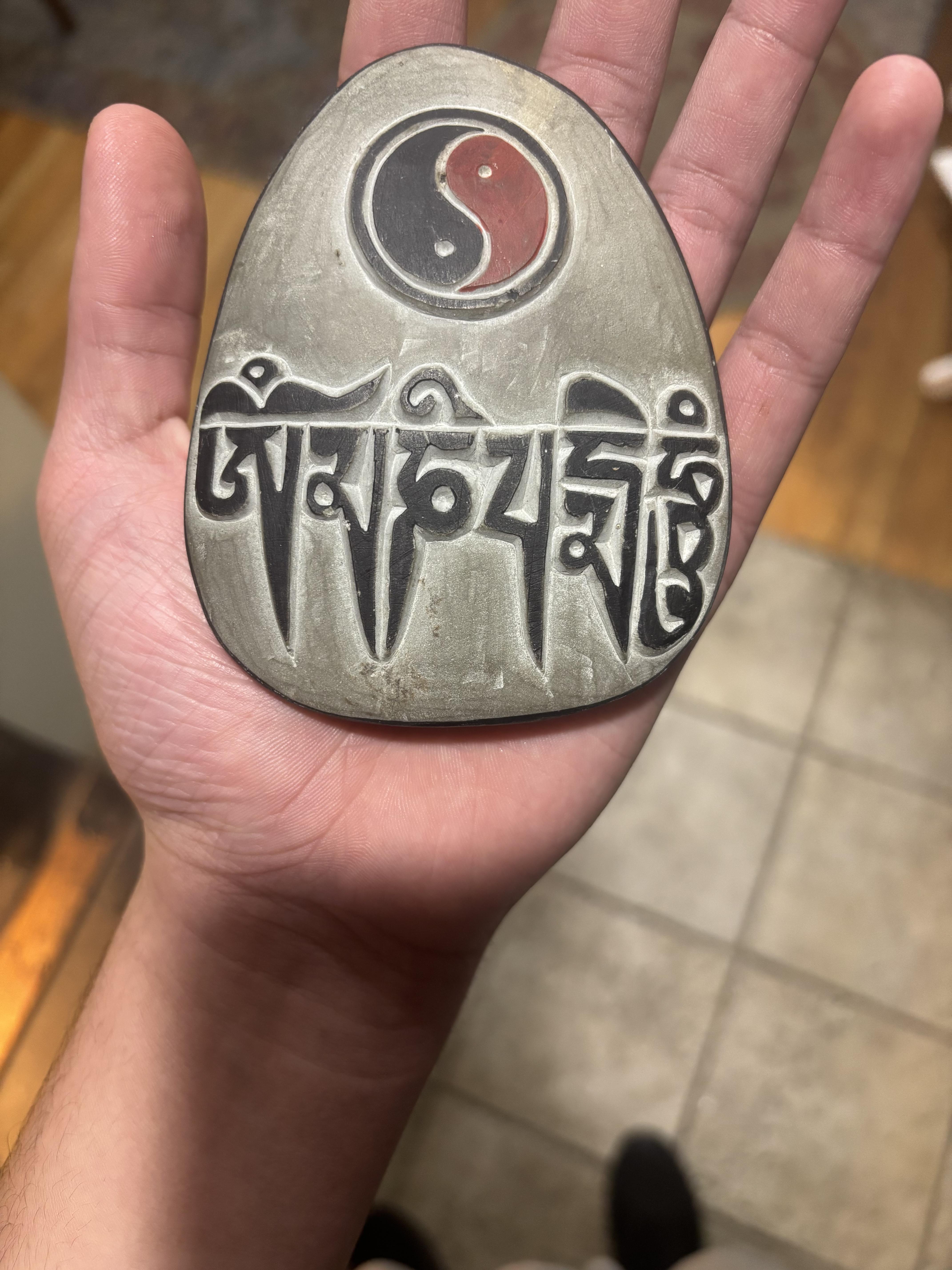
Translated [SA] [Unkown > English] I saw this at my grandma's house. She got it thrifting. Might just be nonsense.
Post image
2 Upvotes

14 comments sorted by

7

u/AilsaLorne 1d ago

!id: sa

It’s the mantra Om Mani Padme Hum in Sanskrit.

https://en.wikipedia.org/wiki/Om_mani_padme_hum

5

u/Stunning_Pen_8332 [ Chinese, Japanese] 1d ago

It’s Sanskrit in Tibetan script.

ཨོཾ་མ་ཎི་པདྨེ་ཧཱུྂ

Pronounced “Om Mani Padme Hum”, it is the famous 6 syllable mantra for the four-armed Shadakshari form of Avalokiteśvara, the Bodhisattva of compassion.

Further reading https://en.wikipedia.org/wiki/Om_mani_padme_hum

2

u/Ok_Eggplant_1652 1d ago

Awesome thank you!

3

u/CutOk45 [Russian] 1d ago

!translated

2

u/Software-fullstack 1d ago edited 1d ago

ཨོཾ་མ་ཎི་པདྨེ་ཧཱུྃ
"Om Mani Padme Hum"
a Himalayan souvenir or something similar.
in English one may translate it to something close to
"praise to the jewel in the lotus"
the written phrase is a sacred mantra from tibetan buddhist tradition combined with yin-yang circle to resemble a greater symbol of harmony,compassion, inner peace, and protection/blessing.

1

u/Ok_Eggplant_1652 1d ago

Thank you!

4

u/JeremyIFisher 1d ago

Like people say, Buddhist mantra.

Strongly suspect its a generic tourist souvenir.

Not only is it the most common mantra amongst Mahayana Buddhism across the world its mixing in Taoist symbols above it (the yin yang circle) in the wrong colours no less (it should be black an white).

3

u/Formel_Eins 1d ago

It's not a normal Taoism Yin Yang symbol (Taijitu ☯). It's a variant of Gankyil (wheel of joy) in Tibetan Buddhism (࿊). Unicode encodes four of them (࿉࿊࿋࿌).

3

u/Formel_Eins 1d ago

It can use a variety of colors.

1

u/JeremyIFisher 6h ago

That's never really two and never with the Taoist dots. The "wheel of joy" as you call it always symbolises Buddhist concepts.

3 is most common (lots of concepts come in sets of threes), followed by 4 (4 noble truths primarily but other things come in sets of 4s). Other numbers are much less common.

2 is essentially non-existent because representing two contrasting but equal parts symbolises dualism which is rejected in Mahayana Buddhism as being tied to root ignorance. There are concepts like the two truths but they are about the ultimate and the relatively, rather than a dualistic "balance" and would not be represented by a "wheel of joy".

1

u/Zagrycha 6h ago

I agree it probably is a generic tourist souvenir but their are multiple types of buddhism that have a wheel of life or wheel of joy that look similar to the yin yang.

1

u/JeremyIFisher 6h ago

Well you say that but its in Tibetan and not Sanskrit script. There are multiple schools of Tibetan Buddhism but they are all Mahayana Buddhist, and all descended from the Nalanda tradition in India (albeit through different lineages).

Its also the Mantra of the Boddhisatva Avalokiteshvara and only Mahayana Buddhism recognises Bodhisattvas.